Table of contents
Open Table of contents
AI in Healthcare: Revolutionizing Diagnostics and Treatment
Category: Healthcare and Life Sciences
Source: The Guardian
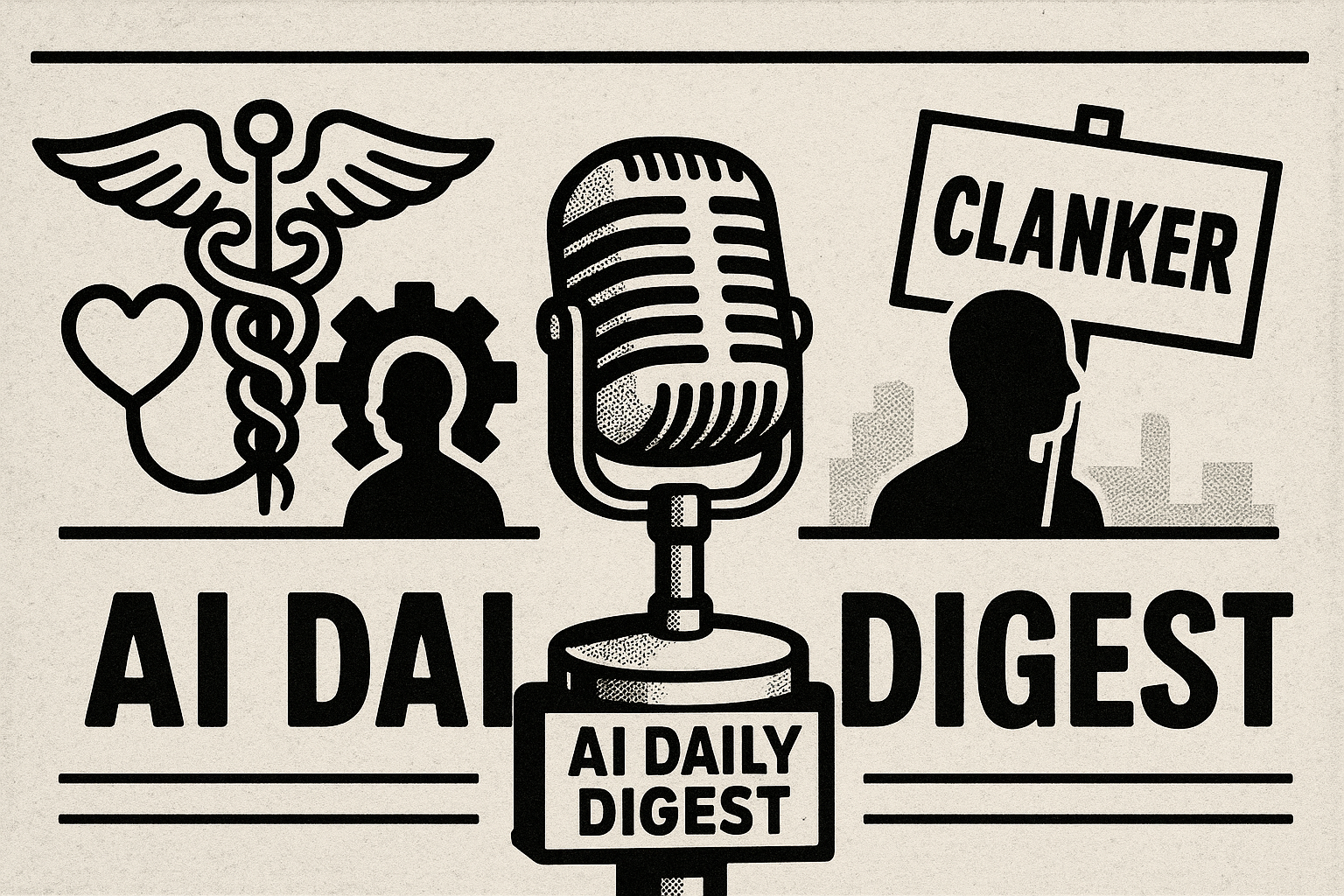
Artificial intelligence is transforming healthcare by enhancing diagnostics and addressing medical inefficiencies. Research shows AI significantly improves outcomes for rare diseases and ensures consistent implementation of evidence-based care. Models such as ChatGPT-4 have outperformed human doctors in clinical reasoning, solving complex medical scenarios which were previously misdiagnosed.
For example, a 2023 study demonstrated an AI hitting over 90% diagnostic accuracy for rare diseases. Alongside diagnostic support, AI is being embraced for democratizing care by reducing systemic healthcare disparities, enabling mobile consultations via NHS apps in countries like the UK. As adoption soars, questions about equitable access remain crucial.
Meta’s New AI Leadership Shakes Up the Tech Giant
Category: Enterprise and Adoption
Source: Ars Technica
Meta’s aggressive AI recruitment tactics, including nine-figure sign-on bonuses for Silicon Valley’s top talent, come with challenges. Notably, friction between long-standing employees and newly onboarded AI experts is leading to organizational restructuring and unexpected staff departures. CEO Mark Zuckerberg envisions “personal superintelligence” projects but faces struggles aligning timelines and resources.
The $14 billion “Meta Superintelligence Lab” remains controversial, plagued by mismanagement rumors and resource constraints despite its aim to rival competitors like OpenAI. Despite turbulence, Meta sees long-term growth in AI-centric innovation, including advanced applications beyond its experimental Llama models.
AI’s Mixed Impact on Employment: Threat or Evolution?
Category: Skills and Workforce
Source: Noahpinion
AI’s influence on job markets remains a hotly debated topic. While massive layoffs in some sectors suggest disruption, economists disagree on whether AI is fundamentally replacing roles or merely shifting responsibilities. Erik Brynjolfsson’s findings highlight that younger, less-experienced workers in AI-exposed roles like coding face challenges. However, middle-aged professionals in the same fields report robust employment gains.
Experts argue this dynamic results from structural inefficiencies rather than existential threats to job security. As companies increasingly rely on AI, balancing economic opportunities with retraining programs for displaced workers will be critical to ensure socio-economic stability.
Further reading dives into the contentious nuances of AI automation and the long-tail impact across industries.
Taco Bell Halts AI Rollout Following High-Profile Failures
Category: Retail and eCommerce
Source: TechCrunch
Taco Bell temporarily paused its adoption of AI ordering systems after well-publicized failures, including a viral incident where prank customers exploited the system with an “18,000 water cups” order. Despite initial goals to streamline drive-through efficiency, inconsistencies in AI-driven customer service forced recalibration.
Executives reaffirm AI’s potential but acknowledged clearer guidelines are needed before further implementation. Whether Taco Bell’s setbacks will affect broader AI trust in customer-facing retail remains an open debate.
Inside the Growing Backlash Against AI
Category: Trends and Analysis
Source: Business Standard
AI technologies are facing cultural resistance fueled by younger generations. A growing number of anti-AI rallies in cities like San Francisco and London use the derogatory term “clanker” to criticize the rapid automation of jobs and perceived corporate exploitation. Humorous yet motivated by real frustrations, the term reflects rising anxieties about AI displacing human creativity and labor.
Critics argue that while AI excels in mechanics, assigning “personality” or anthropomorphic traits to machines risks blurring lines across ethical debates. Movements like these underline widespread uncertainty regarding AI’s unchecked expansion.
Short Summaries:
Accenture Identifies Red Flags for AI Adoption
Accenture CEO Julie Sweet identified common pitfalls of AI adoption, including over-reliance on outdated processes, insufficient ROI focus, and impractical projects that contribute little to financial results. Full story: Fortune
AI’s Effect on Publishing: A Looming Content Drought?
Experts fear AI-driven search methods undermine online content ecosystems, reducing creators’ motivation to produce high-quality materials. Without content to train on, AI capabilities may eventually stagnate. Full story: Bradt
Humans Fixing AI Flaws for Gig Income
Freelancers report job increases correcting AI’s “sloppy outputs” in industries like design and writing, though lower pay remains contentious. Full story: NBC News
Public Groups Oppose Grok AI in U.S. Government
xAI’s Grok model faced scrutiny for ideological biases in sensitive applications, with advocacy groups pushing federal agencies to cease its deployment immediately. Full story: The Register