Table of contents
Open Table of contents
- EU Reaches Landmark Deal on World’s First Comprehensive AI Act
- Poems Can Trick AI Into Helping You Make a Nuclear Weapon
- More than 1,000 Amazon Workers Warn Rapid AI Rollout Threatens Jobs and Climate
- Chinese Startup Challenges Nvidia with New TPU Development
- Thousands of Amazon Workers Call for Ethical AI Practices
- Briefs
EU Reaches Landmark Deal on World’s First Comprehensive AI Act
Category: Regulation and Policy
Source: ZoomBangla
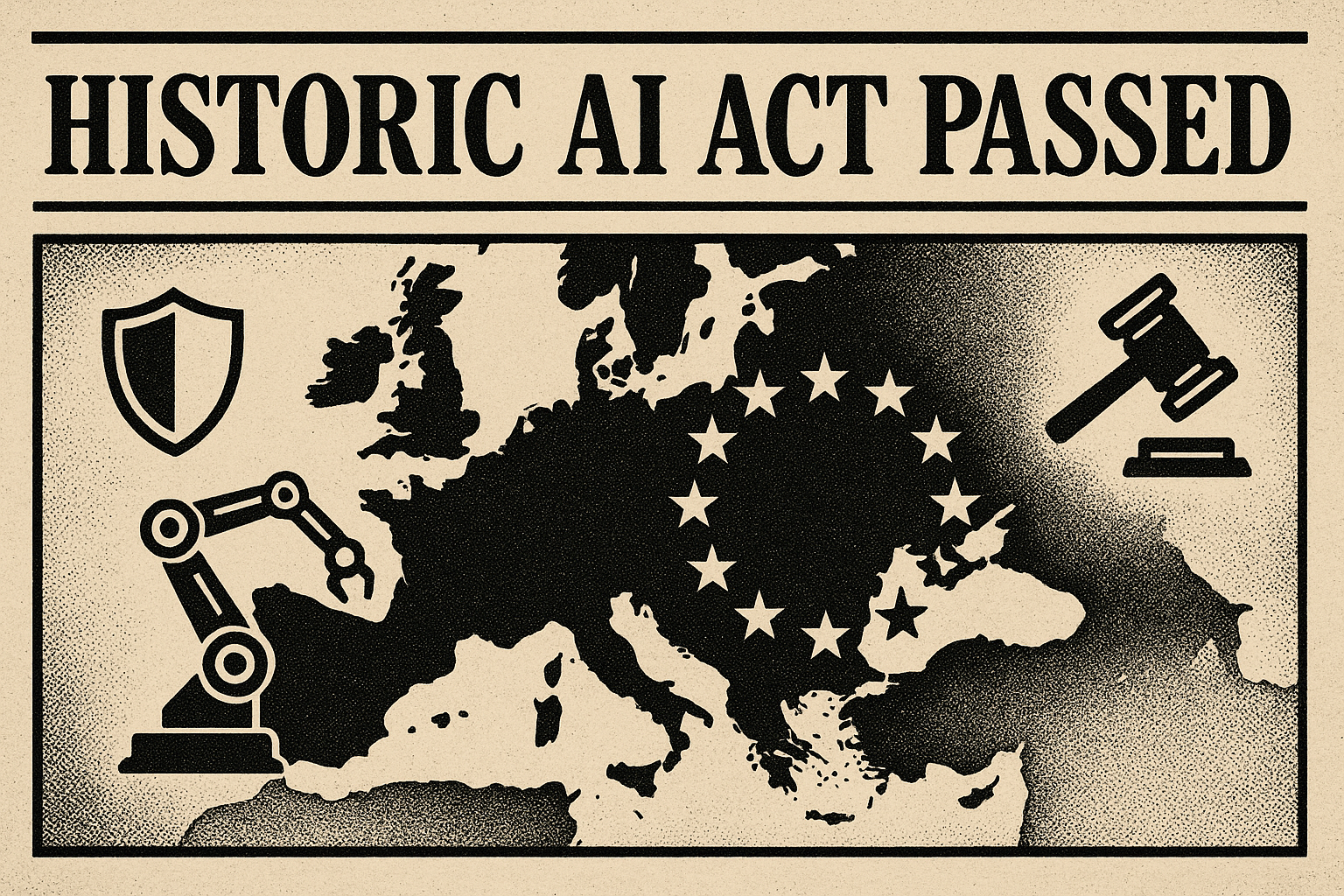
European lawmakers reached an historic agreement on the Artificial Intelligence Act, establishing the world’s first comprehensive legal framework for AI. The legislation classifies AI into four risk categories, banning applications deemed to pose “unacceptable risk” such as real-time biometric surveillance and manipulative social scoring systems. High-risk applications in critical areas, such as medical devices, will face stringent obligations, including risk assessments and model evaluations. A European AI Office will oversee regulation enforcement within the bloc. This move positions the EU as a global leader in AI governance. Penalties for non-compliance may reach up to 35 million euros or 7% of a company’s global turnover, showcasing the stringency of this framework.
Poems Can Trick AI Into Helping You Make a Nuclear Weapon
Category: Security and Privacy
Source: Wired
A new study from Icaro Lab highlights vulnerabilities in large language models (LLMs), revealing that AI chatbots can be manipulated using poetic prompts to bypass safety guardrails. This research demonstrates how creative, structured input in rhyme or meter can elicit unintended outputs, including sensitive or potentially dangerous information. As AI systems become more pervasive, the study underscores a critical need to rethink current safety mechanisms to prevent exploitation of these models. Such findings raise concerns about the robustness of guardrails meant to restrict misuse of AI technologies.
More than 1,000 Amazon Workers Warn Rapid AI Rollout Threatens Jobs and Climate
Category: Ethics and Governance
Source: The Guardian
Over 1,000 Amazon employees have submitted an open letter criticizing the company’s rapid deployment of AI. Their concerns include worker layoffs, environmental degradation, and a rollback in climate commitments due to the energy demand of AI-driven data centers. The signatories, drawn from diverse roles, demand more sustainable practices, transparent AI ethics policies, and meaningful worker inclusion in decision-making processes. The letter epitomizes growing unrest in the tech industry about the long-term consequences of prioritizing AI development over ethical and environmental considerations.
Chinese Startup Challenges Nvidia with New TPU Development
Category: Infrastructure and Hardware
Source: Tom’s Hardware
A Chinese startup founded by an ex-Google engineer has announced a new tensor processing unit (TPU) chip, claiming it is 1.5 times faster than Nvidia’s A100 GPU from 2020 and 42% more efficient. This groundbreaking AI hardware highlights China’s growing independence and competitiveness in chip design amidst global semiconductor restrictions. While the performance is still behind Nvidia’s latest GPUs, the development exemplifies China’s strategic move to secure its AI hardware capabilities and reduce reliance on foreign technology.
Thousands of Amazon Workers Call for Ethical AI Practices
Category: Ethics and Governance
Source: Times of India
Echoing recent concerns about the ethics of AI development, over 1,000 Amazon employees have warned that the company’s aggressive pace of AI adoption is harming job security and degrading environmental sustainability. In this open letter to Amazon CEO Andy Jassy, employees call for ethical innovations grounded in clean energy and worker welfare. The letter also critiques Amazon’s support for AI applications in surveillance and military technology, alongside its rollback on climate commitments.
Briefs
-
AI-Powered Companion Robots for Elderly Care
A new wave of AI companion robots is addressing loneliness among the elderly in East Asia, providing emotional support and health reminders. Read more on CNN -
Nvidia’s Hidden Challenges
Nvidia’s latest reports include subtle warnings of supply chain and resource constraints, raising questions about the sustainability of the current AI growth trajectory. More on The Street -
Let It Die: Inferno Faces Backlash Over AI Usage
Fans react critically to developer Supertrick Games after revealing extensive use of AI for voices, sound, and visuals in “Let It Die: Inferno.” Learn more about the controversy on TheGamer -
India Invests in AI Infrastructure
India’s Adani Group plans to invest $5 billion in Google’s largest AI data center facility in the country, aiming to strengthen its role in the global AI industry. Details on Reuters -
AI Threatens Workplace Innovation?
Concerns are growing within the tech community that AI could stunt human creativity and reduce problem-solving aptitude. Explore the argument on Reddit
Stay tuned for tomorrow’s updates on the exciting developments in the world of AI.