Table of contents
Open Table of contents
- Anthropic’s Dario Amodei: AI Could Handle Most Coding Within 6-12 Months
- Anthropic Releases Claude’s New Constitution Focusing on Values and Ethics
- Jensen Huang Calls AI Buildout “Largest Infrastructure Project in Human History”
- Pentagon Launches $100M Drone Swarm Challenge
- CAMB.AI Launches MARS8: First Family of Specialized TTS Architectures
- Brief Updates
Anthropic’s Dario Amodei: AI Could Handle Most Coding Within 6-12 Months
Category: Trends and Analysis
Source: The Neuron Daily
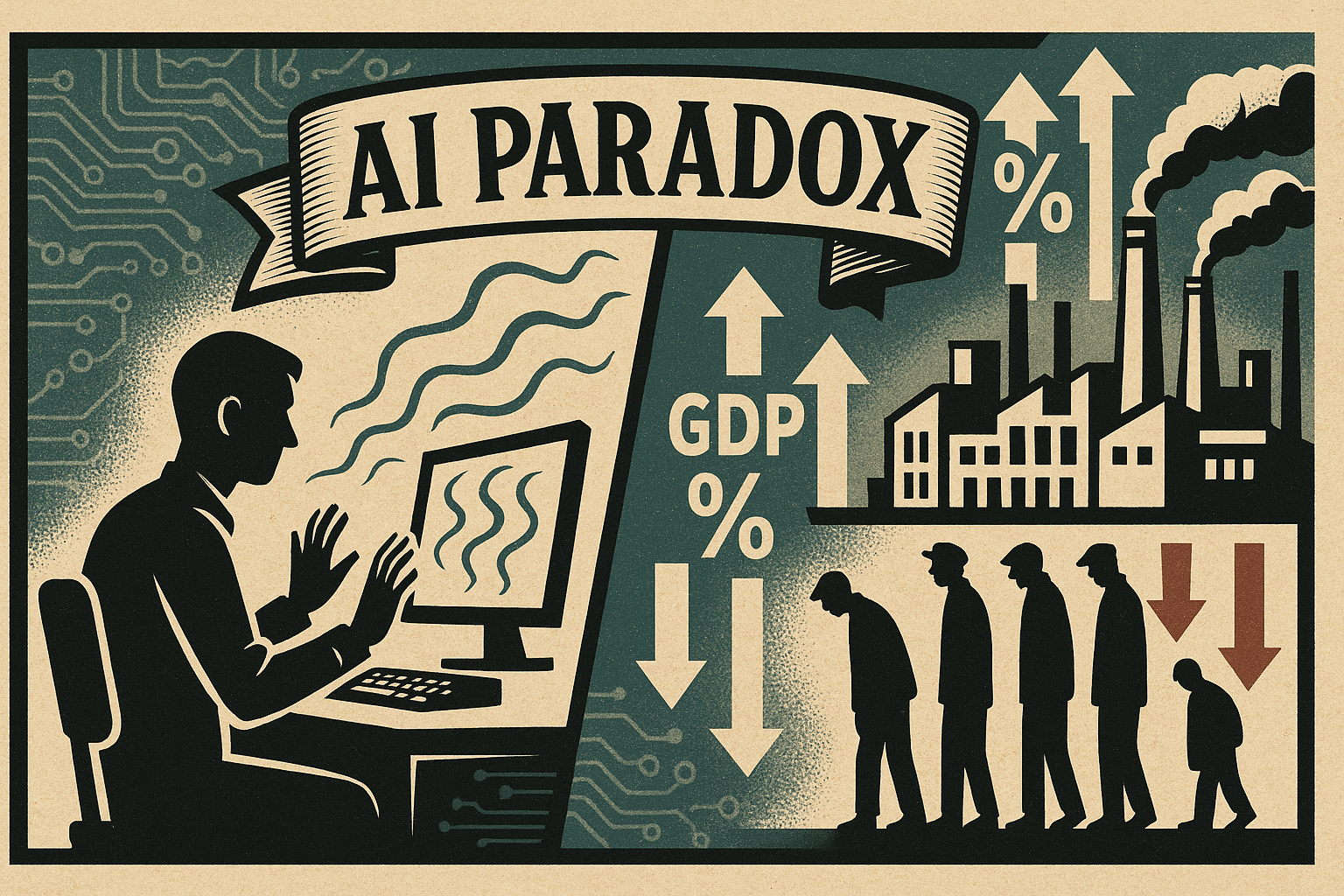
Anthropic CEO Dario Amodei delivered a series of stark warnings at the World Economic Forum in Davos, predicting that AI models may be capable of handling most or all software engineering tasks within the next 6-12 months. His comments came alongside an alarming economic forecast: the possibility of simultaneous 5-10% GDP growth and 10% unemployment—a historically unprecedented combination.
Amodei revealed that engineers at Anthropic have already stopped writing code directly, instead editing what Claude produces. The company’s new Claude Cowork product was built in just a week and a half, almost entirely by AI. He described a potential “zeroth-world country” scenario where 10 million tech workers experience 50% GDP growth while the rest of the economy stagnates—a situation he called “dystopian.”
In one of the most provocative statements of the conference, Amodei compared potential US AI chip exports to China to “selling nuclear weapons to North Korea,” emphasizing the strategic importance of maintaining technological leadership.
DeepMind CEO Demis Hassabis offered a more measured timeline, suggesting 3-5 or even 10 years for human-level AI, noting that coding is easier to automate than scientific discovery because results can be verified instantly. However, he acknowledged that entry-level jobs could be impacted this year. His advice for junior employees: use this time to become exceptionally proficient at using AI tools to “leapfrog” into usefulness in their professions.
Anthropic Releases Claude’s New Constitution Focusing on Values and Ethics
Category: Ethics and Governance
Source: Anthropic
Anthropic has published a comprehensive new constitution for Claude under a Creative Commons CC0 1.0 Deed, making it freely available for anyone to use without permission. The constitution represents a fundamental shift from a list of standalone principles to a holistic document explaining the context, values, and reasoning behind Claude’s behavior.
The constitution prioritizes four key properties in order: (1) Broadly safe - not undermining human oversight of AI development; (2) Broadly ethical - being honest and acting according to good values; (3) Compliant with Anthropic’s guidelines; and (4) Genuinely helpful to users and operators.
Unlike the previous approach, the new constitution is written primarily for Claude itself, providing the knowledge and understanding the AI needs to act well in the world. It includes detailed sections on helpfulness, Anthropic’s guidelines, Claude’s ethics (including hard constraints like never providing uplift to bioweapons attacks), and being broadly safe during this critical period of AI development.
The constitution serves a practical function in training, with Claude using it to construct synthetic training data including conversations, responses aligned with its values, and rankings of possible responses. This transparency allows people to understand which behaviors are intended versus unintended and make informed choices about using Claude.
Jensen Huang Calls AI Buildout “Largest Infrastructure Project in Human History”
Category: Trends and Analysis
Source: NVIDIA Blog
At a packed World Economic Forum session in Davos, NVIDIA CEO Jensen Huang described AI as the foundation of “the largest infrastructure buildout in human history,” driving job creation across the global economy. Speaking with BlackRock CEO Larry Fink, Huang framed AI as a “five-layer cake” spanning energy, chips and computing infrastructure, cloud data centers, AI models, and applications.
Huang emphasized that every layer must be built and operated, creating jobs from energy generation and construction to advanced manufacturing, cloud operations, and application development. He noted that 2025 was one of the largest years for venture capital funding on record, with most capital flowing to “AI-native companies” in healthcare, robotics, manufacturing, and financial services.
Countering concerns about job displacement, Huang pointed to radiology as an example where AI has actually increased demand for radiologists rather than replacing them. “The fact that they’re able to study scans now infinitely fast allows them to spend more time with patients,” he explained. Similarly, AI is helping address a shortage of five million nurses in the US by handling charting and documentation, allowing nurses to focus on patient care.
Huang urged countries to treat AI as essential national infrastructure like electricity or roads, arguing that every nation should develop its own AI capabilities based on local language and culture. He described AI as “the easiest software to use in history,” reaching nearly a billion people in just 2-3 years, making AI literacy essential for the workforce.
Pentagon Launches $100M Drone Swarm Challenge
Category: Autonomous Systems and Robotics
Source: Defense One
The Pentagon has announced a $100 million competition to develop autonomous drone-swarm coordination technology, dubbed an “Ender’s Game challenge.” The initiative seeks systems that can operate without centralized control, requiring each drone to make real-time decisions, communicate with the swarm, and adapt to dynamic threats.
Key technical challenges include distributed multi-agent coordination in real time, sensor fusion across heterogeneous platforms, and distributed planning algorithms that work under limited bandwidth, communication constraints, or jamming. The substantial prize pool signals the Pentagon’s desire to attract external talent from universities, defense contractors, and the broader AI research community.
This effort represents a significant shift from simulation-only research to real-world hardware at scale, combining multi-agent reinforcement learning with physical drone fleets. It sits within the department’s seven priority AI projects and reflects a push to accelerate AI deployment in defense applications.
CAMB.AI Launches MARS8: First Family of Specialized TTS Architectures
Category: Tools and Platforms
Source: CAMB.AI
CAMB.AI, founded by AI researchers from Apple and Carnegie Mellon, has launched MARS8, the first text-to-speech system designed as a family of specialized architectures rather than a single model. The company’s MARS engine has powered AI voice applications reaching over 200 million users through partners including NASCAR, Broadcom, Australian Open, Eurovision Sport, IMAX, and Comcast NBCUniversal.
The MARS8 family includes four distinct architectures: MARS-Flash for ultra-low latency (sub-150ms TTFB) real-time agents; MARS-Pro for expressive dubbing balancing fidelity with speed; MARS-Instruct for director-level control in film production; and MARS-Nano, a 50M-parameter model for on-device applications.
In a significant business model shift, MARS8 launches with “Compute-First” pricing that allows enterprises to run models on their own infrastructure across 25+ platforms including AWS Bedrock, Google Cloud Vertex AI, Modal, and Baseten. This approach can save enterprises up to 90% compared to traditional pay-per-character API pricing while maintaining data compliance and control.
Brief Updates
CEO Survey Shows Limited AI ROI: A PwC survey reveals only 12% of CEOs report major success with AI, while 56% say they’ve realized neither revenue nor cost benefits. Despite this, 30% report revenue increases and 53% agree their businesses are suitable for AI adoption. Source: PC Guide
ElevenLabs Releases First Licensed AI Album: ElevenLabs launched “The Eleven Album” featuring Liza Minnelli on Spotify, claiming it’s the first major AI-generated album made with full artist permission. The company’s marketplace allows public figures to license their AI-cloned voices, with recent partnerships including estates of Judy Garland, James Dean, Burt Reynolds, and Laurence Olivier. Source: NBC News
Wikipedia Formalizes AI Data Agreements: The Wikimedia Foundation announced new paid partnerships with AI companies through Wikimedia Enterprise, providing legal, documented, and large-scale access to Wikipedia data for training AI models. The move coincides with the project’s 25th anniversary. Source: Reddit
AI Detection Tool Becomes Humanization Guide: An open-source plugin called “Humanizer” for Claude Code uses Wikipedia’s AI writing detection rules to help AI write more like humans, accumulating over 1,600 GitHub stars. The irony highlights limitations in AI detection methods. Source: Ars Technica
AMD ROCm 7.2 Released: AMD released ROCm 7.2 with official support for Radeon AI PRO R9600D and Radeon RX 9060 XT LP RDNA4 graphics cards, plus proper support for RDNA3-based Radeon RX 7700 series. The release introduces ROCm Optiq, a next-gen visualization platform for GPU traces. Source: Phoronix
Function AI Agents for Salesforce: An open-source project demonstrates LLM-orchestrated multi-step workflows in Salesforce with human-in-the-loop approvals, error recovery, and intelligent filtering, running entirely in Apex on GPT-4o Mini for under a cent per execution. Source: GitHub
NVIDIA Named Best Tech Workplace: NVIDIA ranked #1 on Glassdoor’s Best Places to Work in Technology and AI list and #3 overall among all employers, climbing from last year’s position. Source: NVIDIA Blog
Survey on Logic-Oriented Fuzzy Neural Networks: A comprehensive survey published in Expert Systems with Applications discusses logic-oriented fuzzy neural networks that balance accuracy and interpretability through AND/OR architecture, addressing the black-box nature of traditional neural networks. Source: ScienceDirect