Table of contents
Open Table of contents
- Goldman Sachs Deploys Anthropic’s Claude to Automate Accounting and Compliance Roles
- Big Tech Loses Over $1 Trillion as AI Spending Fears Trigger Market Sell-Off
- New York Proposes Landmark AI Disclosure Requirements for News Organizations
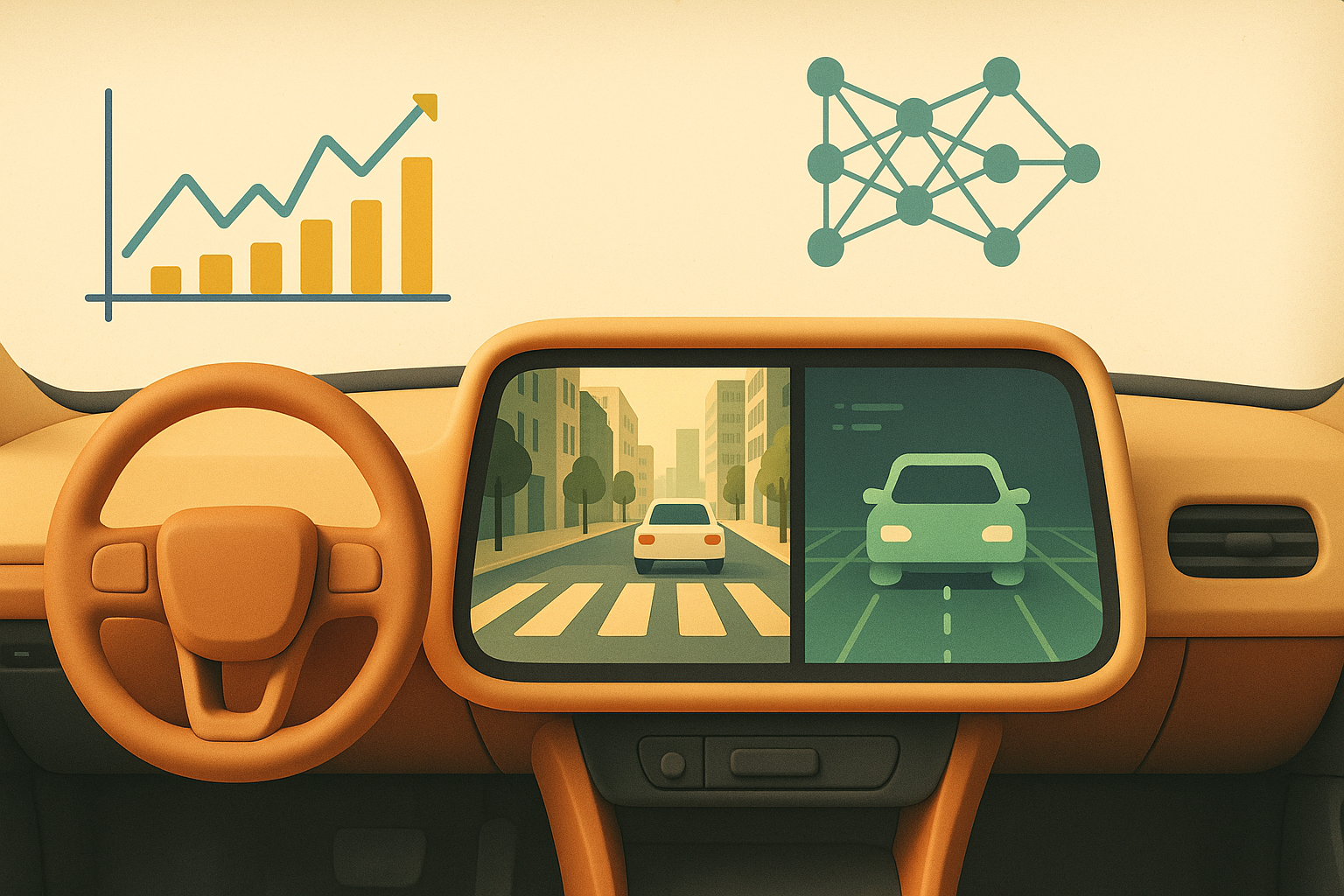
- Waymo Unveils World Model: Frontier Simulation Technology for Autonomous Driving
- Snapchat’s GiGL Framework Solves Billion-Scale Graph Neural Network Challenge
- AI Research Tool OpenScholar Matches Expert Citation Accuracy
- Anthropic Report Reveals Infrastructure Impact on AI Benchmark Reliability
- Brookings Report Proposes Framework for Data Center Economic Development
- Heroku Transitions to Maintenance Mode as Parent Company Prioritizes AI
- AI Wildfire Detection Systems Show Promise in Early Response Times
- Quick Updates
Goldman Sachs Deploys Anthropic’s Claude to Automate Accounting and Compliance Roles
Category: Enterprise AI Source: CNBC
Goldman Sachs is building AI agents powered by Anthropic’s Claude to automate complex back-office functions including trade accounting and client onboarding, marking a significant shift in how financial institutions deploy generative AI beyond simple coding tasks. Embedded Anthropic engineers have spent the past six months working directly at Goldman to co-develop these autonomous systems, according to the bank’s CIO Marco Argenti.
The collaboration represents one of the first large-scale deployments of AI agents for high-stakes financial operations. “Think of it as a digital co-worker for many of the professions within the firm that are scaled, are complex and very process intensive,” Argenti told CNBC. The bank was “surprised” at how capable Claude proved at tasks beyond coding—particularly in areas combining data parsing with rules-based judgment like accounting and compliance.
While Goldman employs thousands in these functions, Argenti emphasized it’s “premature” to expect job losses, framing the technology as capacity injection rather than replacement. The bank expects to launch these agents “soon” and may next develop AI systems for employee surveillance and investment banking pitchbooks. This follows CEO David Solomon’s October announcement of a multi-year reorganization around generative AI aimed at constraining headcount growth even as trading and advisory revenues surge.
Big Tech Loses Over $1 Trillion as AI Spending Fears Trigger Market Sell-Off
Category: Business & Finance Source: CNBC
Amazon, Microsoft, Nvidia, Oracle, Meta, and Alphabet collectively shed more than $1 trillion in market value over the past week as investors questioned the returns on massive AI infrastructure investments. The sell-off followed earnings reports revealing fourth-quarter capital expenditures of approximately $120 billion across the major tech firms, with projections exceeding $660 billion for 2026—surpassing the GDP of countries like the UAE and Singapore.
Amazon’s stock took a particularly hard hit after announcing plans for $200 billion in capital expenditures for 2026, more than $50 billion above analyst expectations. D.A. Davidson downgraded Amazon to neutral, citing concerns that “AWS [is] continuing to lose its lead and now scrambling to catch up through escalating investment.” Analysts also expressed growing worries about AI eroding Amazon’s retail business through chat-driven interfaces like ChatGPT and Gemini.
The divergent market reactions highlight growing uncertainty about AI monetization. While Meta and Alphabet saw their forecasts cheered, Amazon and Microsoft faced punishment for similar spending plans. “We have suddenly gone from the fear that you cannot be last, to investors questioning every single angle in this AI race,” noted Mamta Valechha of Quilter Cheviot. Apple, which has committed far less to AI capex, saw its stock jump 7% in the same period on strong iPhone demand.
New York Proposes Landmark AI Disclosure Requirements for News Organizations
Category: Regulation & Policy Source: Nieman Lab
New York legislators introduced the NY FAIR News Act, which would require news organizations to label AI-generated content and mandate human review before publication. Senator Patricia Fahy and Assemblymember Nily Rozic unveiled the bill Monday, citing concerns that AI-generated content may be “false or misleading” and “plagiarizes” original sources without proper attribution.
The legislation would require disclaimers on any published content “substantially composed, authored, or created through the use of generative artificial intelligence,” though it includes a carve-out for content eligible for copyright protection. News organizations would also need to disclose AI usage to journalists, create safeguards protecting confidential source information from AI systems, and ensure human employees with editorial control review all AI-generated content before publication.
Notably, the bill includes labor protections restricting employers from firing journalists or reducing their work, pay, or benefits due to AI adoption—language that has been negotiated into individual newsroom union contracts nationwide over the past two years. The NewsGuild of New York, which has been campaigning under the banner “News Not Slop,” strongly endorsed the legislation. “Our union is deeply concerned about media companies implementing artificial intelligence in ways that damage the credibility of our members’ journalism,” said spokesperson Jennifer Sheehan.
Waymo Unveils World Model: Frontier Simulation Technology for Autonomous Driving
Category: Autonomous Systems Source: Waymo
Waymo introduced the Waymo World Model, a generative AI system that creates hyper-realistic simulations for autonomous vehicle testing by generating both camera and lidar sensor data. Built on Google DeepMind’s Genie 3 architecture, the system enables Waymo’s self-driving vehicles to navigate billions of virtual miles encountering rare scenarios—from tornadoes to elephants—that would be nearly impossible to capture at scale in reality.
The model offers unprecedented control through three mechanisms: driving action control for “what if” counterfactual scenarios, scene layout control for customizing road configurations and traffic patterns, and language control for adjusting environmental conditions or generating entirely synthetic scenes. Engineers can modify simulations with simple language prompts, and the system can even convert regular dashcam footage into multi-modal simulations showing how the Waymo Driver would perceive the same scene.
“What riders and local communities don’t see is our Driver navigating billions of miles in virtual worlds, mastering complex scenarios long before it encounters them on public roads,” the company stated. The technology addresses a critical limitation in autonomous vehicle development: most simulation models train only on limited on-road data. By leveraging Genie 3’s pre-training on extremely large and diverse video datasets, Waymo transfers vast world knowledge from 2D video into 3D lidar outputs, enabling the generation of virtually any driving scenario across multiple sensor modalities.
Snapchat’s GiGL Framework Solves Billion-Scale Graph Neural Network Challenge
Category: Enterprise AI Source: Reddit
Snapchat released technical details about GiGL (Gigantic Graph Learning), a production framework that runs Graph Neural Networks on graphs with 900 million nodes and 16.8 billion edges—processing end-to-end in under 12 hours daily. The system powers friend, content, and ads recommendations across Snapchat’s platform, demonstrating how industrial-scale GNNs can be deployed despite massive memory requirements.
The framework addresses a fundamental challenge: storing a graph with 100 billion edges requires 800 GB of memory just for node IDs, before loading any features. GiGL’s solution treats subgraph sampling as a massive ETL job using Apache Spark, pre-computing every node’s k-hop neighborhood to cloud storage. This “tabularization” approach transforms graph problems into standard data-parallel machine learning, avoiding distributed graph traversal during training. Snapchat claims this reduced costs by 80% compared to their previous Apache Beam implementation.
The company’s production experience revealed that graph quality beats model complexity: switching from a friendship graph to an engagement graph (who recently interacted) delivered an 8.9% improvement with the same GraphSAGE model while reducing costs due to sparsity. Upgrading to attention-based GAT layers added another 6.5% improvement. Most surprisingly, changing only the retrieval query strategy—using embeddings of a user’s existing friends instead of the user’s own embedding—delivered gains of 10.2% to 13.9% with no model changes or retraining.
AI Research Tool OpenScholar Matches Expert Citation Accuracy
Category: Research & Innovation Source: University of Washington
University of Washington and Allen Institute for AI researchers published findings in Nature showing that OpenScholar, an open-source AI model designed specifically for scientific research synthesis, cites sources as accurately as human experts. In evaluations by 16 scientists, OpenScholar responses were preferred to human-written expert answers 51% of the time, rising to 70% when combined with GPT-4o’s language capabilities.
The breakthrough addresses a critical problem: when the team studied OpenAI’s GPT-4o for research synthesis, they found it fabricated 78-90% of its citations. OpenScholar was trained on 45 million scientific papers and uses retrieval-augmented generation to search for, incorporate, and cite new sources after training. The team created ScholarQABench, the first large multi-domain benchmark with 3,000 queries and 250 long-form expert answers across computer science, physics, biomedicine, and neuroscience.
“Scientists see so many papers coming out every day that it’s impossible to keep up,” said lead author Akari Asai, a research scientist at Ai2. “But the existing AI systems weren’t designed for scientists’ specific needs.” The system has already seen substantial organic adoption, with “far more” demo queries than expected. The team is developing a follow-up model called DR Tulu that builds on OpenScholar’s findings with multi-step search and information gathering for more comprehensive responses. The project’s code, data, and demo are publicly available.
Anthropic Report Reveals Infrastructure Impact on AI Benchmark Reliability
Category: Research & Innovation Source: Reddit
Anthropic engineers discovered that AI agent benchmark scores vary significantly based on infrastructure constraints, time of day, and resource availability—raising fundamental questions about evaluation reliability. While calibrating Terminal-Bench 2.0 on Google Kubernetes Engine, the team found their scores didn’t match the official leaderboard, revealing that system characteristics beyond model capabilities substantially affect performance.
“An agent that writes lean, efficient code very fast will do well under tight constraints. An agent that brute-forces solutions with heavyweight tools will do well under generous ones,” the report concluded. The team also observed that “pass rates fluctuate with time of day, likely because API latency varies with traffic patterns and incidents.” This infrastructure-dependent variability affects not just isolated benchmarks but the entire discipline of AI evaluation.
The findings underscore that agentic evaluations are “end-to-end system tests by construction, and any component of that system can act as a confounder.” This calls into question the comparability of benchmark results across different deployment environments and suggests that evaluation methodologies need to account for infrastructure characteristics. The discovery has sparked debate about whether current benchmarking practices provide meaningful signals about model capabilities or merely reflect optimization for specific test conditions.
Brookings Report Proposes Framework for Data Center Economic Development
Category: Regulation & Policy Source: Brookings Institution
A new Brookings Institution analysis outlines how regions can leverage AI data center development for long-term economic prosperity beyond short-term construction jobs. Researchers Daniel Goetzel, Mark Muro, and Shriya Methkupally argue that communities should shift from accepting the first offer to treating data center negotiations as opportunities for higher-value development aligned with regional tech ecosystem goals.
The report documents how traditional data center deals produce minimal long-term benefits: economic impact studies show operational employment is “small relative to job creation during the construction phase,” typically generating few permanent jobs compared to hundreds of temporary construction positions. However, the ChatGPT-era frenzy has shifted leverage as hyperscalers compete intensely for limited sites with optimal power connections, giving regions negotiating power they previously lacked.
The framework proposes four strategies: negotiating broader tech benefits beyond narrow infrastructure deals, converting AI investment into local wealth creation through community co-investment in real estate deals, developing regional AI testbeds for collaboration between academia and data center operators, and turning energy demand into R&D drivers through innovative procurement. Examples like Microsoft’s Wisconsin partnership—which created an AI Co-Innovation Lab, Datacenter Academy, and trained 114,000 residents—demonstrate what’s possible when regions leverage data center development as catalysts for comprehensive tech ecosystem growth.
Heroku Transitions to Maintenance Mode as Parent Company Prioritizes AI
Category: Enterprise & Adoption Source: Heroku
Salesforce-owned cloud platform Heroku announced it is transitioning to a “sustaining engineering model” focused on stability, security, and reliability rather than new features. The company emphasized that existing customers can continue using the platform with no changes to pricing, billing, or service, but confirmed it will no longer offer Enterprise Account contracts to new customers.
“We’re focusing our product and engineering investments on areas where we can deliver the greatest long-term customer value, including helping organizations build and deploy enterprise-grade AI in a secure and trusted way,” the company stated. The announcement comes as Salesforce, like many enterprise software companies, redirects resources toward AI capabilities amid pressure from both customer demand and investor expectations.
Heroku pioneered platform-as-a-service (PaaS) offerings over a decade ago, making it simple for developers to deploy applications without managing infrastructure. The shift to maintenance mode reflects broader industry consolidation as cloud providers increasingly focus on AI infrastructure and tools rather than traditional application hosting. While core functionality remains operational, the decision signals the end of Heroku’s evolution as an innovative platform and its relegation to legacy status within Salesforce’s portfolio.
AI Wildfire Detection Systems Show Promise in Early Response Times
Category: Enterprise & Adoption Source: Scientific American
AI-powered systems for wildfire detection and prevention are demonstrating significant improvements in response times, with some cameras identifying fires 10-25 minutes before 911 calls come in. Companies like Pano AI and Overstory are deploying complementary approaches—real-time camera networks for detection and satellite-based vegetation monitoring for prevention—across high-risk areas in California and Arizona.
Pano AI’s 360-degree cameras upload images continuously to cloud-based AI systems that monitor for daytime smoke and nighttime heat signatures. Human analysts verify each detection before dispatching alerts, differentiating smoke from fog, dust, or clouds. “Pano AI has consistently beaten 911 callers,” said Scott Bordenkircher of Arizona Public Service, sometimes by 10-25 minutes. The technology builds on ALERTCalifornia, a UC San Diego program that pioneered AI-assisted fire confirmation, cutting response times dramatically compared to traditional 911-based detection.
On the prevention side, Overstory uses satellite imagery and computer vision to identify hazard trees near power lines—a leading ignition source in California’s highest-risk areas. Pacific Gas & Electric reported a nearly 50% drop in vegetation-related ignitions in 2025 after deploying the system. However, experts note limitations: cameras require clear lines of sight and only cover installed areas, while satellite data lags behind real-time camera feeds. Both approaches face the fundamental challenge that “the tech has limits”—they provide valuable early warning but cannot replace comprehensive fire management strategies.
Quick Updates
-
Developer Proposes Alternative AI Progress Metric Based on Liability: Instead of benchmarks, track when AI companies remove “not liable for damages” disclaimers from terms of service—the single best indicator that models are reliable enough for high-stakes applications like medicine or legal advice. Source: Reddit
-
Darren Aronofsky’s AI-Generated Historical Series Draws Harsh Criticism: Primordial Soup’s “On This Day… 1776” uses AI tools to create Revolutionary War vignettes, but critics call it “embarrassing” and “ugly as sin” despite human-written scripts and voice acting. Production sources say it takes “weeks” to produce minutes of usable video. Source: [Ars Technica](https://arstechnica.com/features/2026/02/why-darren-aronofsky-thought-an-ai-generated-historical-docudrama-was-a