Table of contents
Open Table of contents
- Google Launches Nano Banana 2: Fast, High-Quality AI Image Generation Goes Mainstream
- NVIDIA CEO Jensen Huang Says Markets Misread AI’s Impact on Enterprise Software
- Stanford Breakthrough: AI Decodes “Inner Speech” Directly from Brain Signals
- NXP Releases Open-Source Linux Driver for Neutron Neural Processing Unit
- OpenAI Fires Employee Over Prediction Market Insider Trading
- Anthropic’s Claude Hits #4 on US App Store Amid Surge in Adoption
- MIT Researchers Combine Generative AI with Physics to Create Functional 3D Models
- Quick Updates
Google Launches Nano Banana 2: Fast, High-Quality AI Image Generation Goes Mainstream
Category: Tools and Platforms
Source: The Neuron Daily
Google has released Nano Banana 2 (officially Gemini 3.1 Flash Image), combining the visual quality of its Pro model with the speed of Flash—bringing professional-grade AI image generation to 141 countries at no cost. The new model addresses one of generative AI’s most persistent tradeoffs: users no longer need to choose between fast results and good-looking output.
Key improvements include real-time world knowledge pulled from Google Search, enabling accurate rendering of current events and factual infographics rather than relying solely on training data. Text accuracy across multiple languages has improved significantly, making the tool practical for mockups, social posts, and branded materials. The system can now maintain consistency across up to five characters and 14 objects in multi-image workflows—critical for storyboards and ad campaigns. It supports 4K resolution and delivers richer textures, sharper details, and vibrant lighting.
Nano Banana 2 is now the default generator in the Gemini app, Google Search, Google Ads, and the Gemini API. Users can test it for free via AI Studio. Google also published a prompting guide to help users get better results. The original Nano Banana went viral in August 2025, followed by the Pro version in November; this release consolidates both into a single, faster model.
NVIDIA CEO Jensen Huang Says Markets Misread AI’s Impact on Enterprise Software
Category: Enterprise and Adoption
Source: Capital AI Daily
NVIDIA CEO Jensen Huang argues that investors are fundamentally misunderstanding the relationship between AI agents and enterprise software, potentially underestimating the next wave of productivity growth. Speaking recently, Huang said the market has it wrong when it assumes AI will cannibalize traditional SaaS platforms.
He emphasized that software tools exist for good reasons—whether it’s ServiceNow for customer service or Cadence for chip design—and that AI agents will use these tools on behalf of workers, not replace them. “AIs, these agentic AIs will be intelligent software that uses these tools on our behalf and help us be more productive,” Huang said. He added that tool usage will likely increase as companies deploy more agents, noting that NVIDIA now has 42,000 human employees and plans to add hundreds of thousands of digital employees, all of whom will use existing software infrastructure.
Huang’s thesis is that demand for enterprise software may expand, not contract, in the agentic AI era. He believes the narrative that AI will kill SaaS is driven by a “deep misunderstanding” of how agents and software interact. For executives whose compensation is tied to shareholder value, this distinction matters: the market currently rewards headcount reductions that are easy to observe, not the slow, expensive, and largely invisible work of genuine AI integration.
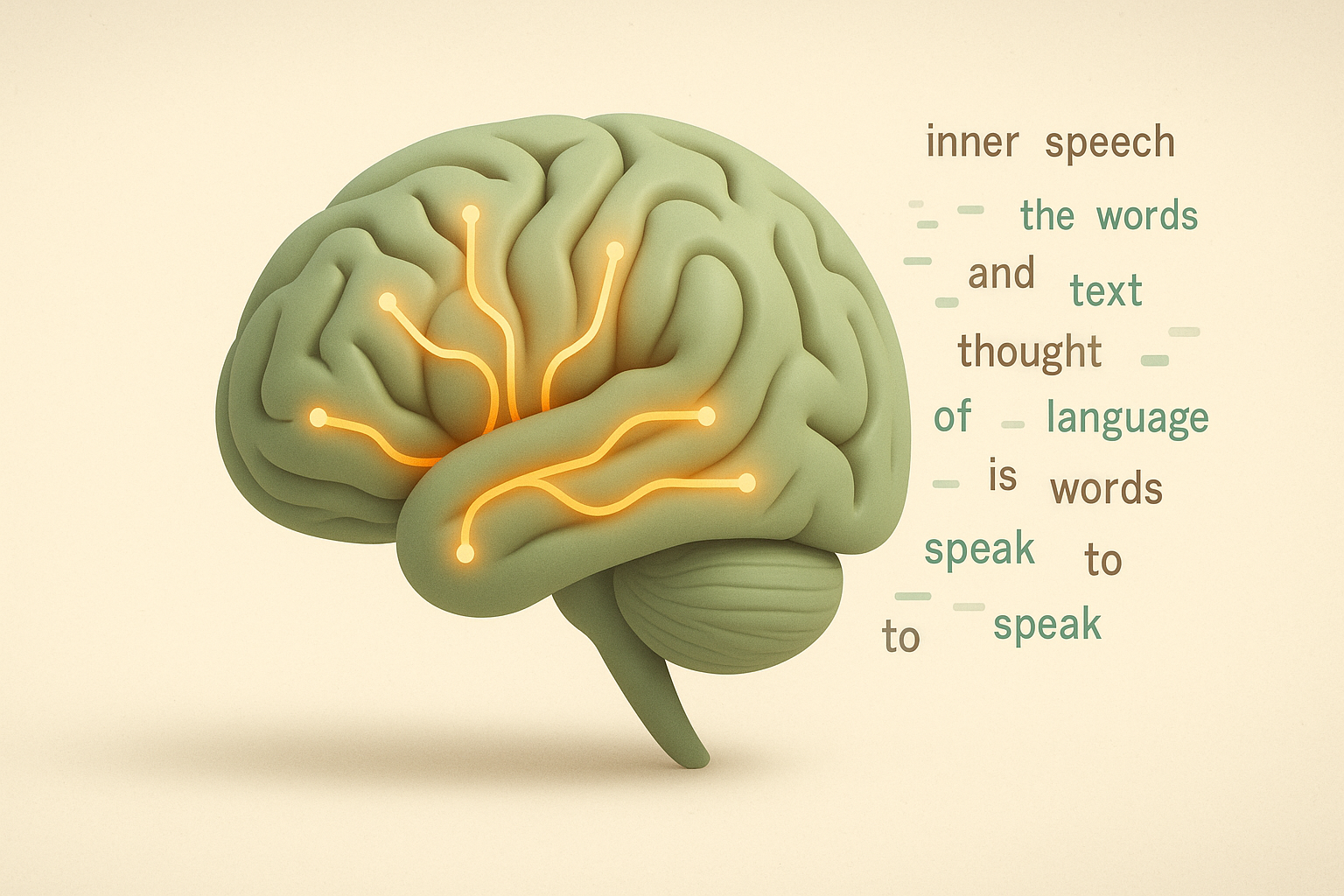
Stanford Breakthrough: AI Decodes “Inner Speech” Directly from Brain Signals
Category: Research and Innovation
Source: BBC Future
Researchers at Stanford University have achieved a major milestone in brain-computer interfaces: decoding a person’s internal monologue in real time without requiring them to attempt to speak. A 52-year-old woman paralyzed by a stroke 19 years earlier was able to generate text on a screen simply by imagining the words, with accuracy reaching up to 74% for prompted tasks.
The participant, identified as T16, had a tiny array of electrodes surgically inserted into her brain. A computer powered by AI decoded the signals produced by her neurons as she imagined saying words, translating them into real-time text. Previous methods required patients to attempt to say words—engaging the motor cortex—for decoding to work. Stanford’s team demonstrated that “inner speech” could also be captured, albeit with weaker signals.
The study, published in August 2025, builds on earlier work in speech decoding. A parallel effort at the University of California, Davis decoded not just words but intonation, pitch, speed, and rhythm—allowing patients to communicate expression and emphasis. Meanwhile, researchers in Japan unveiled a “mind captioning” technique that generates detailed descriptions of what a person is seeing or imagining, combining three AI tools with non-invasive brain scans.
These advances could help people who are unable to communicate, reconstruct hallucinations or dreams for psychiatric research, and eventually enable direct brain-to-brain communication—though ethical and human-rights implications remain to be fully explored.
NXP Releases Open-Source Linux Driver for Neutron Neural Processing Unit
Category: Infrastructure and Hardware
Source: Phoronix
NXP has released a new open-source Linux accelerator driver for its Neutron neural processing unit (NPU), designed for machine learning acceleration in edge AI applications. The Neutron NPU is found in select NXP SoCs, including the i.MX95, and consists of a RISC-V core running proprietary firmware, one or more Neutron cores, dedicated fast memory, and a DMA engine for data transfers.
The driver, now undergoing code review for possible inclusion in a future version of the Linux kernel, is accompanied by an open-source user-space library and a custom LiteRT (formerly TensorFlow Lite) delegate for running LiteRT workloads on the NPU. The move continues a broader trend of open-source kernel drivers emerging for AI accelerators and NPUs, making it easier for developers to integrate specialized hardware into edge devices.
The driver is part of NXP’s effort to support AI inference at the edge, where power efficiency and real-time performance are critical. Those interested can review the patch series on the Linux kernel mailing list.
OpenAI Fires Employee Over Prediction Market Insider Trading
Category: Ethics and Governance
Source: Wired
OpenAI has fired an employee following an investigation into their activity on prediction market platforms like Polymarket and Kalshi. The employee reportedly used confidential information to make trades, raising concerns about insider trading in digital prediction markets.
Prediction markets, which allow users to bet on the outcomes of real-world events, have grown into big business. The incident highlights a new frontier for insider-trading enforcement, as Big Tech employees with access to non-public information test boundaries by making trades based on insider knowledge. The case underscores the need for clearer policies and oversight as prediction markets become more mainstream and lucrative.
Anthropic’s Claude Hits #4 on US App Store Amid Surge in Adoption
Category: Enterprise and Adoption
Source: The Neuron Daily
Anthropic’s Claude app has reached #4 on the US App Store, an all-time high, with free users up more than 60% since January and daily signups tripling since November. The surge reflects growing mainstream adoption of AI assistants, particularly among users seeking alternatives to ChatGPT.
Claude’s rise comes as Anthropic continues to emphasize safety and transparency in its AI systems. The company recently rejected the Pentagon’s “final offer” on AI safeguards, with a Friday deadline looming, signaling its commitment to maintaining control over how its models are deployed in sensitive contexts.
The increase in adoption also reflects broader trends: users are becoming more comfortable with AI tools, and the market is expanding beyond early adopters to include a wider range of use cases, from content creation to enterprise workflows.
MIT Researchers Combine Generative AI with Physics to Create Functional 3D Models
Category: Research and Innovation
Source: MIT News
A new system from MIT called PhysiOpt bridges the gap between creative AI and practical manufacturing by combining generative AI with physics simulations. Users can describe an object using text or images, specify functional constraints like weight or material, and receive a 3D model that can be 3D-printed and actually work in the real world.
PhysiOpt uses a pre-trained shape-generation model and runs finite-element analysis to identify weak points in the design. It then refines the geometry to ensure the final print is structurally sound, all while preserving the appearance. The system can generate objects like keyholders, cups, and custom furniture in under a minute—nearly ten times faster per iteration than comparable frameworks like DiffIPC.
Researchers demonstrated the method by creating a flamingo-shaped glass, a steampunk keyholder, and a giraffe table. The approach opens a new frontier for rapid, reliable 3D design, making it easier for non-experts to create functional, manufacturable objects without needing deep engineering knowledge.
Quick Updates
-
Burger King Tests AI Headsets to Monitor Employee Courtesy: Burger King is testing OpenAI-powered headsets that track whether employees say “please” and “thank you” to customers. The system also recites recipes, alerts managers when inventories are low, and collects operational data. The company says it’s intended as a coaching tool, not a tracker of individual employees. Source: KTLA
-
Jack Dorsey’s Block Lays Off Half Its Workforce, Citing AI: Block, the payments company led by Jack Dorsey, has laid off half its workforce in an AI-framed restructuring. The stock rallied, but critics argue the move reflects a broader pattern of companies using AI as a justification for cuts without proven productivity gains. Source: Reddit – r/ArtificialInteligence
-
Washington State Hotline Serves AI Voice with Spanish Accent Instead of Spanish: Callers to Washington state’s Department of Licensing who pressed 2 for Spanish were greeted by an AI voice speaking English with a strong Spanish accent. The agency has apologized and says the glitch has been fixed. Source: AP News
-
Woolworths Reins in AI Assistant That Claimed to Be Human: Australian supermarket chain Woolworths has scaled back its AI assistant “Olive” after customers complained it was claiming to be human and sharing fake personal anecdotes, including memories of its mother. The company says the birthday responses were human-scripted but have been removed. Source: NBC News
-
Reddit Users Debate Claude Cowork’s Threat to SaaS: A popular Reddit post argues that Claude Cowork won’t kill SaaS because enterprises need “boring” AI that follows rigid specs 100% of the time, not “creative” AI that works 80% of the time. The author presents a 2x2 matrix mapping business tasks by cost of failure and governability needs. Source: Reddit – r/ArtificialInteligence
-
Developers Report AI Image Generation Still Feels Like “Opening Blind Boxes”: A Reddit user shared frustrations about the inconsistency of AI coding tools, comparing it to drawing a random card from a deck. They tested Atoms’ “race mode,” which spins up multiple parallel versions of a project and lets you pick the best one, but noted it significantly increases costs. Source: Reddit – r/ArtificialInteligence
-
LabOS AI-Powered Smart Goggles Guide Lab Work in Real Time: A new wearable AI system uses smart glasses to watch researchers’ hands during experiments, guiding them step-by-step and stopping mistakes before they happen. The system aims to reduce human error in scientific labs. Source: Scientific American
-
Browser Use Details How It Built Secure Agent Sandbox Infrastructure: Browser Use published a deep dive on how it moved from AWS Lambda to Unikraft micro-VMs with a control plane architecture, isolating agents in sandboxes with no secrets and scaling independently. The system supports millions of web agents. Source: Browser Use Blog
-
Geoffrey Huntley: Software Development Now Costs Less Than Minimum Wage: Developer Geoffrey Huntley argues that AI has commodified software development to the point where it costs $10.42 an hour—less than minimum wage. The article discusses implications for venture capital and the need for upskilling. Source: ghuntley.com
-
Dosidicus: Tamagotchi-Style Digital Pet with Neural Network Released: An open-source project called Dosidicus combines a Tamagotchi-style digital pet with a neural network featuring neurogenesis and Hebbian learning. The pet’s brain starts with 8 neurons and grows via learning. Source: GitHub – ViciousSquid/Dosidicus