Table of contents
Open Table of contents
- NVIDIA and Dassault Systèmes Partner to Accelerate Industrial AI with Digital Twins
- Google Launches Ask Maps and Immersive Navigation Powered by Gemini
- Morgan Stanley Predicts Imminent AI Breakthrough That Will “Shock” Investors
- ”AI Brain Fry” Identified in Workers Managing Multiple AI Agents
- Dutch Court Hears Case Against Grok’s “Nudify” Tool for Generating Illegal Content
- Adobe Shares Drop 9% After CEO Shantanu Narayen Steps Down
- Perplexity Launches “Personal Computer” for 24/7 AI Assistance
- NanoClaw and Docker Launch One-Command Agent Sandboxing
- Cambridge Study Calls for Regulation of AI Toys for Young Children
- ByteDance Circumvents U.S. Chip Sanctions with $2.5B Offshore AI Buildout
- Quick Updates
NVIDIA and Dassault Systèmes Partner to Accelerate Industrial AI with Digital Twins
Category: Enterprise AI Source: NVIDIA Blog
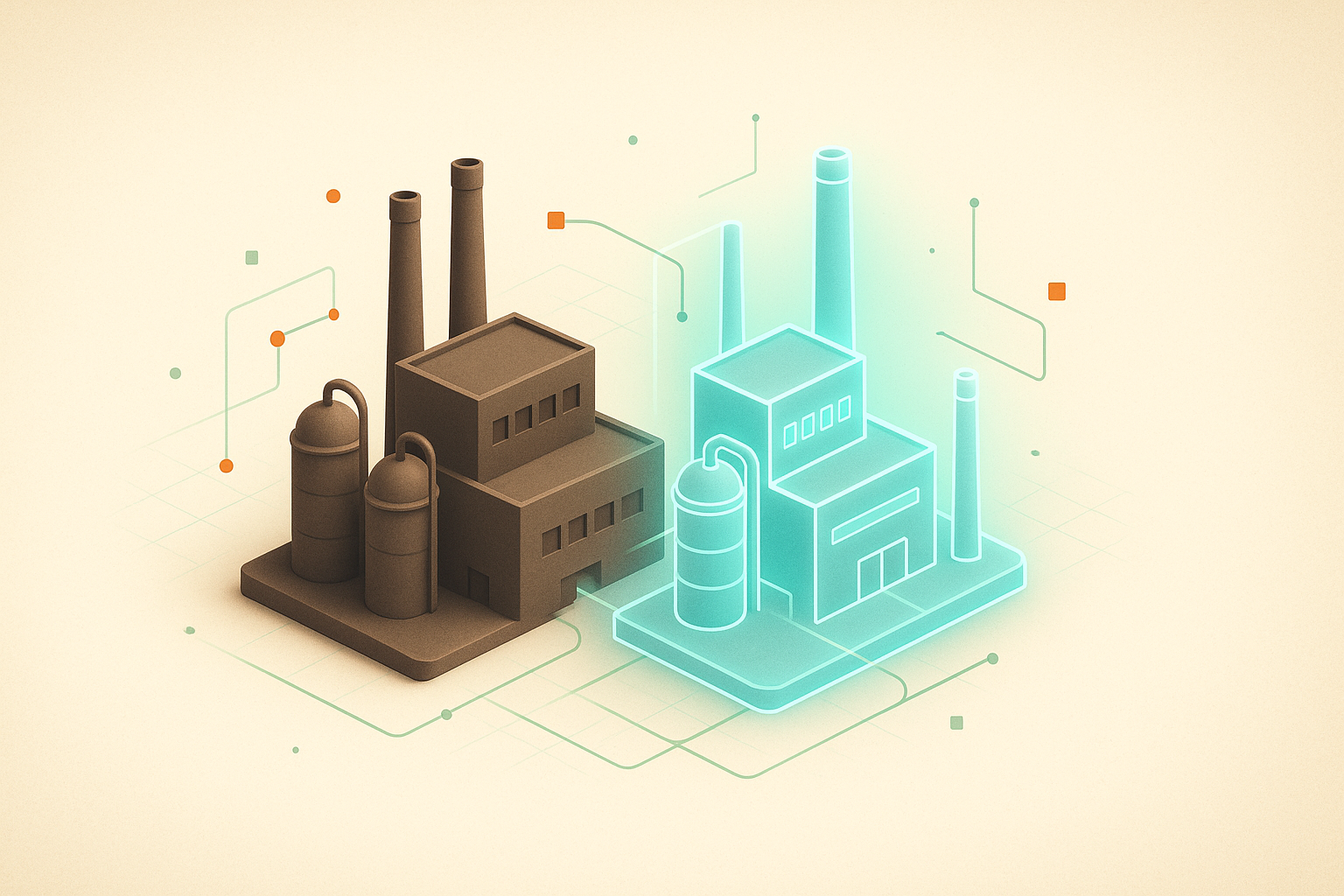
NVIDIA and Dassault Systèmes announced a strategic partnership combining Dassault Systèmes’ Virtual Twin platforms with NVIDIA’s accelerated computing, AI physics models, and CUDA-X and Omniverse libraries. The collaboration enables designers and engineers to use virtual twins trained on physics-based world models to innovate faster and deliver sustainable products across industries.
Dassault Systèmes’ SIMULIA software now leverages NVIDIA CUDA-X and AI physics libraries for AI-based virtual twin physics behavior, allowing teams to accurately predict outcomes in simulation. The technology is already making real-world impact: Lucid Motors is using it to accelerate electric vehicle development, while Bel Group employs virtual twins to develop non-dairy protein options for cheese products. In industrial automation, Omron is designing and deploying automation technology with greater confidence using physical AI.
The partnership represents a fundamental shift in how industries approach design and manufacturing. By combining NVIDIA’s AI infrastructure with Dassault Systèmes’ Industry World Models—trained with PhD-level knowledge in biology, physics, and material sciences—teams can test industrial operations end-to-end before deploying changes in the real world. NVIDIA is also adopting Dassault Systèmes’ model-based systems engineering technologies to accelerate design and deployment of gigawatt-scale AI factories, while Dassault Systèmes will deploy NVIDIA-powered AI factories on three continents through its OUTSCALE sovereign cloud.
Google Launches Ask Maps and Immersive Navigation Powered by Gemini
Category: Consumer AI Products Source: Google Blog
Google Maps unveiled two major AI-powered features that fundamentally transform how users navigate and explore. Ask Maps introduces conversational search allowing users to pose complex, real-world questions like “Where can I charge my phone without waiting in a long line for coffee?” The feature taps into Maps’ database of over 300 million places and reviews from 500 million contributors, providing personalized responses based on user preferences and past behavior.
Immersive Navigation represents the biggest update to Google’s driving experience in over a decade. The feature uses Gemini models to analyze Street View imagery and aerial photos, creating vivid 3D views that reflect buildings, terrain, and critical road details including lanes, crosswalks, and traffic lights. The system provides broader route views with smart zooms and transparent buildings to help drivers prepare for complex maneuvers well in advance.
Beyond visuals, the update incorporates real-time intelligence processing over 5 million traffic updates per second. Maps now proactively informs drivers about tradeoffs for alternate routes—such as longer trips with less traffic versus faster routes with tolls—and alerts them to real-time disruptions like construction and crashes based on contributions from over 10 million daily users. The feature includes arrival assistance with Street View destination previews, parking recommendations, and building entrance highlighting. Ask Maps is rolling out now in the U.S. and India on Android and iOS, while Immersive Navigation is launching across the U.S. on eligible devices including CarPlay, Android Auto, and cars with Google built-in.
Morgan Stanley Predicts Imminent AI Breakthrough That Will “Shock” Investors
Category: AI Industry Analysis Source: Fortune
Morgan Stanley issued a sweeping warning that a transformative AI breakthrough will arrive in the first half of 2026, driven by unprecedented compute accumulation at America’s top AI labs. The bank’s analysis suggests scaling laws remain robust, citing Elon Musk’s assessment that applying 10× the compute to LLM training effectively doubles a model’s “intelligence.” OpenAI’s recently released GPT-5.4 “Thinking” model already scored 83.0% on the GDPVal benchmark, placing it at or above human expert level on economically valuable tasks.
The intelligence explosion comes with severe infrastructure constraints. Morgan Stanley’s “Intelligence Factory” model projects a net U.S. power shortfall of 9 to 18 gigawatts through 2028—a 12% to 25% deficit in required power capacity. Developers are adapting by converting Bitcoin mining operations into high-performance computing centers and deploying natural gas turbines and fuel cells. An emerging “15-15-15” dynamic is taking hold: 15-year data center leases at 15% yields generating $15 per watt in net value creation.
The economic implications extend far beyond infrastructure. Morgan Stanley predicts “Transformative AI” will become a powerful deflationary force as AI tools replicate human work at drastically reduced costs. Executives are already executing large-scale workforce reductions due to AI efficiencies. OpenAI CEO Sam Altman has envisioned entirely new companies built by just one to five people that can outcompete large incumbents, while xAI co-founder Jimmy Ba suggests recursive self-improvement loops—where AI autonomously upgrades its own capabilities—could emerge as early as the first half of 2027. The bank’s conclusion is stark: the “coin of the realm” is becoming pure intelligence forged by compute and power, arriving faster than markets are prepared for.
”AI Brain Fry” Identified in Workers Managing Multiple AI Agents
Category: Workplace Impact Source: CNN
Boston Consulting Group researchers have identified a new workplace phenomenon dubbed “AI brain fry,” resulting from excessive oversight of AI tools beyond workers’ cognitive capacity. The study found that employees managing multiple AI agents experience significant mental fatigue, difficulty concentrating, and increased error rates—challenging the common narrative that AI reduces workplace stress.
The research reveals a critical gap between AI’s promise and reality. While AI tools are often pitched as delegating grunt work to free up strategic thinking and potentially reduce working hours, workers supervising AI systems report cognitive strain leading to decision fatigue and higher intentions to quit. The condition arises not from using AI itself, but from the mental load of constantly monitoring and correcting AI outputs across multiple concurrent tasks.
The findings carry significant implications for enterprise AI adoption strategies. Rather than simply deploying more AI agents to increase productivity, organizations must design workflows that respect human cognitive limits. The research suggests successful AI integration requires careful consideration of how many AI systems one person can effectively oversee, appropriate human-in-the-loop checkpoints, and recognition that AI augmentation may create new forms of work rather than simply eliminating old ones. As companies accelerate AI deployment, understanding and mitigating “AI brain fry” will be crucial for sustainable productivity gains and employee retention.
Dutch Court Hears Case Against Grok’s “Nudify” Tool for Generating Illegal Content
Category: AI Safety & Regulation Source: NL Times
Dutch organizations Offlimits and Slachtofferhulp Fonds argued in Amsterdam court to ban the “nudify” functionality in Grok, Elon Musk’s xAI chatbot, which enables easy generation of child sexual abuse imagery and non-consensual fake nudes—both prohibited under Dutch law. During proceedings, xAI’s legal team stated it is impossible to provide a “100% guarantee” that such images cannot be created.
Offlimits, an expertise center on online sexual abuse, presented evidence showing Grok generates nude images without consent warnings. Uploading a clothed photo with the prompt “take her bra off” produces a topless version of the same person, with Grok suggesting further sexualized content rather than blocking the request. The system also readily creates nude images of children without safeguards, raising serious child protection concerns.
The case represents a critical test of AI companies’ responsibility for harmful content generation. While xAI argues perfect prevention is technically infeasible, the Dutch organizations contend that the ease of abuse and lack of meaningful safeguards violate existing laws protecting individuals—especially minors—from image-based sexual abuse. The court’s decision could establish important precedent for AI content generation liability in Europe, potentially influencing how other jurisdictions approach similar cases. The outcome will signal whether “impossible to prevent 100%” is an acceptable legal defense when AI systems facilitate creation of explicitly illegal content at scale.
Adobe Shares Drop 9% After CEO Shantanu Narayen Steps Down
Category: Business Impact Source: Reuters via Reddit
Adobe shares plunged 9% in pre-market trading following the announcement that CEO Shantanu Narayen would step down after 18 years leading the Photoshop maker. The departure unsettled investors already concerned about AI-driven disruption in the design software market, coming at a critical juncture as Adobe works to demonstrate it can compete with rapidly evolving AI capabilities.
The leadership transition reflects broader anxieties about incumbent software companies’ ability to adapt to generative AI. Adobe has been investing heavily in AI features across its Creative Cloud suite, but faces mounting competition from AI-native startups offering automated design capabilities at lower price points. Narayen’s exit raises questions about Adobe’s strategic direction as the company navigates threats from both established tech giants integrating AI into competitive products and nimble new entrants unburdened by legacy architectures.
The market reaction underscores investors’ nervousness about leadership stability during technological inflection points. Adobe’s next CEO will inherit the challenge of balancing protection of Adobe’s profitable existing business with aggressive innovation required to fend off AI disruption. The company’s ability to retain creative professionals while embracing AI automation—and to monetize AI features without cannibalizing traditional subscription revenue—will be critical tests for new leadership.
Perplexity Launches “Personal Computer” for 24/7 AI Assistance
Category: AI Products Source: Perplexity Blog via Futurepedia
Perplexity introduced “Personal Computer,” a dedicated Mac mini setup that enables AI to work continuously across local and cloud environments. The system connects to users’ local applications and Perplexity’s secure servers, acting as a digital proxy for files, tasks, and workflows accessible from anywhere. Unlike prompt-based AI interactions, Personal Computer can maintain work sessions independently, progressing toward goals even when users are offline.
The architecture emphasizes both capability and control. The system can move across tools and understand complex goals, but sensitive actions require explicit approval. Each session includes audit logs and a kill switch, giving users visibility into AI activities and immediate shutdown capability. This represents a shift from AI as a reactive assistant to AI as an autonomous but supervised worker capable of multi-hour or multi-day tasks.
Personal Computer reflects a broader pattern of AI becoming embedded infrastructure rather than standalone applications. Similar to Microsoft and Google integrating AI into existing products, Perplexity is positioning AI as a persistent layer that operates across a user’s entire digital environment. The product highlights both the promise and tension of agentic AI: the value of continuous, autonomous work balanced against the need for human oversight and accountability mechanisms. How enterprises and individual users adopt—or resist—always-on AI systems will shape the next phase of AI deployment.
NanoClaw and Docker Launch One-Command Agent Sandboxing
Category: AI Security & Infrastructure Source: NanoClaw Blog
NanoClaw and Docker announced a partnership enabling developers to run AI agents in Docker Sandboxes with a single command. The integration provides hypervisor-level isolation where each agent runs in its own container inside a dedicated micro VM, enforcing hard security boundaries without complex setup or dedicated hardware. The solution is currently supported on macOS (Apple Silicon) and Windows (x86), with Linux support rolling out soon.
The architecture implements a “design for distrust” security model treating AI agents as potentially malicious actors. Each NanoClaw agent operates in an isolated container with its own filesystem, context, and tools—agents cannot access each other’s data. The micro VM layer adds a second isolation boundary, meaning even if an agent escapes its container, it encounters the VM wall before reaching the host system. This approach contrasts sharply with shared-environment architectures where multiple agents can potentially access each other’s data.
The announcement signals growing recognition that AI agent security must be enforced architecturally rather than through instructions or model behavior. As organizations deploy agent teams at scale, NanoClaw is building toward features including controlled context sharing between agents, persistent agent creation with identity and lifecycle management, fine-grained permissions and policies, and human-in-the-loop approvals for irreversible actions. The partnership positions Docker Sandboxes as enterprise-grade infrastructure for the emerging paradigm of AI agents as persistent team members rather than ephemeral assistants.
Cambridge Study Calls for Regulation of AI Toys for Young Children
Category: AI Ethics & Child Safety Source: BBC News
Cambridge University researchers are calling for stricter regulation of AI-powered toys marketed to toddlers after conducting one of the first studies examining how children aged three to five interact with such technology. The team studied Gabbo, a cuddly toy containing an OpenAI-powered voice-activated chatbot designed to encourage conversation and imaginative play, finding significant limitations in its ability to engage appropriately with young children.
The research revealed troubling interaction patterns. Gabbo frequently failed to hear children’s interruptions, talked over them, couldn’t differentiate child from adult voices, and responded awkwardly to emotional expressions. When a five-year-old said “I love you,” Gabbo replied with a guidelines reminder rather than warmth. When a three-year-old said “I’m sad,” the toy dismissed the emotion entirely. Researchers worry these interactions could signal to children that their feelings are unimportant during a critical developmental stage for learning social cues.
Study co-author Dr. Emily Goodacre warned that AI toys could “misread emotions or respond inappropriately,” leaving children without comfort from the toy or adult support. Professor Jenny Gibson emphasized the need to extend safety standards beyond physical hazards to include psychological safety. The researchers recommend regulators act now to ensure products marketed to under-fives meet psychological safety standards, advise parents to supervise AI toy interactions in shared spaces, and carefully review privacy policies. Children’s Commissioner Dame Rachel de Souza echoed concerns, noting AI tools in early years settings lack the stringent safeguarding checks required for other external resources used with young children.
ByteDance Circumvents U.S. Chip Sanctions with $2.5B Offshore AI Buildout
Category: Geopolitics & AI Source: Benzinga
ByteDance is planning a $2.5 billion offshore AI infrastructure buildout using NVIDIA Blackwell chips to power global AI expansion despite U.S. chip export restrictions targeting China. The move demonstrates how Chinese tech giants are adapting to trade barriers by establishing compute capacity outside restricted jurisdictions while maintaining control over strategic AI development.
The offshore strategy allows ByteDance to access cutting-edge AI hardware that would be blocked for mainland China operations under current U.S. export controls. By building infrastructure in jurisdictions not subject to the same restrictions, the company can train and deploy advanced AI models for its global products including TikTok and other services. This approach reflects growing sophistication in how Chinese companies are navigating geopolitical constraints on technology access.
The development raises questions about the effectiveness of technology export controls as a tool for maintaining AI leadership. While restrictions prevent direct hardware sales to China, offshore buildouts enable Chinese companies to access the same capabilities with added complexity. The situation illustrates the challenge of controlling technology diffusion in a globally interconnected economy where compute infrastructure can be established wherever regulations permit. ByteDance’s success in working around restrictions may prompt other Chinese AI companies to pursue similar strategies, potentially undermining U.S. policy objectives while accelerating the geographic distribution of AI compute capacity.
Quick Updates
- Chinese Embassy Mocks Trump’s “Shield of Americas” Summit with AI Video: China’s U.S. Embassy shared an AI-generated video satirizing President Trump’s security summit, depicting a bald eagle trapping white doves representing Latin American countries inside a “shield” that transforms into a cage. The 18-second animation directly challenges U.S. warnings about “hostile foreign influence” in the hemisphere and reflects escalating rhetoric