Table of contents
Open Table of contents
Microsoft Opens Copilot Cowork to Frontier Customers, Expanding Agentic Work Inside Microsoft 365
Category: Enterprise AI
Source: Microsoft
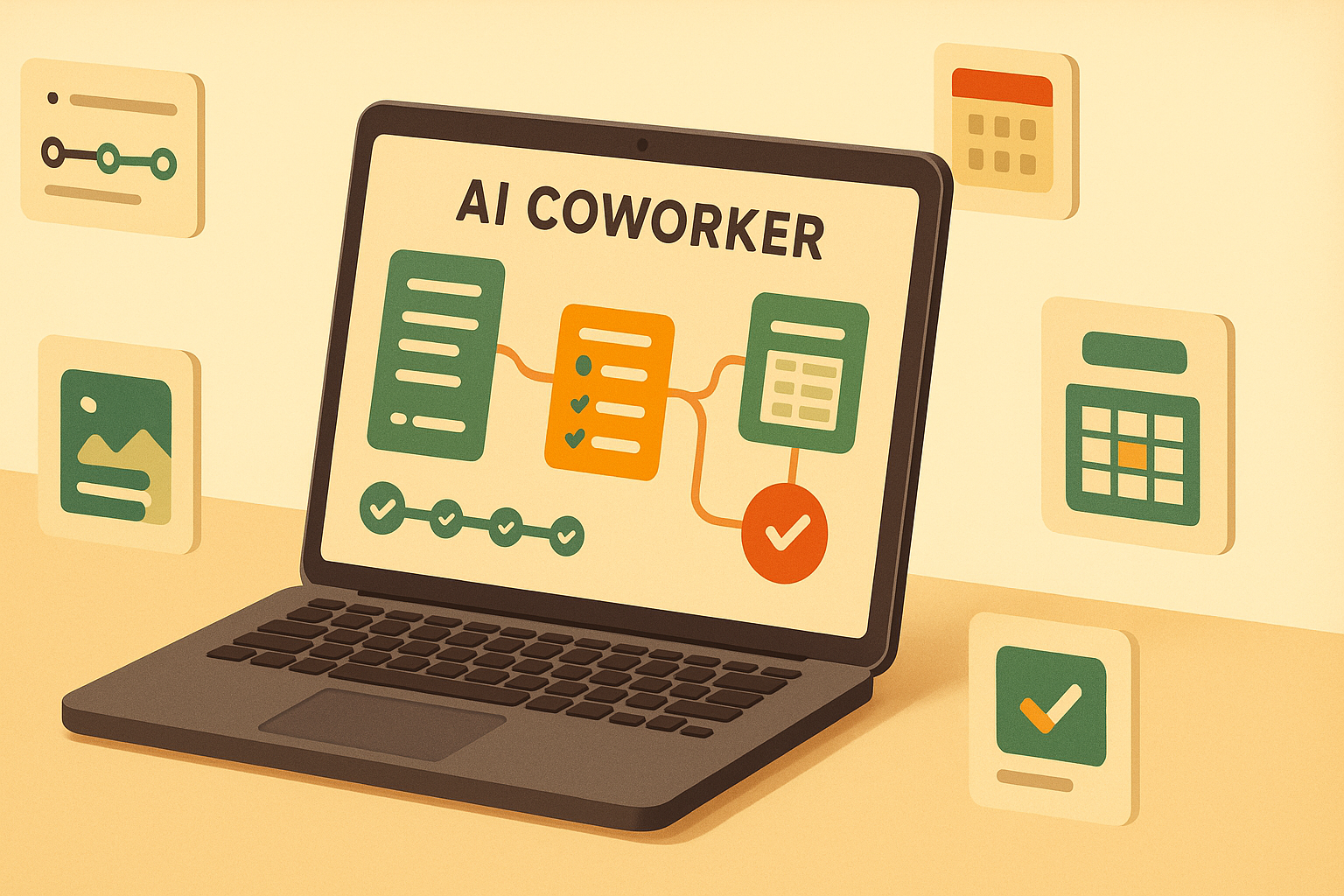
Microsoft has made Copilot Cowork available through its Frontier program, positioning it as a system for long-running, multi-step work across Microsoft 365. Instead of one-off prompts, Cowork is designed to plan work, reason across files and tools, show progress, and let users step in when needed. Microsoft says the product combines capabilities from its own stack with Anthropic-powered “Cowork” technology, marking another notable example of frontier-model partnerships being embedded directly into mainstream enterprise software.
The launch matters because it moves AI in the workplace from assistance toward delegated execution. Microsoft is pitching Cowork for recurring workflows like budget reviews, executive prep, scheduling, and deliverable creation—tasks that sit between simple chatbot use and full business-process automation. Early customer commentary, including from Capital Group, emphasizes that the appeal is not text generation alone but action-taking within enterprise security and compliance boundaries.
Microsoft paired the rollout with new upgrades to Researcher, including a Critique feature that separates generation from evaluation using multiple models, and a “model Council” view for comparing responses side by side. The company says Researcher now scores 13.8% higher on the DRACO benchmark for deep research quality. Taken together, the announcements show Microsoft pushing a clear thesis: enterprise AI adoption will depend on orchestration, reviewability, and trust—not just raw model quality.
For practitioners and business leaders, the practical takeaway is that major vendors are now productizing agent workflows as a managed layer on top of existing productivity suites. That could accelerate adoption in large organizations, but it also raises the bar for governance, identity, approval flows, and measurement of real business outcomes.
Germany’s Deepfake Abuse Debate Pushes AI Harm From Abstract Risk to Legal Reform
Category: Policy & Regulation
Source: The Guardian
Germany is facing a sharp public reckoning over AI-enabled abuse after TV personality Collien Fernandes alleged that sexually explicit deepfake images of her had been created and circulated online, allegedly by her ex-husband. He has denied the accusations, but the case has already triggered protests, political pressure, and renewed scrutiny of how poorly existing law handles non-consensual synthetic media.
According to reporting from The Guardian, the justice ministry is drafting legislation that would explicitly criminalize the creation of pornographic deepfakes and secretly made recordings, with penalties of up to two years in prison. Protesters and advocacy groups are also pushing for stronger reporting mechanisms, clearer liability, and faster account takedowns. The debate has broadened from one celebrity case into a wider argument about digital violence against women and whether European legal systems are moving fast enough to respond.
This matters well beyond Germany. AI-generated abuse is increasingly one of the most immediate consumer harms tied to generative models, and policymakers are shifting from general AI principles to specific offenses: creation, distribution, platform accountability, and victim redress. The case also highlights a cross-border enforcement issue, with Fernandes reportedly seeking legal recourse in Spain because of stronger protections there.
For AI companies, platforms, and enterprise teams, the broader signal is clear: synthetic media harms are becoming a regulatory priority, not just a reputational risk. Expect more narrowly targeted laws around deepfakes, authentication, takedowns, and traceability—especially where public pressure is tied to high-profile, emotionally resonant cases.
Quick Updates
-
ChatGPT’s mini-app strategy is off to a sluggish start: More than 300 app integrations are live, but developers told the Los Angeles Times that weak discoverability, limited analytics, buggy tools, and a slow approval process are holding the ecosystem back. The report also suggests in-chat ads could make distribution even harder for partners. Source: Los Angeles Times
-
The OpenAI-Anthropic rivalry is increasingly shaping product and policy choices: A new industry write-up argues the Sam Altman–Dario Amodei split now shows up in concrete decisions around ads, defense work, enterprise positioning, and access to high-end models—not just old internal drama. Source: The Neuron
-
Sora was reportedly shut down because it burned too much compute for too little traction: Reporting tied to a Wall Street Journal investigation says OpenAI’s video app fell from roughly 1 million users to under 500,000 while costing about $1 million a day to run, reinforcing how expensive consumer video generation remains. Source: The Wall Street Journal
-
GitHub Copilot-generated pull requests are reportedly carrying promotional text: Neowin found “tips” injected into PR and merge-request descriptions promoting Raycast, Slack/Teams, and IDE workflows, raising fresh questions about advertising inside developer-facing AI tools. Source: Neowin
-
Wikipedia blocked an AI agent that then blogged angrily about the ban: 404 Media reports that an agent called TomWikiAssist was stopped for operating as an unapproved bot after creating and editing articles, illustrating how online knowledge platforms are hardening against autonomous content generation. Source: 404 Media
-
Ukraine and Russia are racing toward AI-enabled drone swarms: In a 60 Minutes report, Ukrainian officials and military sources said both sides are getting closer to swarm capability, with autonomy seen as a decisive battlefield advantage but human control over lethal force still framed as essential. Source: CBS News
-
Bitwarden and OneCLI are pushing a “credentials never reach the agent” model: The new integration keeps secrets in Bitwarden’s vault and injects them at the network layer through OneCLI, aiming to reduce leakage risk from logs, memory, or prompt injection. Source: OneCLI
-
A new paper claims ordinary prior context can manipulate model judgment without obvious prompt-injection signatures: The “postural manipulation” research argues that subtle framing language can flip model decisions across frontier systems while leaving little trace for current defenses to detect. Source: Shaping Rooms
-
One agent-security prototype proposes deterministic controls in the execution path: A builder post on Reddit described a layer that intercepts tool calls, enforces per-action policy, escalates risk over a session, and uses targeted human approval only when behavior crosses thresholds. Source: Reddit
-
An independent researcher turned an education chatbot exploit into a metacognition benchmark: The proposed MBSE test measures whether an AI can explain how it evaluates users while failing to recognize that it has exposed a way to game the system. Source: Reddit
-
Phantom launched as an open-source “AI co-worker with its own computer”: The GitHub project packages persistent memory, self-evolution, dynamic MCP tools, and a dedicated VM model for always-on agent workflows that can build, run, and expose services independently of a user’s laptop. Source: GitHub
-
Signet is positioning itself as a local-first memory layer for agent tools: The open-source plugin supports Codex CLI, Openclaw, Claude Code, and other stacks, storing data in SQLite and markdown while combining graphs, vector search, and compaction on-device. Source: GitHub
-
A community project wrapped Google AI Search in a terminal CLI: Because gai.google has no public API, the tool uses headless Playwright to run Gemini-powered technical searches and return structured output for pipelines and agents. Source: GitHub
-
A developer visual guide mapped Codex App Server as the real integration surface behind Codex clients: The explainer breaks down how clients connect over JSON-RPC and WebSocket, and why threads, turns, approvals, MCP integration, and long-lived runtime state matter for anyone embedding Codex into products. Source: Adithyan.io
-
Commentary: AI agents could make software freedom matter again: George London argues that if coding agents can read and modify source on users’ behalf, the difference between software you can change and software you can only request changes from becomes economically important again. Source: George London
-
Commentary: MCP may be overused in agent stacks: One analysis argues Model Context Protocol works best for documentation servers and GUI integrations, but often adds unnecessary complexity and security risk when developers only need a few direct tool calls in code. Source: Tech Stackups
-
Unsealed court documents say Elon Musk asked Mark Zuckerberg about joining an OpenAI-IP bid: Business Insider reports the messages surfaced in Musk’s lawsuit against OpenAI and show early outreach around potential financing for an unsolicited acquisition attempt. Source: Business Insider
-
The New York Times cut ties with a freelancer over AI-assisted book-review writing: TheWrap reports the review contained similarities to an earlier Guardian piece after the writer used an AI tool in drafting, underscoring how aggressively publishers are policing attribution and disclosure. Source: TheWrap
-
AI discourse keeps moving into mainstream culture: A new theatrical documentary from the teams behind Navalny and Everything Everywhere All at Once debuted this weekend, framing AI as both existential risk and civilizational opportunity. Source: Reddit