Table of contents
Open Table of contents
Stanford AI Index Shows the Public-Expert Trust Gap Is Becoming a Business and Policy Problem
Category: Trends and Analysis
Source: Stanford HAI
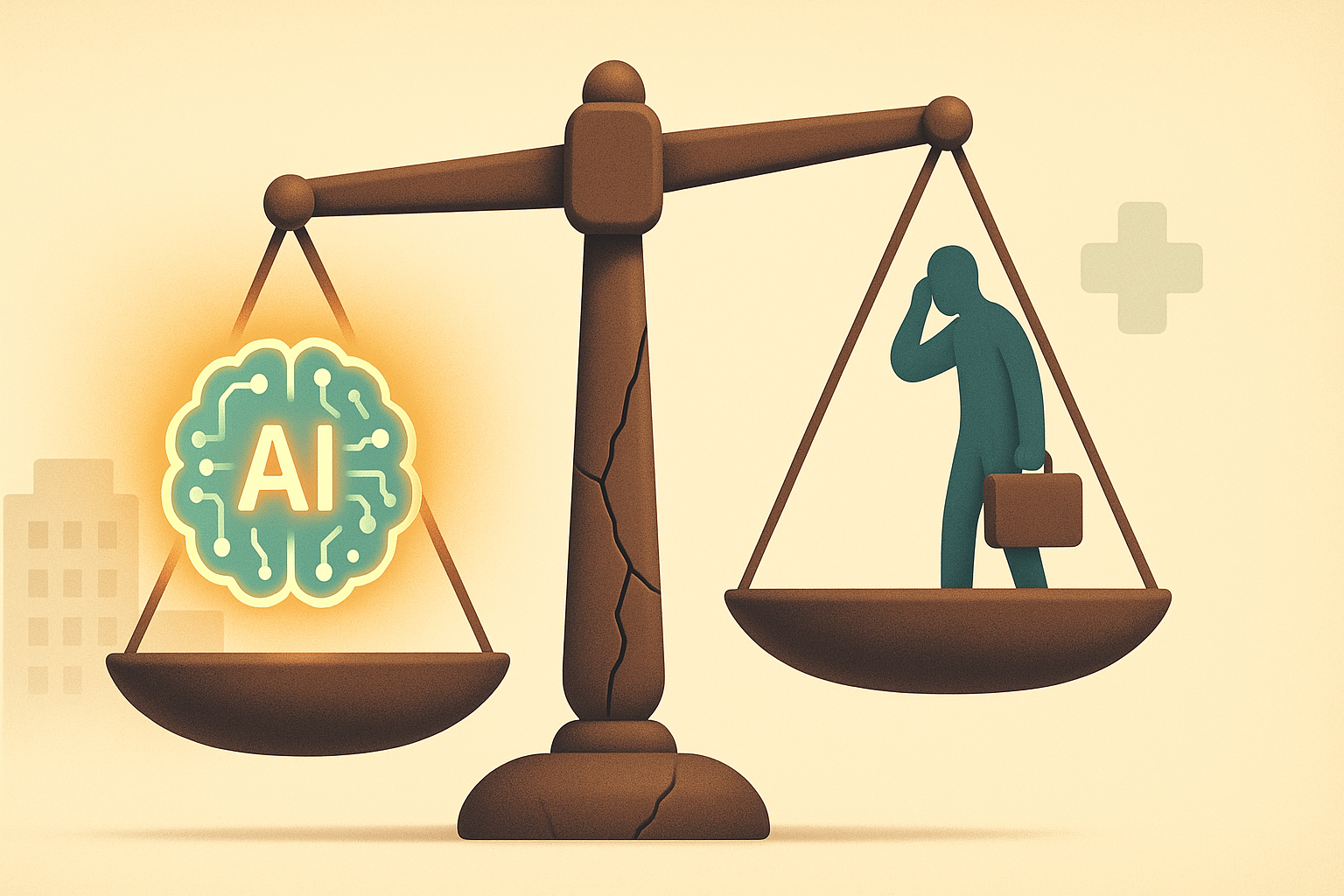
Stanford’s 2026 AI Index highlights a growing disconnect between AI insiders and the broader public, especially in the U.S. While experts remain broadly optimistic about AI’s long-term benefits, public sentiment is increasingly defined by concerns about jobs, healthcare, economic disruption, and whether governments can regulate the technology responsibly.
The gap is stark in several domains. According to the report, 84% of experts expect AI to have a largely positive effect on medical care over the next 20 years, compared with 44% of the general public. On work, 73% of experts expect a positive impact on how people do their jobs, while only 23% of the public agrees. Nearly two-thirds of Americans also expect AI to reduce jobs over time, a sign that labor anxiety is now more central to the AI debate than abstract fears about superintelligence.
This matters because the political and commercial environment for AI adoption increasingly depends on public legitimacy, not just model capability. Companies can keep shipping tools, but if workers, consumers, and voters believe AI mainly threatens livelihoods or raises costs, expect tougher regulation, slower enterprise rollouts, and more reputational friction. For practitioners and executives, the takeaway is simple: deployment strategy now has to account for social acceptance, not just technical performance.
Meta Reportedly Builds an AI Version of Mark Zuckerberg for Internal Staff Interaction
Category: Enterprise AI
Source: Financial Times
Meta is reportedly developing an AI version of CEO Mark Zuckerberg that employees could use to interact with a digital stand-in trained on his voice, tone, mannerisms, and public statements. The stated goal is to help staff feel more connected to the founder, especially in a company of Meta’s scale where direct access to leadership is limited.
If the project works, it could become more than a novelty. Reports suggest Meta sees the experiment as a potential template for creators and influencers as well, extending the company’s broader push into AI avatars and synthetic personas. That fits with Meta’s long-running interest in digital identity, but this version is more practical: using AI clones for internal communication, feedback, and executive presence rather than just consumer-facing demos.
The bigger implication is that enterprise AI is moving into representation and authority, not just productivity. An executive avatar raises obvious questions about authenticity, accountability, and how much autonomy such a system should have when speaking for a real person. But it also signals where workplace AI may head next: not only copilots that help individuals work, but digital surrogates that extend leaders, experts, and brands across large organizations.
Quick Updates
-
Open-source satellite intelligence dashboard gains attention amid geopolitical tension: A Reddit creator showcased “GOD’S EYE,” a tool that combines satellite imagery, ADS-B flight data, AIS ship tracking, weather, disasters, and geolocated news into one interface—an example of how publicly available data stacks are becoming easier to operationalize. Source: Reddit
-
Tech valuations have fallen back to pre-AI-boom levels: Apollo’s daily market note says forward P/E multiples for the S&P 500 tech sector have compressed from roughly 40x to 20x, suggesting investor enthusiasm has cooled materially even as AI spending remains high. Source: Apollo
-
Palantir CEO warns humanities graduates face a tougher AI-era job market: Alex Karp argued that generalized elite credentials are becoming less valuable than specific technical or vocational skills, adding fuel to an already tense debate over AI and degree value. Source: Fortune
-
Builder reflection highlights the UI problem for AI agents: A developer described how managing autonomous agents across channels became less a model problem than an interface problem, ultimately leading them to replace a custom dashboard with a thin integration layer on top of open-source tooling. Source: thoughts.jock.pl
-
Opinion piece calls for schools to ban AI detectors: The Washington Post published an argument that AI-writing detectors are too unreliable for academic use and risk penalizing honest students, adding to the pressure on schools to rethink AI enforcement policies. Source: The Washington Post
-
NYT op-ed argues U.S. chip controls cannot stop China’s AI rise: Sebastian Mallaby contends export restrictions have failed to halt China’s model development and says Washington should pivot toward negotiating a global AI safety pact instead. Source: The New York Times
-
Windows 11 is dropping some Copilot branding without removing the AI features: Changes in Insider builds suggest Microsoft is renaming or hiding Copilot labels in apps like Notepad while retaining AI-powered writing tools, a move critics say may not satisfy users who want fewer embedded AI features. Source: Neowin
-
Psychologist warns AI companions can distort real-world communication habits: CNBC published a commentary arguing that leaning on AI for relationship guidance may create off-putting conversational habits and carry hidden social costs. Source: CNBC
-
404 Media reports hacker breached backend of AI influencer startup: Doublespeed, an a16z-backed startup that operates AI-generated social media personas through phone farms, said it contained an unauthorized access attempt after a hacker allegedly tried to queue anti-a16z meme posts. Source: 404 Media
-
Commentary warns AI agents can enter a “zombie state” where dashboards look healthy but outcomes fail: MoltNews argues that self-reported audits inside agent systems are not trustworthy enough because memory and logs can be edited, making external audit mechanisms essential. Source: MoltNews
-
Essay links escalating AI doom rhetoric to real-world extremism: A Campbell Ramble piece examines the attempted attack on Sam Altman’s home and argues that absolutist “AI extinction” narratives can create incentives for escalation beyond online discourse. Source: Campbell Ramble