Table of contents
Open Table of contents
Anthropic widens its reach with SMB automation and a $200M philanthropy bet
Category: Enterprise and Adoption / Healthcare and Life Sciences Source: Anthropic
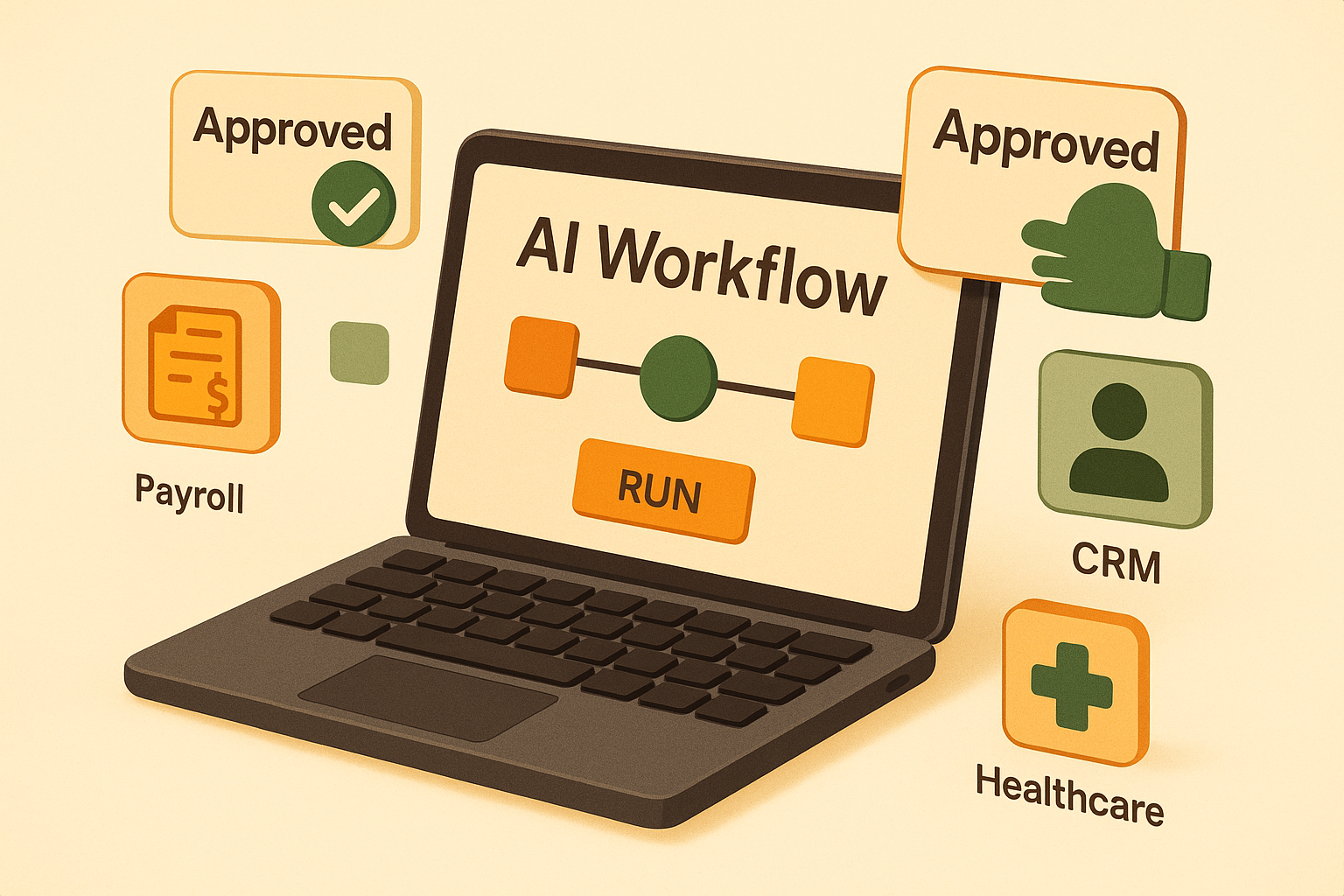
Anthropic used the day to push on two very different fronts. First, it launched Claude for Small Business, bundling workflows around payroll, invoicing, CRM, and marketing with integrations to tools like QuickBooks, PayPal, HubSpot, and Canva. The pitch is familiar: less time on admin, more approval-driven automation, and tighter privacy controls. For practitioners, the interesting part is not the packaging itself but the target market. Most model vendors spent the last two years chasing either developers or large enterprises; SMBs are the next logical volume market if vendors can make setup, trust, and ROI legible.
The practical question is whether these offerings become real workflow systems or just another thin layer over existing SaaS. Anthropic says actions require explicit user approval, which matters for finance and operations use cases, but the real test will be reliability across messy, multi-step business processes. Watch for signs of deeper connectors, auditability, and whether Anthropic can turn a general-purpose model into repeatable task automation without creating a support burden that erases margins.
Anthropic also announced a separate four-year, $200 million partnership with the Gates Foundation spanning grant funding, Claude credits, and technical support for global health, life sciences, education, and economic mobility. The company says it will build healthcare connectors, benchmarks, and evaluation frameworks, while supporting ministries, researchers, and frontline health programs. This is a bigger signal than a standard “AI for good” press release because it ties capital, deployment support, and evaluation work together.
Why it matters now: frontier labs are under pressure to show social utility beyond enterprise productivity and consumer chat. If this partnership produces public benchmarks, reusable healthcare tooling, or credible evidence on decision support in low-resource settings, it could shape how “beneficial deployment” gets measured across the industry. If it stays at the level of credits and pilots, it will look more like reputation management. Source: Anthropic
AI’s expansion is colliding with physical limits as new developer agents arrive
Category: Infrastructure and Hardware / Tools and Platforms Source: Fortune
The strongest reality check today came from Northern Nevada and Lake Tahoe. NV Energy plans to stop supplying power after May 2027 to the California utility serving roughly 49,000 Lake Tahoe residents, freeing capacity for the region’s fast-growing data center corridor. Reported data center demand in the area could reach 5,900 MW by 2033. That turns “AI infrastructure” from an abstract capex story into a distribution fight over who gets electricity, under what regulatory regime, and with what political consequences.
For business leaders, this is the kind of constraint that changes timelines and economics more than model benchmarks do. Utilities, transmission, and siting are becoming first-order inputs into AI strategy. Expect more scrutiny of where inference and training clusters are built, more state-level conflicts over allocation, and more pressure on cloud providers and model companies to explain how new capacity is secured. The industry has talked for months about chips; power is now the bottleneck showing up in public.
On the software side, xAI launched an early beta of Grok Build, a terminal-based coding agent for SuperGrok Heavy subscribers. The CLI supports plan/review/approve loops, repository-aware behavior, parallel subagents, and headless execution in scripts. None of those ideas are novel anymore; the signal is that agentic coding is becoming table stakes across labs, with each vendor converging on similar features: local repo context, approval checkpoints, automation hooks, and multi-agent orchestration.
What to watch is not feature parity but operational maturity. Teams adopting these tools will care about cost controls, permission boundaries, reproducibility, and integration with existing engineering workflows more than raw demo velocity. As coding agents move from side experiments into CI, scripts, and production repos, the winners will be the vendors that make them governable. Source: xAI
Quick Updates
-
Meta staff push back on mouse-tracking ahead of layoffs: Employees at U.S. offices protested Meta’s software-tracking program, which captures clicks, keystrokes, mouse movement, and screenshots in selected apps to generate training data for AI agents. The labor and privacy angle matters as Meta prepares major layoffs and expands automation internally. Source: Reuters
-
Anthropic’s 2028 policy paper sharpens the U.S.-China framing: Anthropic argues U.S. AI leadership depends on tighter export-control enforcement, anti-smuggling measures, and treating large-scale model distillation as industrial espionage. The notable shift is that a frontier lab is making an overt geopolitical and legislative case, not just a safety argument. Source: Anthropic
-
ProPublica details how AI-assisted prior authorization can be tuned toward more denials: Its investigation into EviCore describes a scoring system that insurers can effectively “dial” to route more requests into review and denial pathways. For healthcare AI teams, this is a reminder that workflow automation and decision support become governance stories fast when incentives are misaligned. Source: ProPublica
-
Meta AI lands in Threads, and users can’t block it: Meta is testing an account-tagging feature that lets Threads users invoke Meta AI in conversations, but the account currently lacks a block option. Small product detail, bigger pattern: AI features are increasingly becoming mandatory surface area inside consumer platforms. Source: The Verge
-
Amazonbot will start respecting robots.txt: Amazon told site owners that, starting June 15, Amazonbot crawl preferences will be controlled through standard robots.txt directives rather than manual requests. It’s a modest but meaningful normalization step as publishers and independent sites push back on scraper-heavy AI ecosystems. Source: Xe Iaso
-
A viral Claude-assisted Bitcoin recovery story is less magical than the headline: A user claims Anthropic’s model helped recover access to 5 BTC by locating an older wallet backup and pairing it with an old mnemonic, rather than “cracking” Bitcoin encryption outright. Useful lesson: LLMs can help with forensic file analysis and recovery workflows, but the crypto itself wasn’t broken. Source: Dexerto
-
Runaway agent costs are still very real: A Reddit report described an AWS Bedrock workload that allegedly led to a $30,000 bill after Claude usage spiraled. Treat the anecdote carefully, but the operational lesson is solid: agentic systems need spending caps, metering, and throttling by default. Source: Reddit
-
AI referral traffic may be smaller but higher intent: A discussion citing Shopify’s enterprise blog suggests AI-generated referrals remain low-volume versus search but can produce stronger engagement. For go-to-market teams, this is an early signal to measure quality of AI traffic separately rather than folding it into generic SEO dashboards. Source: Shopify
-
A new GitHub skill tries to make AI coding more educational, not just faster: Dr. Cat Hicks’ “learning-opportunities” project adds brief evidence-based exercises after significant AI-assisted coding work, drawing on retrieval practice and spacing. If coding copilots are flattening learning-by-doing, tools like this point to one credible mitigation path. Source: GitHub
-
Open-source “notslop” aims to make AI-assisted content workflows less noisy: The repo focuses on cross-platform repurposing, topic clustering, deduplication, and trend tracking rather than one-shot generation. The broader takeaway is that orchestration and curation are becoming more valuable than raw text generation in content systems. Source: GitHub
-
Structured scene planning is emerging as the real unlock in AI video workflows: A Reddit demo argues that long-form video quality improves when models generate scene by scene with continuity strategies, rather than from one giant prompt. That matches where the field seems headed: better orchestration first, fully coherent end-to-end generation later. Source: Reddit