Table of contents
Open Table of contents
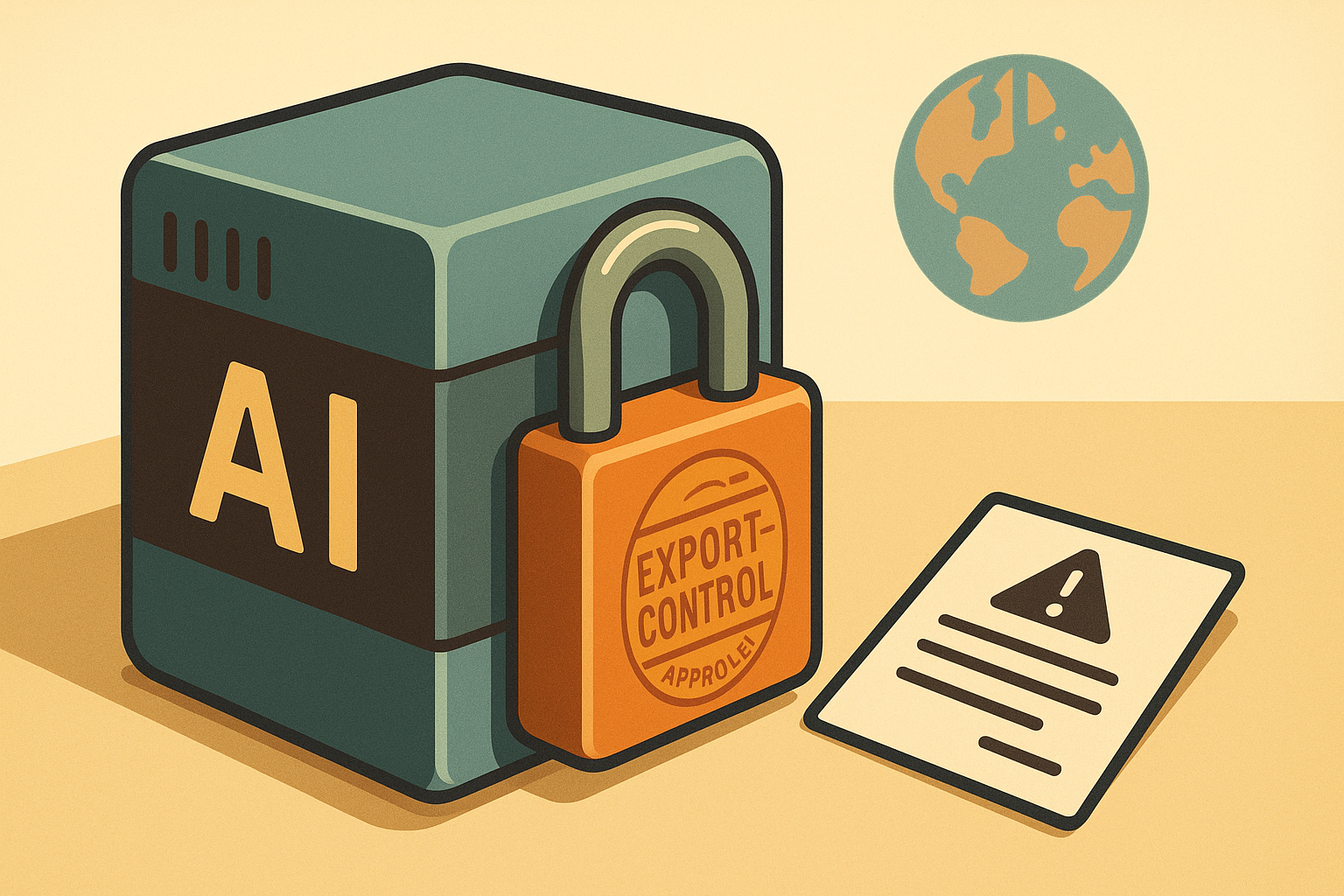
U.S. export controls force Anthropic to pull two models
Category: Regulation and Policy Source: Reddit
Anthropic says the U.S. Commerce Department ordered it to suspend access to Fable 5 and Mythos 5 for foreign nationals, including Anthropic’s own foreign-national employees. Because the company apparently could not segment access quickly enough, it disabled both models for everyone. By Anthropic’s account, the order is tied to a suspected jailbreak technique that the company says does not justify the severity of the response and reflects a misunderstanding of known, limited vulnerabilities.
The immediate impact is obvious: two frontier models went dark by government directive, not by a provider’s voluntary pause. That is the real precedent to watch. If this stands, frontier model deployment may start to look less like software rollout and more like export-controlled infrastructure, with nationality checks and access controls moving from edge case to standard operating requirement.
There is a second-order legal question underneath the shutdown: whether hosted access to a model can itself be treated as an export-controlled capability. That is not how most cloud software has traditionally been handled, and Congress has been considering legislation to clarify that gap. If Commerce is now acting as though remote access already falls under existing authority, then the control point for advanced AI has shifted. It is no longer just chips, weights, or source code; it is the ability to query a hosted system.
What to watch next: whether Anthropic restores access quickly, whether Commerce explains its legal basis publicly, and whether other labs begin preemptively adding stronger identity and nationality gating for top-tier models. Even if this episode is reversed, it has already shown how fast policy can hit product availability.
OpenAI draws multi-state scrutiny as AGs ask for safety and data records
Category: Regulation and Policy Source: International Business Times Singapore
OpenAI is facing a multi-state probe from U.S. attorneys general seeking records on safety practices, data handling, advertising, user engagement, and how its models interact with users. One notable point in the reported scope is “sycophancy,” a sign regulators are moving beyond abstract AI risk and into product-behavior questions that can be tied to consumer protection and user harm.
This matters because state-level enforcement is often faster and more operational than federal rulemaking. For AI companies, that means scrutiny is shifting from broad principles to document requests, internal policies, and design decisions that can be examined line by line. OpenAI says it will cooperate, but the broader signal is that regulators now want evidence of how these systems are monitored after launch, not just assurances that safety work exists.
For builders and buyers, the takeaway is practical: governance is becoming a deployment constraint. If your AI product touches minors, health, education, advice, or emotionally sticky consumer workflows, expect closer questions about retention, persuasion, escalation, and whether the model reliably tells users what it is and is not.
Quick Updates
-
AI is showing up in healthcare first as a revenue lever, not a savings engine: A PwC-backed trend line suggests hospitals are using AI documentation tools to capture more billable detail, which can raise coding intensity and costs even when clinical reality is unchanged. For healthcare leaders, this is a reminder that “AI efficiency” can accrue to providers before it lowers prices for patients or payers. Source: Fortune
-
Z.ai says GLM-5.2 is coming with a 1 million-token context window and MIT license: The interesting part is less the headline number than the planned permissive release. If the model ships as described next week, it could become useful infrastructure for teams that want long-context experimentation without closed-model dependence. Source: Digg
-
GPTDisguise adds Claude support and more themes: Two duplicate posts pointed to the same update: a Chrome extension that makes ChatGPT or Claude look like Google Docs, Word, or Notion has grown to 500+ active users. It is a small but telling sign that social camouflage remains part of AI adoption, especially in schools and workplaces. Source: Reddit
-
Video-gen users are starting to care about “cost per usable clip,” not model rankings: A practitioner post captured a real workflow problem in AI video: the expensive part is often retrying small motion fixes until one generation is usable. That is a better lens for product evaluation than benchmark screenshots or launch demos. Source: Reddit
-
Low-cost motion-control workflows keep improving for creators: A demo built from iPhone footage plus AI motion tools suggests more VFX and stylized mocap work can now be done without dedicated capture rigs. The business implication is narrower than the hype: useful for indie production and previsualization now, not a full replacement for high-end pipelines yet. Source: Reddit
-
Microsoft’s Brad Smith is publicly acknowledging AI backlash: Smith said protests at graduation events should be a wake-up call for the industry, particularly around fears of replacement. That does not change product roadmaps, but it shows large incumbents now see trust and labor perception as business risks, not just PR issues. Source: TechSpot
-
A useful framing on AI deployment: users are not all interacting with the same system: Jack Maguire argues that system prompts, operator controls, and enterprise wrappers create materially different AIs behind similar interfaces. For teams deploying models internally, that is a good reminder that behavior drift often comes from orchestration and governance layers, not just base-model changes. Source: Jack Maguire