Table of contents
Open Table of contents
A cloud-scale credential harvesting campaign is treating fresh CVEs as just another input
Category: Security and Privacy Source: Honeylabs
Honeylabs published one of the more useful security analyses of the week: most observed exploitation of CVE-2026-4020, a WordPress Gravity SMTP information-disclosure bug, appears to come from the same operation rather than hundreds of unrelated attackers. Across 566 IPs that hit the vulnerable endpoint, 561 shared the same JA4H HTTP fingerprint. The operator rotated 3,299 user-agent strings and used thousands of short-lived cloud instances, but the underlying request shape stayed constant.
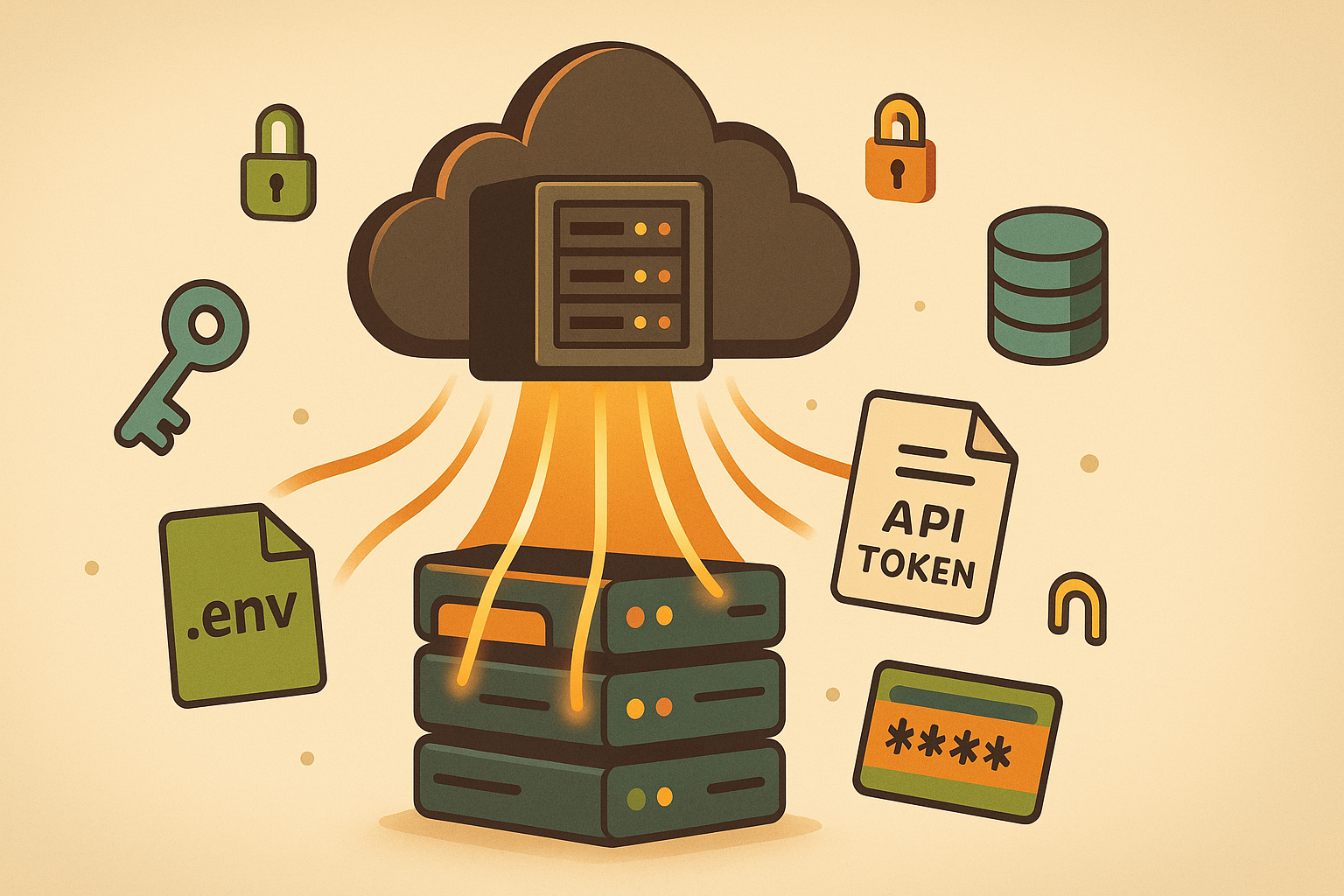
What matters is the objective. This was not classic exploit chaining or noisy vulnerability scanning. The campaign overwhelmingly probed for exposed secrets: .env files, .git/config, cloud credentials, Terraform state, framework debug endpoints, database dumps, and now a new WordPress bug that leaks SMTP credentials and API keys. In other words, fresh CVEs are being folded into an existing credential-collection pipeline almost immediately. Defenders should assume disclosure bugs now get operationalized as harvesting primitives, not just one-off attacks.
The practical takeaway is to widen detection beyond IP and user-agent blocklists. Honeylabs’ data is a reminder that cloud abuse plus cheap instance churn makes superficial indicators brittle. Teams should prioritize fingerprinting, exposure reduction for common secret-bearing files and endpoints, and aggressive secret rotation when a disclosure bug lands. For AI builders, this matters because the same leaked configs often expose model APIs, vector stores, cloud accounts, and internal tooling—not just email credentials.
AI is moving out of the chat window and into the physical world, with infrastructure racing to keep up
Category: Tools, Platforms, and Infrastructure Source: NVIDIA
NVIDIA put its XR AI stack into public beta, packaging a developer framework for multimodal agents on AR glasses and XR devices. The pitch is familiar—agents that can perceive, retrieve enterprise knowledge, reason, and act—but the interesting part is where NVIDIA is aiming it: factories, labs, operating rooms, and design workflows. The stack ties device inputs like video, audio, depth, and pose to enterprise retrieval, tool use, and accelerated runtimes. If it works, that moves “copilot” software from desktop assistance to hands-free, context-aware task support.
The gap to watch is latency, reliability, and distraction tolerance. XR agents only matter if they can operate inside real workflows without adding friction or hallucinated guidance. NVIDIA’s early examples—Siemens in factory support, research labs guiding experimental steps, surgical assistance that avoids cluttering the surgeon’s view—are plausible enterprise wedges, but still mostly controlled deployments. What changed today is that the tooling is becoming productized enough for broader developer experimentation.
The hardware side is moving in parallel. NVIDIA also highlighted Coherent’s expanded Sherman, Texas facility for indium phosphide wafers, a key optical component in AI networking. That matters because the next scaling wall in AI infrastructure is increasingly interconnect, not just compute. As clusters grow across racks and data centers, optics become the connective tissue that keeps large training and inference systems viable. The message underneath both announcements is the same: “physical AI” is not just about better models; it needs mature runtimes at the edge and far more capable networking underneath.
A separate but related signal came from OpenAI and Molecule.one, which described a near-autonomous chemistry workflow that used GPT-5.4 with high-throughput experimentation to improve a medicinal-chemistry reaction. The result—better yields for a difficult Chan-Lam coupling variant, validated across thousands of experiments and some bench-scale replication—is noteworthy less as a model milestone than as a workflow milestone. The pattern to watch is AI paired with automated experimentation, instrumentation, and verification loops. That is where narrow but real scientific productivity gains are starting to show up.
Quick Updates
-
Wolfram ships Version 15 with deeper built-in AI: Wolfram Language and Mathematica now add a built-in AI Assistant, expanded computation-augmented generation, agent tooling, and broader upgrades across tabular data, time series, modeling, and symbolic workflows. For practitioners, the value is tighter integration between LLM access and a mature computational stack, not just another chat layer. Source: Stephen Wolfram
-
Pentagon says generative AI is drafting congressional reports: U.S. Defense Department officials said GenAI.mil, built on Google’s Gemini for Government, is being used to help draft mandated reports and other internal tasks. The headline is less the time savings claim and more that high-stakes government paperwork is becoming a mainstream gen-AI use case before clear public norms on disclosure and review are settled. Source: Ars Technica
-
Pew finds the public still wary even as AI use rises: Only 16% of Americans think AI will have a positive societal impact over the next 20 years, while 40% expect a negative one. At the same time, daily chatbot use is no longer niche. For business leaders, adoption and legitimacy are diverging; usage growth is not the same as trust. Source: TechCrunch
-
Enterprise web teams are now budgeting for “AI visibility”: WPVIP’s survey argues brands are spending meaningful time tracking whether they appear in chatbot answers, not just search rankings. Treat the marketing framing with caution, but the shift is real: content teams increasingly need measurement for AI referrals, citations, and answer-surface visibility. Source: WPVIP
-
Greptile details an execution layer for AI code review: The company’s TREX system runs sandboxed code, spawns sub-agents per issue, and attaches artifacts like logs, screenshots, and videos to findings. The important idea is evidence-backed review: if AI code review is going to be trusted in production, it needs reproducible runtime proof, not just static comments. Source: Greptile
-
Anthropic opens Seoul office and deepens Korean partnerships: Anthropic says enterprises including LG CNS, Hanwha Solutions, and Samsung SDS are rolling out Claude, while NAVER and Nexon are adopting Claude Code. It’s another sign that frontier-model vendors are increasingly competing through regional enterprise distribution and developer tooling, not just model benchmarks. Source: Anthropic