Table of contents
Open Table of contents
Cloudflare shows what production-grade AI security auditing actually looks like
Category: Security and Privacy Source: Cloudflare
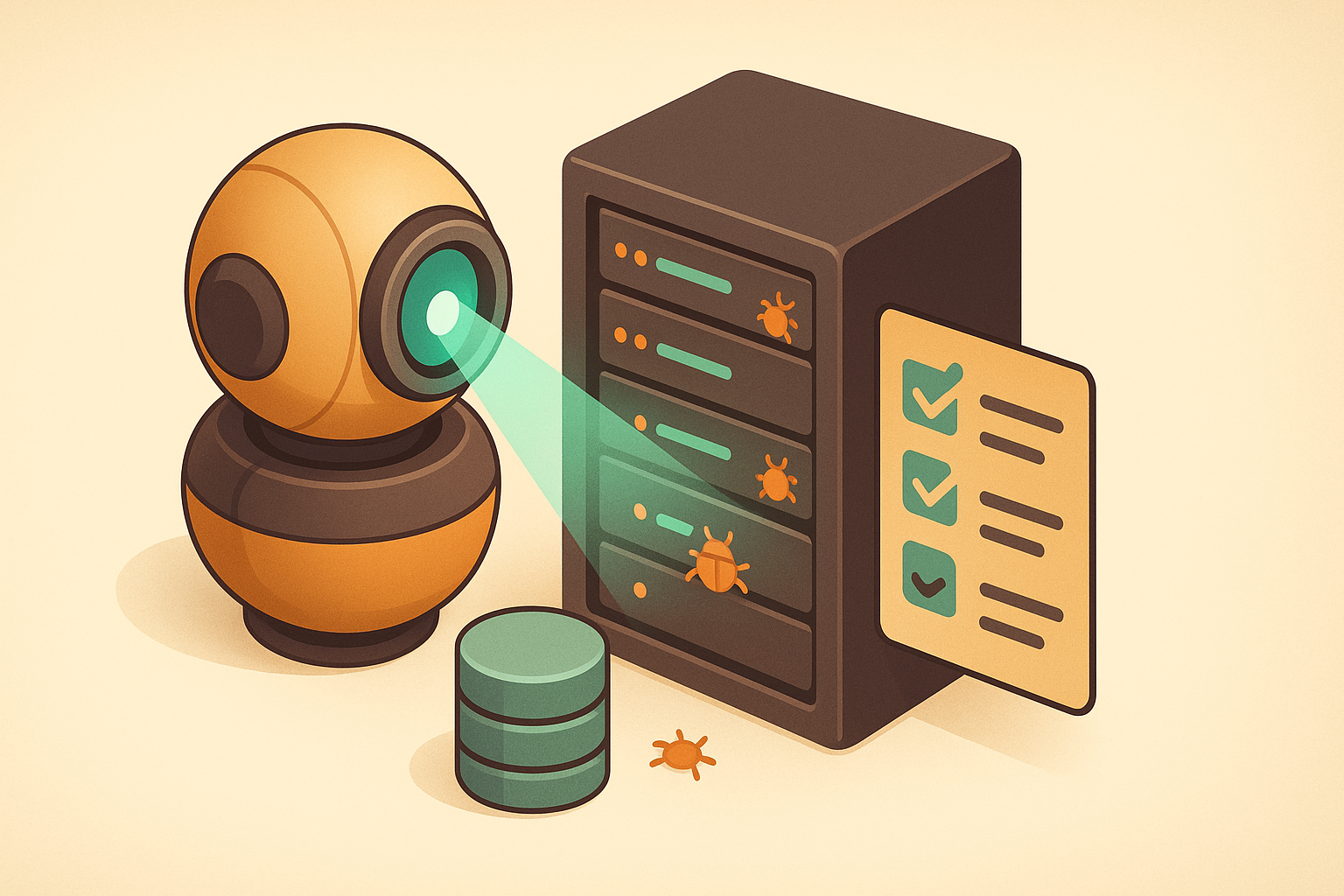
Cloudflare published a substantive engineering breakdown of its vulnerability discovery harness, and it’s worth reading because it moves past the usual “agent finds bugs in a repo” framing. The key design choice is to treat the model as a stateless compute layer inside a persistent system: recon, hunt, validate, report, and re-verify, all backed by external state. That directly addresses the three failure modes most practitioners already know too well—context collapse, non-resumable runs, and weak cross-repo reasoning.
The practical takeaway is that the harness, not the model, is the durable asset. Cloudflare says different frontier models surface different slices of bugs, which reinforces a point many teams still underweight: if your workflow is tightly coupled to one model’s prompt behavior, you’re building on sand. Their advice is refreshingly grounded—start with a minimal recon/hunt/validate pipeline, keep findings in a database, and only add deduplication or cross-repo tracing when the lack of it becomes the bottleneck. For security teams experimenting with AI-assisted auditing, this is a much more credible blueprint than autonomous-agent demos.
A related but quieter infrastructure change landed in the Model Context Protocol ecosystem: the Enterprise-Managed Authorization extension for MCP is now stable, adding centrally managed OAuth provisioning through an organization’s identity provider. In plain terms, that means enterprises can pre-connect MCP servers for users instead of forcing per-app consent flows on first use. If MCP is going to become real enterprise plumbing rather than a developer toy, this kind of zero-touch auth matters more than flashy model features.
What to watch next: whether vendors building “AI security agents” expose this level of orchestration and persistence, or continue to sell wrapper demos around single-session models; and whether MCP’s auth standard actually gets adopted across tool vendors, which would make internal tool connectivity much less painful for large deployments. Both stories point in the same direction: the AI stack is becoming more operational, less magical.
Open-weight progress is real, but deployment costs and human costs are rising
Category: Open Source and Community Source: Nature
Z.ai’s GLM-5.2 is the day’s most notable model release on the open side. The headline facts are substantial: 753B total parameters in an MoE design, roughly 40B active per token, MIT-licensed weights, and a 1M-token context window. More important than the parameter count is the architecture claim behind it: IndexShare, which reuses sparse-attention token selections across multiple layers to cut long-context compute. If that technique holds up in broader use, it’s the kind of systems-level efficiency work that matters for long-horizon coding and agent workflows far more than another benchmark screenshot.
But the operational reality is just as important as the benchmark bump. The full weights are around 1.5 TB, which sharply limits who can actually run the model locally in any meaningful way. So yes, this is an advance for open weights, and yes, it appears genuinely competitive on external leaderboards. But for most teams, the practical question is not “is it state of the art?” It’s “can we serve it economically, fine-tune it sanely, and support the hardware footprint?” On that front, GLM-5.2 looks like progress for labs and well-resourced infra teams more than broad democratization.
The other major signal today cuts in the opposite direction: Nature reports early evidence that AI assistance can erode professional skill when used heavily. The strongest example cited is in medicine, where experienced endoscopists performed worse and slower once AI assistance was removed after an assisted review phase. The piece also points to software development studies suggesting developers who rely more heavily on AI completion later produce buggier code when working without it. The exact magnitude will vary by domain and study design, but the underlying concern is no longer hypothetical.
For practitioners and business leaders, that creates a harder operating question than “should we deploy copilots?” The better question is how to preserve baseline human competence while still taking the productivity gains. In engineering teams, that may mean deliberate no-assist exercises, stronger review requirements for AI-heavy workflows, and better measurement of post-assist performance rather than just throughput. In regulated or safety-critical settings, expect this to feed into procurement standards, training policies, and eventually oversight. Model capability is still climbing; confidence in uninterrupted human judgment may not be.
Quick Updates
-
JDK 28 brings Project Valhalla into the mainline: Value classes have landed in the OpenJDK repo and are slated for JDK 28 in preview, a long-awaited change that should improve memory efficiency and performance for immutable data-heavy Java workloads. Relevant for AI platform teams running large JVM services. Source: JVM Weekly
-
Bipartisan U.S. bill targets government pressure on platforms and AI providers: The proposed JAWBONE Act would create a federal cause of action against officials who coerce intermediaries into suppressing lawful speech, while adding transparency requirements around those contacts. For AI companies operating moderation or model access policies, this is one to track. Source: EFF
-
ISA choice matters less than many think in AI servers: A ChipStrat analysis argues that in GPU-centric AI infrastructure, CPU instruction set differences are usually secondary to memory bandwidth, software stack maturity, and efficiency. Useful framing for infra buyers weighing Arm versus x86 in accelerator-heavy deployments. Source: ChipStrat