Table of contents
Open Table of contents
Agentic coding is starting to matter in scientific software
Category: Research and Innovation Source: OpenAI
OpenAI published a field report on eight agent-assisted scientific computing projects, mostly in life sciences, covering everything from maintenance and packaging work to GPU-native rewrites and larger codebase migrations. The useful part is not the vendor framing; it’s the pattern across cases. Teams report real gains in engineering throughput, especially for chores that academic software projects routinely under-resource: build systems, testing, optimization, and long-tail maintenance.
The more important takeaway is where the bottleneck moved. In these projects, researchers increasingly acted as spec writers, validators, and orchestrators rather than primary implementers. Agents were effective on bounded tasks, but they were not reliable judges of scientific correctness. Teams that got value had clear acceptance tests: output parity with existing tools, benchmark targets, simulated data, or known-answer validation. That is a practical operating model practitioners can reuse now.
Why this matters now: scientific software has long been a weak link in reproducibility and research velocity. If agents can lower the cost of maintaining and modernizing core tools, they could have outsized impact well beyond flashy frontier-model demos. But the report also reinforces a constraint many engineering teams already know: “last mile” validation still dominates. Watch for labs, research software groups, and biotech teams that invest in test harnesses and stewardship, not just access to coding agents.
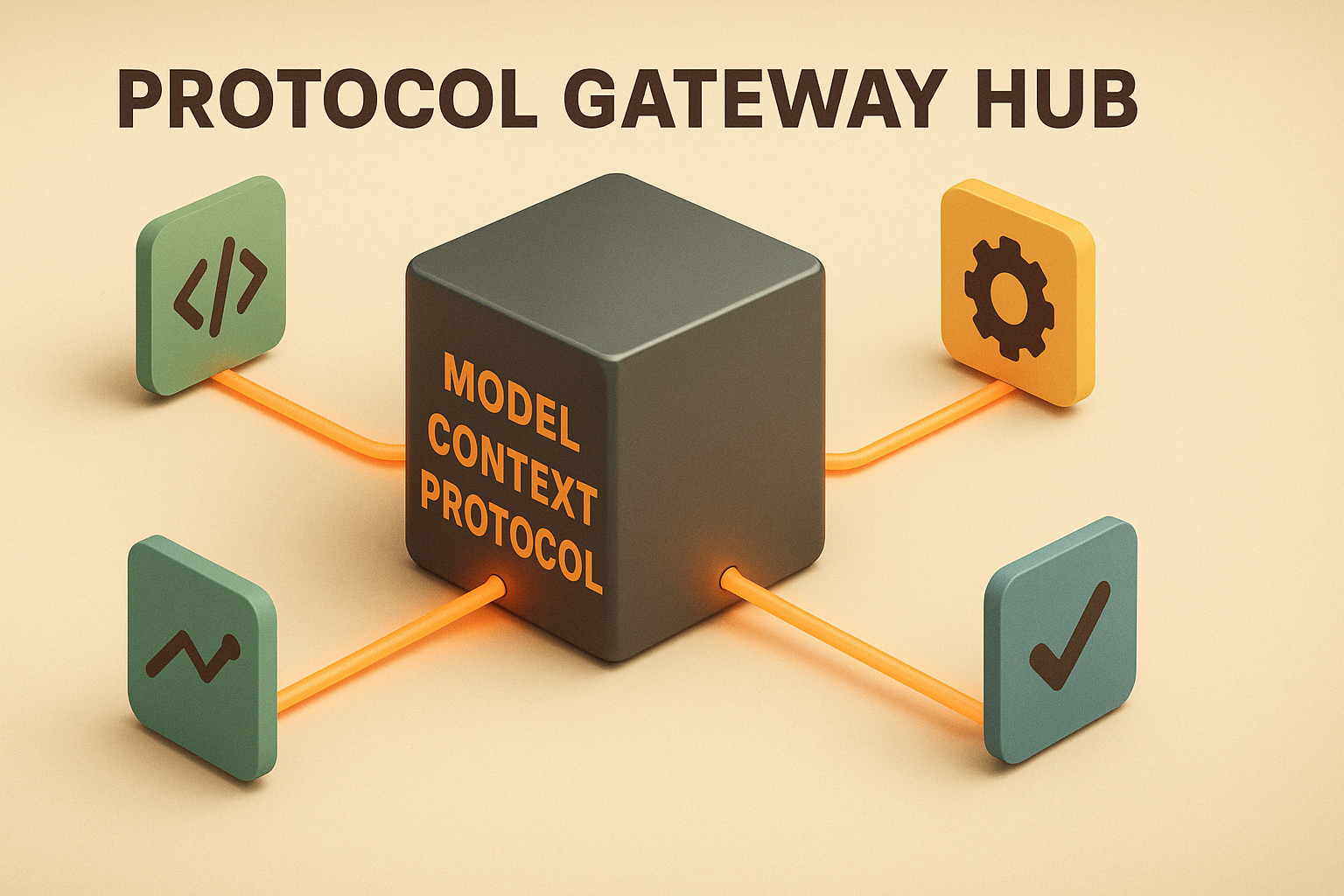
MCP’s new spec pushes the protocol toward real production use
Category: Tools and Platforms Source: Model Context Protocol
The Model Context Protocol released a new specification with several changes that look incremental on paper but matter for anyone building agent tooling at scale: a stateless protocol core, multi-round-trip requests, header-based routing, cacheable list results, stronger authorization, a formal extensions framework, and updated Tier 1 SDKs. In short, MCP is maturing from “useful integration idea” into a more disciplined systems interface.
The stateless core and routing changes are especially worth watching. They make MCP easier to fit into existing infrastructure patterns, including proxies, gateways, and horizontally scaled services. Cacheable list results should reduce unnecessary traffic for common discovery flows, while formalized extensions help avoid the fragmentation that tends to hit fast-moving protocols once vendors start improvising.
For builders, this matters because tooling interoperability is becoming a bigger constraint than raw model quality in many workflows. If MCP can stabilize around features enterprises actually need, it has a better shot at becoming boring infrastructure—which is the highest compliment a protocol can earn. The next thing to watch is adoption in frameworks, IDEs, and enterprise agent platforms, plus whether security and extension semantics stay clean as the ecosystem broadens.
Quick Updates
-
AI is widening the pool of small-business builders in the US: The Economist reports that AI tools are helping solo operators and small firms—from online sellers to local accountants—do more with less overhead. The broader signal is not one breakout startup, but a continuing shift in who can launch and run a viable business. Source: The Economist
-
Open-model UX is becoming a real draw, not just a cost story: Matthew Saltz describes the appeal of pointing a coding workflow at his own inference endpoint, highlighting control, privacy, and ownership rather than benchmark supremacy. Subjective, but useful as a read on why some developers are moving toward self-directed model setups. Source: Matthew Saltz
-
Meta-backed assistive robotics project reports early safety gains: A University of Pittsburgh effort using Meta’s DINO and SAM for assistive mobility and manipulation says early trials show a 30% reduction in falls versus current wheelchairs. Promising, though this is still early-stage and worth tracking through independent clinical validation. Source: Meta AI
-
ASRock shows what “compact” AI infrastructure now means: Its 4U16X-GNR2 packs eight NVIDIA HGX B300 GPUs, dual Xeon 6 CPUs, and liquid cooling into a 4U chassis. The practical takeaway: dense Blackwell-era deployments are being designed around liquid-cooled cluster environments, not traditional air-cooled server assumptions. Source: Windows Forum
-
A notable trust model for AI-generated code: A new GitHub project claims the first fully verified 3D mesh intersection implementation in Lean 4, with a small formal spec and large proof corpus backing AI-written implementation code. If the approach holds up, it’s a concrete example of using formal methods to make AI code generation safer in high-assurance domains. Source: GitHub
-
NVIDIA keeps pushing edge AI as a developer on-ramp: NVIDIA highlighted Jetson Orin Nano Super and associated SDKs for compact robotics and edge inference projects. The news itself is mostly packaging, but it underlines the company’s broader play: make local, real-time AI prototyping easier for students, makers, and robotics teams. Source: NVIDIA