Table of contents
Open Table of contents
Cloudflare’s Astro “software factory” shows a realistic near-term use for coding agents
Category: Open Source and Community Source: Cloudflare
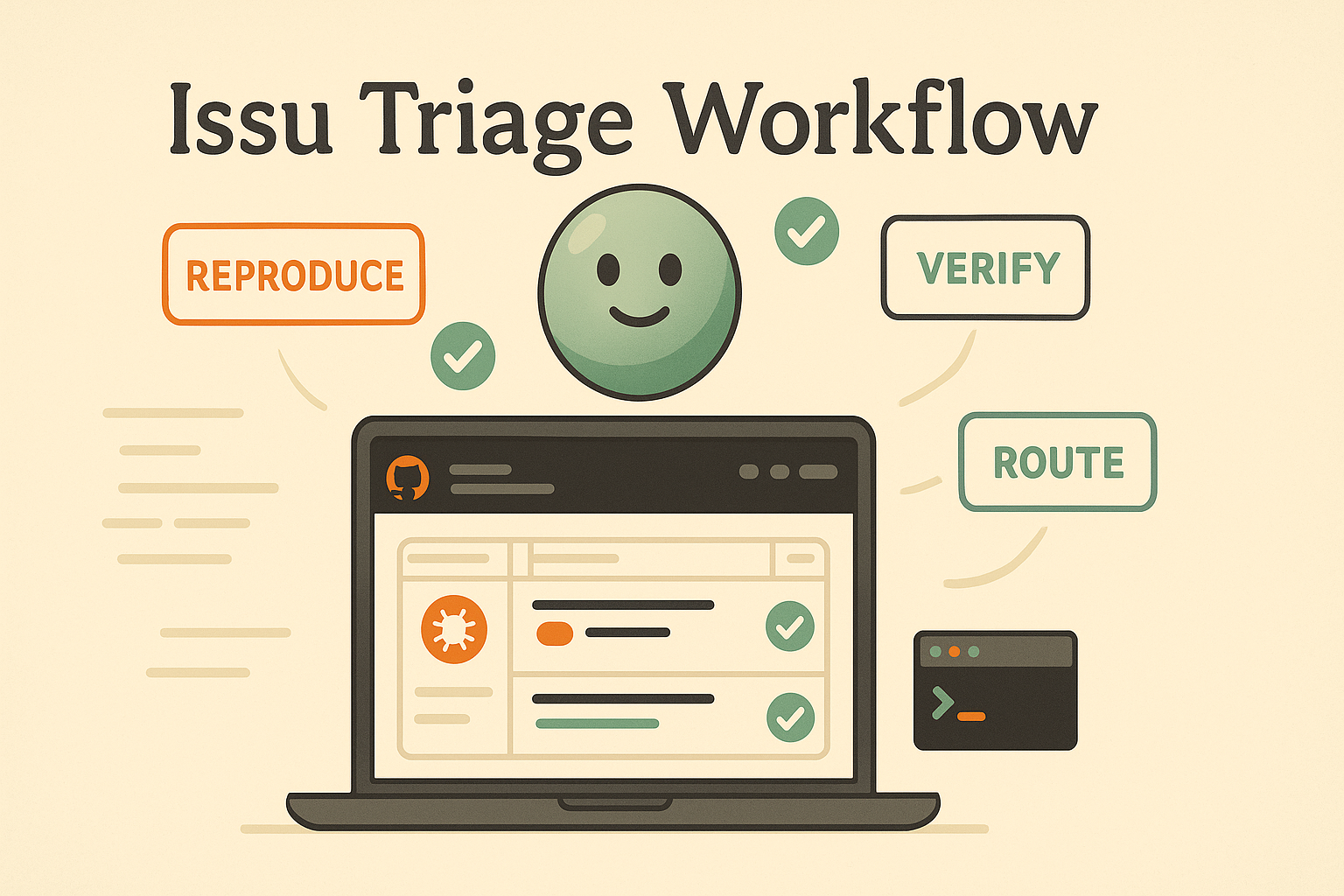
Cloudflare published one of the more useful engineering case studies of the day: an AI-driven issue triage pipeline for Astro that reportedly cut the project’s open GitHub issues by roughly 85%, from more than 200 to around 30. The setup uses isolated sub-agents inside GitHub Actions to reproduce bugs, verify fixes, and generate preview releases, with state tracked through issue labels rather than opaque orchestration.
What matters here is less the “AI agent” branding and more the design pattern. The system breaks work into narrow, auditable steps, keeps agents isolated to reduce cross-contamination and bias, and exposes workflow state through normal GitHub primitives. That is much more credible than claims of fully autonomous software development. For maintainers, this points to a practical deployment model: use agents to compress repetitive verification work, not to replace core technical judgment.
Cloudflare also says the framework behind this, Flue, is open source. That raises the odds this becomes a reusable approach rather than a one-off demo. Teams running large OSS projects or enterprise repos should watch whether this pattern generalizes beyond issue reproduction into regression testing, release management, and dependency upkeep—areas where labor is high, logic is structured, and errors are expensive but measurable.
NSF launches regional AI infrastructure hubs, widening the compute-access agenda
Category: Regulation and Policy Source: National Science Foundation
The NSF launched its State and Regional AI Infrastructure Hubs program, aimed at expanding access to compute, data, software, and technical support through regional consortia of universities and partners. NVIDIA separately announced it is participating, but the bigger story is the federal push to distribute AI capacity beyond a small set of elite institutions and hyperscaler relationships.
This matters because the AI bottleneck is no longer just model quality; it is access. If these hubs work, they could give more researchers, educators, and students a path to usable AI infrastructure without requiring direct ties to frontier labs or major cloud contracts. The program also fits a broader U.S. strategy of pairing infrastructure with workforce development, including credentials and applied training tied to regional industries.
The watch item is execution. Shared infrastructure programs often succeed or fail on operations: procurement, governance, scheduling, staffing, and whether “access” includes enough hands-on support to make the systems usable. If the hubs become durable regional platforms rather than announcement-stage partnerships, they could have real downstream effects on research output, talent development, and local AI ecosystems.
Quick Updates
-
Warp brings its coding agent to any terminal via standalone CLI: Warp launched a standalone Agent CLI with model routing, session multiplexing, and native terminal-oriented workflows. For heavy shell users, the key question is whether this improves reliability and cost control versus editor-first agents, not just convenience. Source: Warp
-
Anthropic adds a top policy operator: Anthropic hired Mariano-Florentino “Tino” Cuéllar as its first Chief Global Affairs Officer, formalizing its push into government relations and global AI policy. Expect more direct engagement from frontier labs on regulation, national security, and international governance. Source: Anthropic
-
Lilian Weng maps the current version of recursive self-improvement: Weng’s essay frames modern “RSI” less as models rewriting themselves and more as systems improving the training, evaluation, and deployment pipeline for successor models. Useful as a conceptual update, especially for teams tracking auto-ML and agentic R&D loops. Source: Lilian Weng
-
A new RL startup pitches market-derived environments: E.env launched with a thesis that non-stationary, market-based environments are better than static benchmarks for training adaptive agents. It is an interesting benchmark idea, but for now it is a concept-stage claim rather than a validated research platform. Source: E.env
-
Another warning shot on AI economics: Ed Zitron argues that much of the apparent AI revenue boom is concentrated around a few labs and their hyperscaler partners, with profitability still unclear. It is commentary, not fresh reporting, but the demand-quality question remains worth tracking through cloud earnings and enterprise renewal data. Source: Where’s Your Ed At
-
AI data center power-cost claims are circulating, but source quality is uneven: One widely shared article claims AI data centers have added major costs to the U.S. grid and lifted electricity bills in some states, but the underlying write-up is thin and partially mismatched to the headline. The broader issue—AI’s impact on power pricing and grid investment—is real, but readers should wait for cleaner utility and regulator data. Source: Gadget Review