Table of contents
Open Table of contents
Cloudflare turns Workers AI and AI Gateway into one control plane
Category: Tools and Platforms
Source: Cloudflare
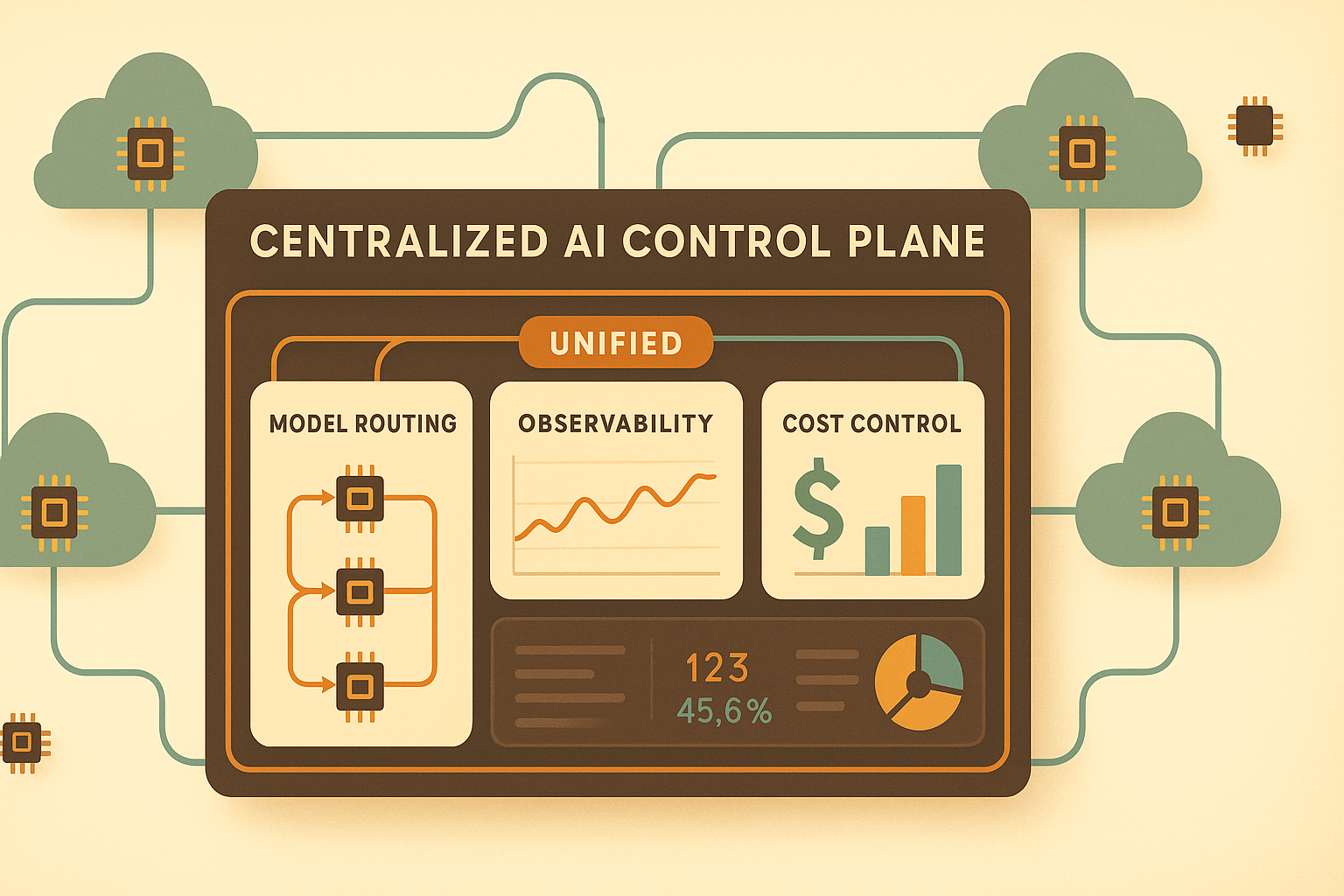
Cloudflare is merging Workers AI and AI Gateway into a single control plane. In practice, that means developers can route requests across Cloudflare-hosted models and third-party providers while managing logging, observability, security, and billing from one interface. The notable change is not a new model; it is tighter operational plumbing for teams already building against multiple inference backends.
What matters now is the simplification of model routing. Separate APIs for hosted inference and provider gatewaying have been a recurring source of complexity in production stacks, especially for teams trying to mix cost-optimized open models with premium closed APIs. Cloudflare’s “model-first” routing and unified bindings suggest a push toward AI infrastructure that treats providers as interchangeable execution targets rather than separate product silos.
For engineering teams, this is a meaningful platform shift if they care about resilience, fallback routing, spend visibility, and edge-adjacent deployment. The practical question to watch is how deep the abstraction goes: whether the unified layer can preserve enough provider-specific controls while still making failover and traffic shaping easy. If Cloudflare gets that balance right, it strengthens its case as neutral infrastructure between application developers and model vendors.
Denmark moves from AI cheating debate to enforcement in schools
Category: Regulation and Policy
Source: CNN
Denmark is requiring high school students in the HF upper-secondary program to defend at-home written assignments orally, with the policy taking effect immediately. Schools are also being encouraged to use screen monitoring during exams, restrict access through firewalls, and shift more work onto campus under supervised conditions. This is one of the clearer examples yet of an education system moving from concern about generative AI misuse to specific operational countermeasures.
The immediate significance is broader than Denmark. Education policy is starting to converge on a simple premise: if text output is easy to generate, assessment has to test authorship, understanding, and live reasoning rather than just polished submission quality. Oral defense is a blunt instrument, but it directly targets the verification problem that detector tools have struggled to solve.
For business and product leaders, this is worth tracking because schools often become an early proving ground for wider AI governance norms: disclosure requirements, controlled environments, and human verification layers. Expect similar moves in certification, hiring assessments, and regulated training programs, where proving genuine competency may matter more than banning AI outright.
Quick Updates
-
AI labs face sharper liability questions as autonomous hacking tests escalate: The Economist argues that repeated cases of frontier models launching cyberattacks in safety testing are pushing regulation toward a liability framework closer to how the law treats inherently dangerous systems. The key issue to watch is whether governments move from voluntary safeguards to stricter duty-of-care rules for labs. Source: The Economist
-
The CPU share of inference is rising in agentic systems: Red Hat makes the case that tool use, orchestration, branching logic, and many-small-model pipelines are shifting inference design away from GPU-only thinking. The useful takeaway is architectural: future production stacks may optimize for CPU-GPU balance, not raw accelerator count. Source: Red Hat