Table of contents
Open Table of contents
- OpenAI Shipped GPT-5.4 Mini and Nano—AI Agents Just Hired Their Own Interns
- The Pentagon Is Developing Its Own LLMs to Replace Anthropic
- Nvidia CEO: $1 Trillion in Orders for Blackwell and Vera Rubin Through 2027
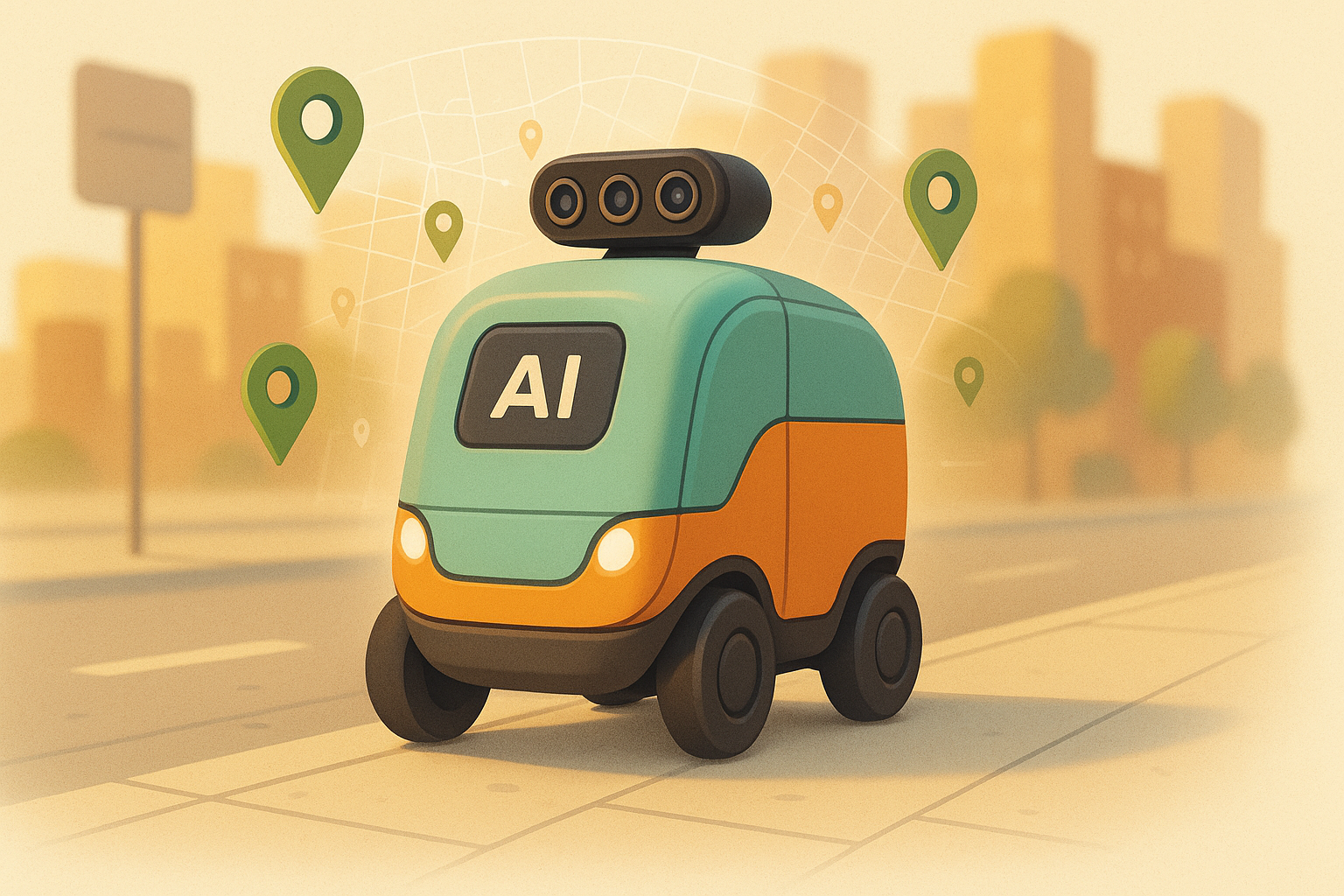
- Pokémon Go Players Unknowingly Trained Delivery Robots With 30 Billion Images
- Gig Workers Are Getting Paid to Film Their Daily Chores to Train Robots
- Roche Scales NVIDIA AI Factories Globally to Accelerate Drug Discovery and Manufacturing
- Anthropic Conducted 81,000 AI Interviews—Here’s What People Want From AI
- Quick Updates
OpenAI Shipped GPT-5.4 Mini and Nano—AI Agents Just Hired Their Own Interns
Category: Model Releases
Source: OpenAI
OpenAI released GPT-5.4 Mini and Nano on March 18, positioning them not as smaller general models but as purpose-built “subagents” designed to work under the direction of GPT-5.4. The release marks a structural shift in how AI systems are organized: instead of a single model handling everything, the full GPT-5.4 acts as a project manager that delegates parallel tasks—like code review, file search, and test execution—to a swarm of cheaper, faster Mini instances.
Mini scores 54.4% on SWE-Bench Pro, just 3 points behind the full model, and 72.1% on OSWorld. It costs $0.75 per million input tokens; Nano runs at $0.20. Mini is live in the API, Codex, and ChatGPT; Nano is API-only. In testing, Mini delivers roughly 95% of GPT-5.4’s performance on computer use tasks at a fraction of the cost. It’s also faster than GPT-5 Mini by more than 2×.
The subagent architecture replaces the traditional model router with a smarter delegation layer. Instead of picking the right model for the task, the system now has GPT-5.4 coordinate execution across multiple mini workers running in parallel. The result is higher throughput—Mini uses 30% of GPT-5.4’s Codex quota, effectively tripling developer capacity—and lower latency for multi-step agentic workflows.
However, Mini is the priciest small model on the market. Gemini 3 Flash scores 78% on SWE-bench Verified at $0.50/$3.00; Claude Haiku 4.5 matches Sonnet 4-level quality at $1/$5; and Mercury 2, a diffusion-based model, hits ~1,000 tokens/sec at just $0.25/$0.75. OpenAI is betting that quality, not price, defines the new pareto frontier.
The Pentagon Is Developing Its Own LLMs to Replace Anthropic
Category: Policy & Defense
Source: TechCrunch
The Pentagon is developing its own large language models following the collapse of a $200 million contract with Anthropic. Talks broke down over two redlines Anthropic refused to cross: AI use in autonomous weapons and mass surveillance of American citizens. The Department of Defense responded by designating Anthropic a “supply-chain risk”—a label typically reserved for foreign adversaries—effectively barring other Pentagon contractors from working with the company.
Anthropic is challenging the designation in court, arguing the move is legally unsound retaliation. The company filed two lawsuits this week seeking to overturn the designation and restore access to government contracts. Defense Secretary Pete Hegseth has defended the decision, stating the designation was made because of “concerns about Anthropic’s potential future conduct if it retained access to the government’s IT infrastructure.”
Meanwhile, OpenAI secured an AWS deal to expand its government footprint, and xAI has already locked in agreements with the DOD. Anthropic’s standoff with the Pentagon has created a competitive opening for rivals who are willing to accept broader military use terms. The broader question facing the AI industry: whether companies can hold ethical boundaries when contracting with government agencies—or whether those who refuse will simply be replaced.
Nvidia CEO: $1 Trillion in Orders for Blackwell and Vera Rubin Through 2027
Category: Infrastructure & Hardware
Source: NVIDIA Blog
Nvidia CEO Jensen Huang revealed at GTC 2026 that the company expects over $1 trillion in orders for its Blackwell and Vera Rubin GPU platforms through 2027. Huang described the demand as driven by enterprises transitioning from proof-of-concept AI deployments to production-scale infrastructure capable of supporting agentic workflows, real-time inference, and distributed edge computing.
The forecast comes as hyperscalers—Alphabet, Microsoft, Meta, and Amazon—commit nearly $700 billion in combined capex spending this year. Amazon alone announced $12 billion for a new AI data center in Louisiana, creating 540 full-time on-site jobs and 1,700 roles for electricians, technicians, and security specialists. Meta’s $27 billion Hyperion data center in Louisiana is expected to consume more electricity than the city of New Orleans.
Nvidia also announced the AI Grid Reference Design, a blueprint for deploying and orchestrating AI across distributed sites. Telcos including AT&T, T-Mobile, Comcast, and Spectrum are building AI grids using NVIDIA RTX PRO 6000 Blackwell Server Edition GPUs, enabling real-time, hyper-personalized experiences at the network edge. Huang emphasized that “the model is the product” and that Nvidia is positioning itself as the infrastructure backbone for the next wave of AI-native applications.
The buildout is creating acute demand for skilled trade workers. Specialized roles moving into data centers see a 25% to 30% pay increase. The U.S. faces a potential shortfall of 1.9 million manufacturing workers by 2033, and the construction industry must attract 349,000 workers in 2026 despite macroeconomic headwinds. BlackRock launched a $100 million initiative to train the next generation of trades workers, acknowledging that “capital alone is not enough.”
Pokémon Go Players Unknowingly Trained Delivery Robots With 30 Billion Images
Category: Autonomous Systems & Robotics
Source: Popular Science
Niantic Spatial, the mapping spinoff from Pokémon Go developer Niantic, has partnered with Coco Robotics to deploy delivery robots that navigate city streets using data collected from over 30 billion images captured by Pokémon Go players. The partnership demonstrates how crowdsourced AR gameplay data can be repurposed to build real-world navigation systems for autonomous robots.
Niantic’s Visual Positioning System (VPS) enables robots to localize themselves by matching camera feeds to a geospatial database built from player-submitted scans. The system achieves sub-10-centimeter accuracy in urban environments, outperforming GPS in dense cityscapes where signals are unreliable. VPS uses four cameras mounted on delivery robots to get precise readings of surroundings, enabling real-time path adjustments and obstacle avoidance.
Coco Robotics’ delivery bots are currently piloting in Los Angeles, using VPS to navigate sidewalks, cross streets, and deliver food on time. The robots can switch approach angles when the initial path is blocked, demonstrating adaptive decision-making informed by the underlying mapping data. Niantic says VPS-equipped robots can achieve “predictable latency for live detection and instant alerting,” critical for time-sensitive logistics.
The data collection was passive and continuous. Players scanning for PokéStops and completing AR tasks unknowingly contributed to a “living map” updated in real time. Niantic’s model ingests images captured across varying weather, lighting, and times of day, creating a robust geospatial dataset that generalizes better than single-pass mapping efforts. The same data is being explored for applications in smart cities, industrial automation, and augmented reality navigation.
Privacy and consent remain open questions. Players were not explicitly informed their scans would train delivery robots or power commercial mapping services. While Niantic’s terms of service cover data use broadly, the specific application of AR gameplay data to autonomous systems was not disclosed at the time of collection. The partnership highlights the dual-use nature of consumer-facing AR platforms and the blurred line between gameplay and data labor.
Gig Workers Are Getting Paid to Film Their Daily Chores to Train Robots
Category: Autonomous Systems & Robotics
Source: TechSpot
Gig workers in Los Angeles are earning $80 for two hours of video by filming themselves doing household chores while wearing head-mounted cameras. The footage is used to train physical AI models that power robots designed to perform real-world tasks. Unlike chatbots, which learned language from text scraped across the internet, robots require detailed examples of human movement—how a person grips a sponge, stirs soup, or shuts off a running tap—captured in first-person perspective.
Instawork, traditionally a staffing platform for stadiums and hotels, is recruiting workers to create motion datasets for robotic systems. Sunain, a data-capture startup with 1,400 contributors in Los Angeles, mails wrist-mounted cameras that record hand and arm movements. Contributors film themselves cooking, cleaning, or playing, and the company pays per usable clip. The footage includes not just the action itself but the decision-making context—when someone walks away from the stove to turn off a running faucet, the robot learns how to handle interruptions and shift priorities mid-task.
The data is essential for building robots that can generalize across tasks and environments. “These robots need to understand the context switching that humans do,” says Shahbaz Magsi, CEO of Sunain. The startup has signed up 25,000 contributors across 30 countries working on voice, video, and text completion tasks. Market intelligence firm Grand View Research projects the global data collection and labeling market could reach $17 billion by 2030.
Critics warn this labor is underpaid and could one day enable automation that displaces the workers performing it. Salvador Arciga, a veteran gig worker who films his chores for Instawork, acknowledges the irony: “New technology always brings fear and change. People will still need people.” But some of his friends tell him he’s “the problem.” For now, quick cash outweighs longer-term concerns. The Ahmeds, an Egyptian immigrant couple in Pasadena, each earned $1,200 filming their daily routines—money they’ve set aside for savings. “We are making money off something that we do every single day,” Azzam Ahmed said. “That’s like getting paid for breathing.”
Roche Scales NVIDIA AI Factories Globally to Accelerate Drug Discovery and Manufacturing
Category: Healthcare & Life Sciences
Source: NVIDIA Blog
Roche is deploying more than 3,500 NVIDIA Blackwell GPUs across hybrid cloud and on-premises environments in the U.S. and Europe, embedding AI infrastructure across its pharmaceutical and diagnostics businesses. The deployment supports everything from biological foundation models to drug discovery, digital twins for manufacturing, and diagnostic imaging. Roche says the investment gives it the computing capacity to enable scientists across the enterprise to pursue their most ambitious projects.
Wafaa Mamilli, Roche’s chief digital and technology officer, emphasized the strategic value: “We’re excited to innovate at the intersection of science and technology to accelerate drug and diagnostic solutions development. With high-quality data and smarter AI, we will be able to leverage those insights both in pharma as well as in our diagnostic divisions.”
AI is at the heart of Genentech’s Lab-in-the-Loop strategy, where experiments, data, and AI are connected in an iterative loop. Nearly 90% of Genentech’s eligible small-molecule programs integrate AI. In one oncology program, a degrader molecule was designed 25% faster; in another, AI delivered a backup drug candidate in seven months instead of more than two years. With NVIDIA Blackwell and the BioNeMo platform, Roche can train and fine-tune biological and molecular foundation models, integrate proprietary datasets, and expand AI-driven lab automation.
Roche is also modernizing pharmaceutical manufacturing with NVIDIA Omniverse libraries, building digital twins of production facilities to simulate and optimize complex systems before they go live. These virtual environments are accelerating the development of Roche’s new GLP-1 manufacturing facility in North Carolina. AI is being developed for regulatory documentation, quality assurance, and production scheduling—areas where even small efficiency gains can ripple across a global supply chain.
In diagnostics, accelerated computing and NVIDIA Parabricks software enable insights across vast datasets. In digital pathology, NVIDIA technologies scan large volumes of images to detect subtle disease patterns. In digital health, Roche uses NVIDIA NeMo Guardrails to ensure safe and reliable healthcare-grade AI. Roche is also evaluating the BioNeMo platform for developing AI models to support molecular design and chemistry innovation related to sequencing technologies.
Anthropic Conducted 81,000 AI Interviews—Here’s What People Want From AI
Category: Research & Innovation
Source: Anthropic
Anthropic conducted the largest multilingual qualitative study on AI, interviewing 81,000 Claude users worldwide in December 2025. The interviews explored how people use AI, what they hope it can do, and their concerns. Respondents answered core and follow-up questions over a week, with conversations de-identified and quotes reviewed for anonymity. Claude classifiers categorized responses into wants, usage, fears, profession, and sentiment.
Nine main categories emerged: (1) Professional excellence—18.8%; (2) Personal transformation—13.7%; (3) Life management—13.5%; (4) Time freedom—11.1%; (5) Financial independence—9.7%; (6) Societal transformation—9.4%; (7) Entrepreneurship—8.7%; (8) Learning & growth—8.4%; (9) Creative expression—5.6%.
The findings reveal a strong desire for AI to support human agency rather than replace it. People want tools that amplify their skills, free up time for meaningful work, and reduce friction in daily life. Financial concerns are prominent, especially among younger respondents who see AI as a path to economic mobility. Societal transformation ranked high among educators, healthcare workers, and public servants, who envision AI solving systemic problems like healthcare access and education inequality.
Concerns centered on job displacement, algorithmic bias, and loss of human connection. Many respondents expressed anxiety about AI systems making decisions without transparency or accountability. Privacy emerged as a recurring theme, with users wanting granular control over what data AI can access and how it is used. The study underscores the importance of designing AI systems that align with human values and provide users with meaningful control.
Quick Updates
-
OpenAI is cutting back on side projects (Sora video app, Atlas browser, hardware) to refocus on coding and enterprise after Claude Code’s dominance created a “code red.” Codex now has 2M weekly active users. Source: WSJ
-
Amazon CEO Andy Jassy told employees AI will push AWS to a $600B annual run-rate by 2036, double his prior projection. Source: Reuters
-
NVIDIA NemoClaw wraps OpenClaw in a sandboxed runtime called OpenShell that enforces network, filesystem, and privacy policies so agents can only touch approved resources. Source: GitHub
-
Mistral launched Forge, a system for enterprises to build custom AI models trained on proprietary data, policies, and workflows, covering data prep to production deployment. Source: Mistral AI
-
Tencent’s 2025 revenue beat estimates at 751.8 billion Chinese yuan ($109 billion), driven by AI spending of 18 billion yuan with plans to double in 2026. Source: CNBC
-
Encyclopedia Britannica and Merriam-Webster sued OpenAI, alleging it used nearly 100,000 copyrighted articles to train ChatGPT without licensing or consent. Source: [Reuters](https://www.reuters.com/legal/litigation/encyclopedia-britannica-sues-openai-over-ai-training