Table of contents
Open Table of contents
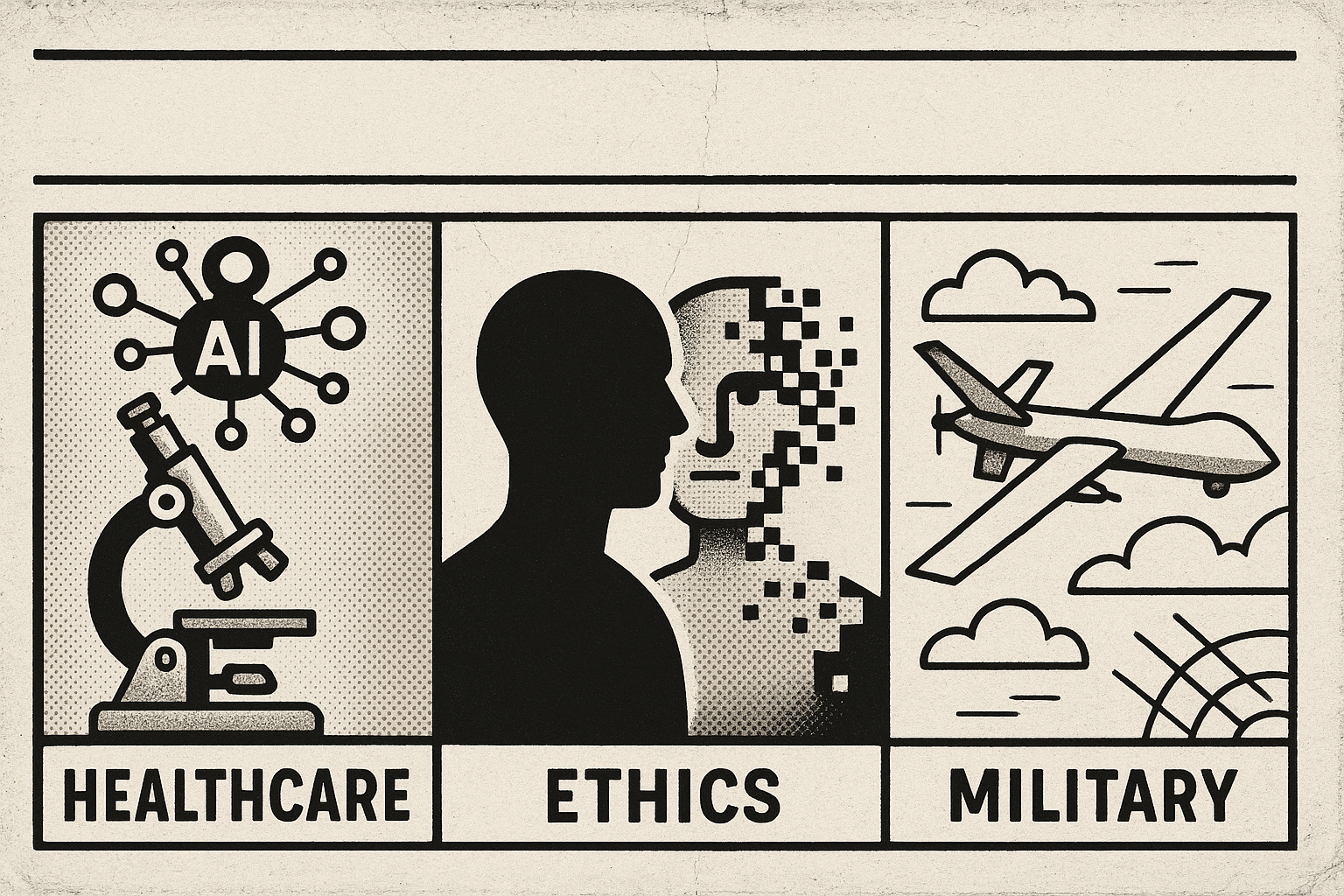
- AI lets Russian war widows see their soldier husbands one more time
- AI in the military: Testing a new kind of air force
- OpenAI’s new AI device reportedly faces technical hurdles that could delay its launch
- New antibiotic targets IBD — and AI predicted how it would work before scientists could prove it
- The Algorithmic Afterlife: When your data refuses to die
- Short summaries
AI lets Russian war widows see their soldier husbands one more time
Category: Ethics and Governance
Source: Washington Post
A profound trend is gaining momentum in Russia, where AI is being used to create video memorials of deceased loved ones, particularly fallen soldiers. These AI-generated video messages simulate heartfelt goodbyes, aimed at comforting bereaved families. While seen as an innovative way to preserve memories, the concept raises moral and ethical concerns about grief exploitation and the emotional consequences of relying on synthetic recreations.
The use of AI in this manner is gaining traction globally, yet it prompts questions about the implicit responsibilities of tech creators towards the memories of the deceased. As this practice evolves, the broader societal implications are likely to spark deeper reflection and potential regulatory measures.
AI in the military: Testing a new kind of air force
Category: Autonomous Systems and Robotics
Source: CBS News
The U.S. Air Force is revolutionizing aerial combat by integrating AI-piloted drones alongside traditional fighter jets. At Eglin Air Force Base, human pilots train with XQ-58A Valkyrie drones, known for their rapid decision-making capabilities. These drones assist pilots in intercepting adversaries and executing complex flight strategies.
Experts, including General Adrian Spain, see the technology as a response to global threats, notably China’s air power. However, the ongoing debate about AI’s role in firing decisions highlights the ethical complexities of autonomous warfare. The Air Force envisions 1,000 AI-assisted aircraft by 2030, reflecting a pivotal shift in military strategies.
OpenAI’s new AI device reportedly faces technical hurdles that could delay its launch
Category: Infrastructure and Hardware
Source: The Decoder
OpenAI, in collaboration with designer Jony Ive, is developing a revolutionary AI device intended to reimagine human-computer interaction. However, the team faces significant setbacks related to technical integration and privacy concerns. The device, envisioned as a screen-less, always-on AI assistant, is designed to process environmental data for seamless communication.
Challenges include refining its personality for relatable interaction and addressing privacy concerns regarding its continuous listening feature. Manufacturing complexities and budget constraints further complicate the project, potentially delaying the launch well into 2026.
New antibiotic targets IBD — and AI predicted how it would work before scientists could prove it
Category: Healthcare and Life Sciences
Source: McMaster University
Artificial intelligence is making significant strides in healthcare, demonstrated by its role in predicting the effectiveness of a new antibiotic for inflammatory bowel disease (IBD). Researchers used AI to forecast the antibiotic’s success before it was validated through lab experiments. Human trials are scheduled within three years, underscoring how AI accelerates treatment development.
This breakthrough exemplifies AI’s potential to revolutionize medicine, offering faster drug discovery processes and substantial healthcare improvements for chronic conditions.
The Algorithmic Afterlife: When your data refuses to die
Category: Ethics and Governance
Source: The Pioneer
As digital data immortalizes aspects of human existence, new challenges emerge regarding the ethics of the “algorithmic afterlife.” Indian and global traditions emphasize letting go in death, yet platforms like Facebook hold millions of deceased profiles, shaping AI training and content algorithms.
This persistence of residual data sparks debates about posthumous privacy rights, ethical data use, and the environmental impact of storing this vast repository of information. The need for digital wills and frameworks addressing these issues grows urgent as humanity navigates the implications of a digitally eternal existence.
Short summaries
- OpenAI acquires ROI: OpenAI recently acquired personal finance app ROI, marking its deeper push into AI-driven finance. Read more at TechCrunch
- Instacrops saves water: Startup Instacrops unveiled an AI solution to cut agricultural water use by 30%, showing promise for sustainable farming. TechCrunch
- Jobs resistant to AI: Experts highlight careers demanding empathy, manual dexterity, or complex judgment as most resilient against automation. Reddit post
- Amazon’s “Enshittification” spiral: The Guardian details how platforms like Amazon deteriorate by prioritizing profit over user value, raising consumer concerns. The Guardian
Stay updated with more AI news tomorrow!