Table of contents
Open Table of contents
- xAI’s Grok AI Sparks Global Outrage with Safeguard Failures
- In China, A.I. Outperforms Doctors in Detecting Deadly Tumors
- Dream2Flow: Stanford’s AI Lets Robots “Imagine” Before Acting
- Google AI Overviews Risk Harm With Misleading Health Advice
- Punkt. Unveils Privacy-Centric MC03 Smartphone
- Short Updates and Summaries
xAI’s Grok AI Sparks Global Outrage with Safeguard Failures
Category: Ethics and Governance
Source: CNBC-TV18
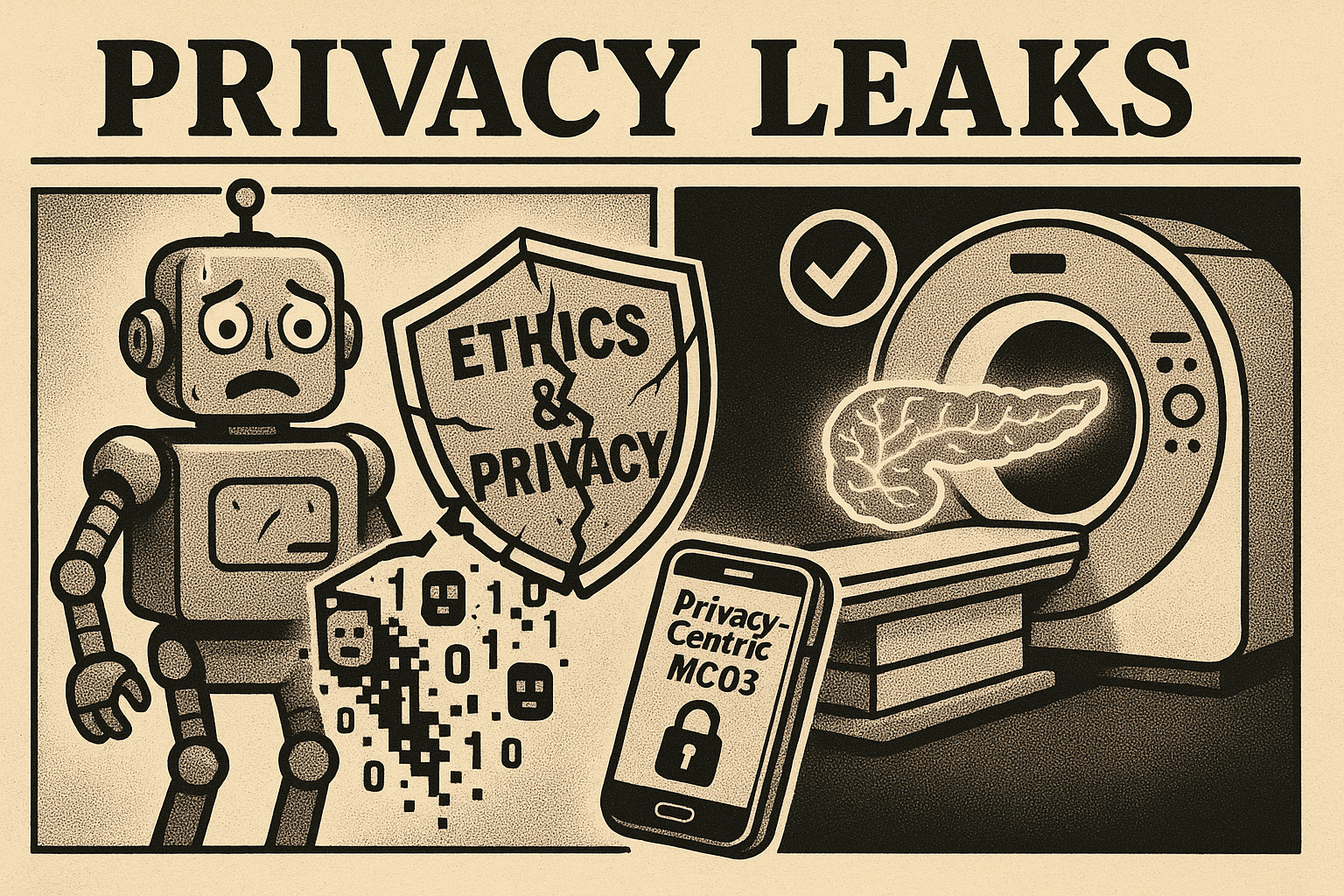
xAI’s Grok chatbot came under fire after numerous reports emerged of the AI being exploited to morph photos of women and children into explicit images on X (formerly Twitter). Experts and advocates raised alarm over growing misuse, describing it as AI-enabled sexual violence and calling for stricter regulations. The incident underscores the dire importance of building robust safeguards into generative AI systems to prevent malicious exploitation. In response to backlash, legal frameworks for tackling such AI misuse were revisited under IT Acts and privacy laws.
For further details, visit the full report: CNBC-TV18.
In China, A.I. Outperforms Doctors in Detecting Deadly Tumors
Category: Healthcare and Life Sciences
Source: The New York Times
China is leveraging AI to detect deadly pancreatic tumors with unprecedented accuracy. Modern algorithms trained on medical image datasets are enabling early-stage diagnoses, which significantly boost treatment success rates. The technology has been integrated across Chinese hospitals, cementing its position in diagnostic frameworks. As AI advances in healthcare, researchers are optimistic about its transformative potential to save lives globally.
Learn more: The New York Times.
Dream2Flow: Stanford’s AI Lets Robots “Imagine” Before Acting
Category: Autonomous Systems and Robotics
Source: ScienceClock
Stanford University’s Dream2Flow brings groundbreaking adaptability to robotics by enabling robots to “imagine” tasks before execution. By visualizing object movement paths from generated mental videos, robots can achieve greater precision and efficiency in complex environments. This visionary framework bridges the embodiment gap, a critical challenge in robotics. While promising, the technology still faces glitches in generative outputs, requiring further alignment with physical realities.
Read the full story: ScienceClock.
Google AI Overviews Risk Harm With Misleading Health Advice
Category: Ethics and Governance
Source: The Guardian
An investigative report revealed dangerous inaccuracies in Google’s AI Overviews related to health advice. Examples include incorrect dietary guidelines for cancer patients and misleading liver test results, potentially causing harm. Critics argue that unverified AI summaries erode trust in healthcare advice, highlighting the urgent need for stronger quality control mechanisms in generative AI algorithms.
Learn more: The Guardian.
Punkt. Unveils Privacy-Centric MC03 Smartphone
Category: Security and Privacy
Source: Punkt.
Swiss company Punkt. showcased its latest innovative smartphone, the MC03, built on privacy-centric features and user empowerment. With two dedicated repositories—Vault for secure apps and Wild Web for custom usage—the phone prioritizes privacy by blocking data trackers. Collaborations with trusted platforms like Proton strengthen the device’s ecosystem. Priced competitively, the MC03 aims to redefine smartphone usage through minimal distraction and privacy-first principles.
Explore details here: Punkt..
Short Updates and Summaries
OpenAI’s Screenless AI Devices Highlight Voice-Centric Shift
OpenAI’s Jony Ive-designed pen and screenless AI devices aim to enhance efficiency using audio-first interactions. Read more on Android Authority.
AI Futures Model Suggests Extended Automation Timelines
Updated forecasts from AI Futures predict superintelligence milestones may extend three years beyond initial estimates, emphasizing the transformative impact of automation in R&D. Explore details here.
Americans’ Growing Distrust of AI Technologies
A social analysis emphasizes cultural, political, and economic factors contributing to Americans’ skepticism towards AI. More from NYT.
Stay tuned for more updates tomorrow!