Table of contents
Open Table of contents
OpenAI reorganizes teams to build audio-focused AI hardware products
Category: Infrastructure and Hardware
Source: Ars Technica
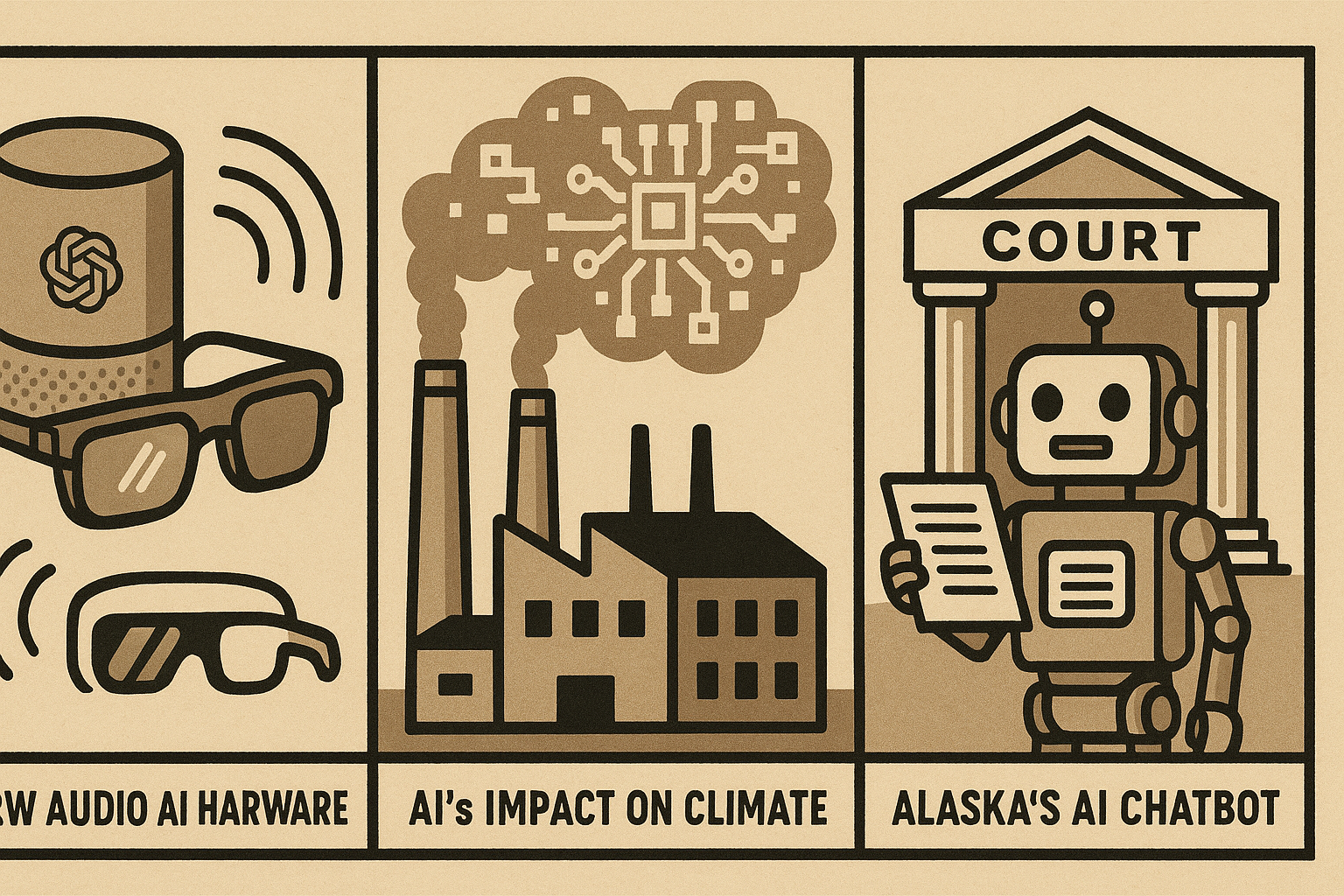
OpenAI is making a major push into audio-based artificial intelligence with plans to release a new family of hardware devices in 2026. These devices, such as advanced smart speakers and augmented reality glasses, aim to improve adoption and usability of voice interfaces, traditionally lagging behind screen-based technologies. Integrating teams across engineering, product development, and research, OpenAI hopes to advance audio models to overcome current limitations in accuracy and speed.
This move aligns with industry trends seen with competitors like Google and Amazon, who have been investing heavily in voice interfaces. OpenAI’s focus on audio interaction could transform how users engage with their devices, promoting less screen dependency and potentially sparking a new era of voice-first technologies.
To learn more, visit OpenAI’s dedicated research page: OpenAI Audio Models.
‘Just an unbelievable amount of pollution’: How AI impacts the climate
Category: Trends and Analysis
Source: The Guardian
AI technologies are increasingly under scrutiny for their environmental impact, with data centers consuming massive amounts of energy and contributing to carbon emissions. Experts are concerned about significant electricity usage as datacenter demands grow worldwide, threatening global climate goals. Despite potential for AI to aid in energy optimization and climate solutions, heavy reliance on fossil fuels for AI development remains a pressing issue.
Ireland’s escalating datacenter electricity demand and Elon Musk’s datacenter emissions highlight the urgency to regulate AI resource consumption. Calls for environmental impact assessments and greener AI innovations are growing as corporations face pressure to deploy sustainable technology responsibly.
For more insights, review the International Energy Agency’s report: AI and Climate.
Alaska’s court system built an AI chatbot, but faced challenges
Category: Enterprise and Adoption
Source: NBC News
Alaska’s court system spent over a year developing an AI-based probate assistant, AVA, aimed at simplifying complex legal procedures for residents. While promising, the project encountered delays and technical issues, including inaccurate outputs and misaligned chatbot behaviors during testing.
Developers faced challenges such as balancing empathetic design with legal accuracy, and curbing AI “hallucinations.” Despite setbacks, AVA is scheduled for a late January launch, illustrating efforts to tackle high-stakes applications of AI in government services.
For further updates on the project, visit the original article on NBC News.
Other news in brief
-
Microsoft CEO Satya Nadella launches AI-focused blog: Nadella’s vision centers on cognitive amplification tools and responsible AI integration, emphasizing the pivotal impact AI will have in 2026.
Source: The Verge -
Bypassing Nano Banana Pro watermarks: Reddit users report diffusion-based post-processing techniques that remove the AI tool’s invisible watermark detection. This discovery raises questions about AI security and robustness in digital watermarking.
Source: Reddit
Each story highlights the scale and complexity of AI’s influence across sectors, from innovation and sustainability to ethics and adoption challenges. Stay tuned for more insights on tomorrow’s developments in AI!