Table of contents
Open Table of contents
Sebastian Raschka Maps the Architecture Behind Modern Coding Agents
Category: Tools and Platforms Source: Sebastian Raschka, PhD
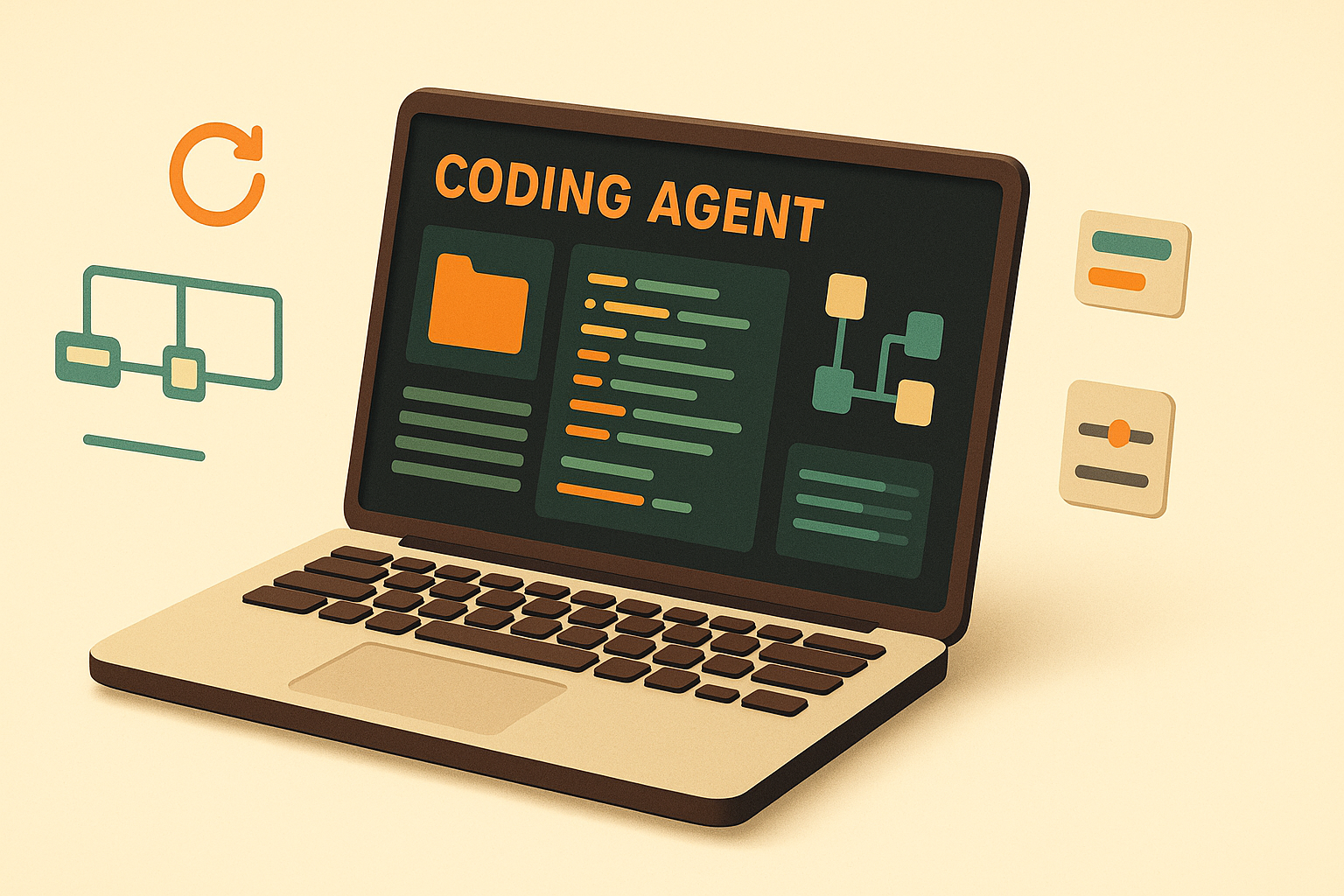
A widely shared new deep dive from Sebastian Raschka focused less on model benchmarks and more on the software layer that makes coding agents useful in practice. His argument is that the real differentiator in developer-facing AI products is often not the base model alone, but the surrounding harness: repo awareness, prompt caching, structured tool use, context compression, session memory, and bounded delegation.
That framing matters because it helps explain why similarly capable frontier models can feel very different in tools like Codex, Claude Code, or lightweight open-source agents. Raschka argues that a coding agent becomes meaningfully stronger when it can inspect a repository, reuse stable prompt prefixes, validate tool calls, and avoid wasting context on repeated file reads and oversized logs. In other words, the engineering around the model increasingly determines reliability, speed, and cost.
For practitioners, the piece is useful because it translates “agentic coding” from marketing language into concrete system design choices. Teams building internal developer agents are under pressure to reduce token waste, improve approval controls, and make sessions resumable; Raschka’s six-part framework gives them a practical checklist for evaluating those systems. It also reinforces a broader industry trend: as foundation models converge, workflow orchestration and context management are becoming a more important competitive moat.
Microsoft Expands Machine-Learning-Guided Windows 11 Rollouts
Category: Tools and Platforms Source: Microsoft
Microsoft has begun automatically rolling out Windows 11 25H2 to eligible consumer PCs running 24H2, using what it describes as an “intelligent” update system that applies machine learning to decide when a device is ready. The rollout targets Home and Pro devices, while enterprise-managed systems are excluded for now.
The move is notable because it shows AI and machine learning continuing to shift from optional product features into infrastructure-level control systems. Microsoft is not just adding AI assistants to Windows; it is also using ML to make operating-system decisions about timing, compatibility, and deployment at scale. That may improve update completion rates and reduce fragmentation, but it also raises familiar concerns about transparency and user agency, especially when forced updates are involved.
The timing adds another layer of scrutiny. Microsoft is pushing the new version ahead of 24H2’s support deadline later this year, while still dealing with recent Windows update reliability issues. For IT leaders and software vendors, the implication is clear: machine-learning-based automation is increasingly shaping the operating environment underneath AI applications themselves. That makes governance, override controls, and clearer communication around automated system decisions more important, not less.
Quick Updates
- Tesana pitches prompt-based game creation for the masses: PC Gamer profiled startup Tesana, which says AI tools could let “100 million new people” make videogames, underscoring growing investor and creator interest in generative game development even as questions remain about quality and originality. Source: PC Gamer
- Developer benchmarks claim major token savings in agent workflows: A Reddit post from an independent builder argued many agent frameworks waste hundreds of thousands of tokens by repeatedly resending static files, and presented a compile-time approach that reportedly cut context usage by 95%. Source: Reddit
- NHS staff reportedly resist Palantir’s data platform: Resistance to Palantir’s Federated Data Platform inside England’s health service appears to be driven by ethics, privacy, and trust concerns, showing how adoption barriers can persist long after large public-sector AI and data contracts are signed. Source: The Register
- OpenAI sketches a broader “super app” vision for ChatGPT: Greg Brockman said OpenAI is working toward a unified application that combines chat, coding, browsing, and memory into a more agentic personal assistant, signaling how the company wants ChatGPT to evolve beyond a single chatbot interface. Source: Capital AI Daily
- Skyvern details a workflow for Claude to QA its own output: The automation startup described using browser automation plus Claude-generated code to test UI changes and catch the kinds of small but costly failures that often slip through code generation alone. Source: Skyvern
- Report links Grok subscriptions to SpaceX IPO banking mandates: Yahoo Finance reported that banks participating in the planned SpaceX IPO may be required to buy Grok subscriptions, a sign of how AI products are being bundled into broader corporate finance and ecosystem deals. Source: Yahoo Finance
- Anthropic tightens third-party access to Claude subscriptions: Starting April 4, Claude subscription limits no longer cover usage through third-party harnesses like OpenClaw, pushing heavy users toward pay-as-you-go bundles or API billing and highlighting the cost of agentic demand on model providers. Source: The Verge
- China moves toward rules for digital humans: Draft rules targeting AI-generated avatars and “digital humans” point to deeper regulatory interest in synthetic media, identity disclosure, and platform accountability in China. Source: The Broad Post
- A veteran WordPress developer pushes back on “AI killed the CMS” claims: An opinion essay argued that AI may change interfaces and workflows, but does not eliminate the long-term value of content models, permissions, publishing systems, and maintainability that traditional CMS platforms provide. Source: jazzsequence
- Research suggests many users over-trust faulty AI answers: Ars Technica highlighted new findings that people are often too willing to defer to LLM outputs, even when those answers are wrong, adding to evidence that convenience can come at the expense of critical thinking. Source: Ars Technica
- Educators say AI is flattening classroom discussion: CNN reported that some students now use chatbots to generate talking points during class, with faculty observing more homogeneous participation and less original reasoning. Source: CNN
- NVIDIA uses National Robotics Week to highlight physical AI: The company used the occasion to spotlight research, tools, and ecosystem work aimed at bringing foundation models into robots and other embodied systems, reinforcing its push beyond data-center AI into physical automation. Source: NVIDIA
- Industry commentary contrasts open and closed agent strategies: A Sparked Weekly item making the rounds argued that NVIDIA is expanding partnerships around enterprise AI agents while Anthropic is becoming more restrictive on third-party agent usage, illustrating divergent platform strategies across the sector. Source: Sparked Weekly
- Medvi scrutiny deepens over AI-generated marketing and authenticity claims: Investigations into GLP-1 startup Medvi pointed to AI-generated patient images and deepfaked before-and-after photos, merging concerns about deceptive health marketing with broader questions about startup due diligence. Source: Futurism
- Take-Two reportedly dissolves its internal AI team: The game publisher behind Rockstar and Zynga has reportedly laid off its AI unit, a notable counterpoint to the wider entertainment industry’s rush toward generative tooling. Source: Eurogamer