Table of contents
Open Table of contents
- Anthropic Pushes Claude Further Into Long-Running Agent Work
- Cloudflare Turns AI Gateway Into a Cross-Provider Inference Layer
- Agent Security Problem of the Day: Tool Metadata Can Hijack the Model
- Research Shows Cheap LLM Routers Can Become a Real Supply-Chain Risk
- Google Is Standardizing Agentic Android Development With a CLI and “Skills”
- Keycard Targets a Real Pain Point for AI Teams: Local Secret Handling
- Quick Updates
Anthropic Pushes Claude Further Into Long-Running Agent Work
Category: Model Releases
Source: Anthropic
Anthropic introduced Claude Opus 4.7, positioning it as a step forward for extended tasks, stricter instruction-following, self-verification, and better vision. The company also added API controls including a new xhigh effort level and task budgets in beta, plus Claude Code updates such as /ultrareview and expanded auto mode for Max users.
The practical question is not whether the model is “smarter” in the abstract, but whether it fails less often in multi-step work where small errors compound. That is where enterprise buyers and serious developers actually feel model quality. Anthropic’s emphasis on long tasks and self-checking suggests it is chasing reliability more than novelty—a sensible direction, since most teams do not need another chatbot personality; they need fewer silent mistakes in coding, review, and operations.
The vision upgrade is also notable. Anthropic says Opus 4.7 can process images at more than 3× the previous resolution, which matters for documents, diagrams, UI screenshots, and anything else where detail gets lost quickly. The hype to ignore: “self-verification” is not the same as truth. The thing to watch is whether Opus 4.7 materially reduces rework in production agent flows, especially coding and review pipelines where Anthropic has been building a strong position.
Cloudflare Turns AI Gateway Into a Cross-Provider Inference Layer
Category: AI Infrastructure
Source: Cloudflare
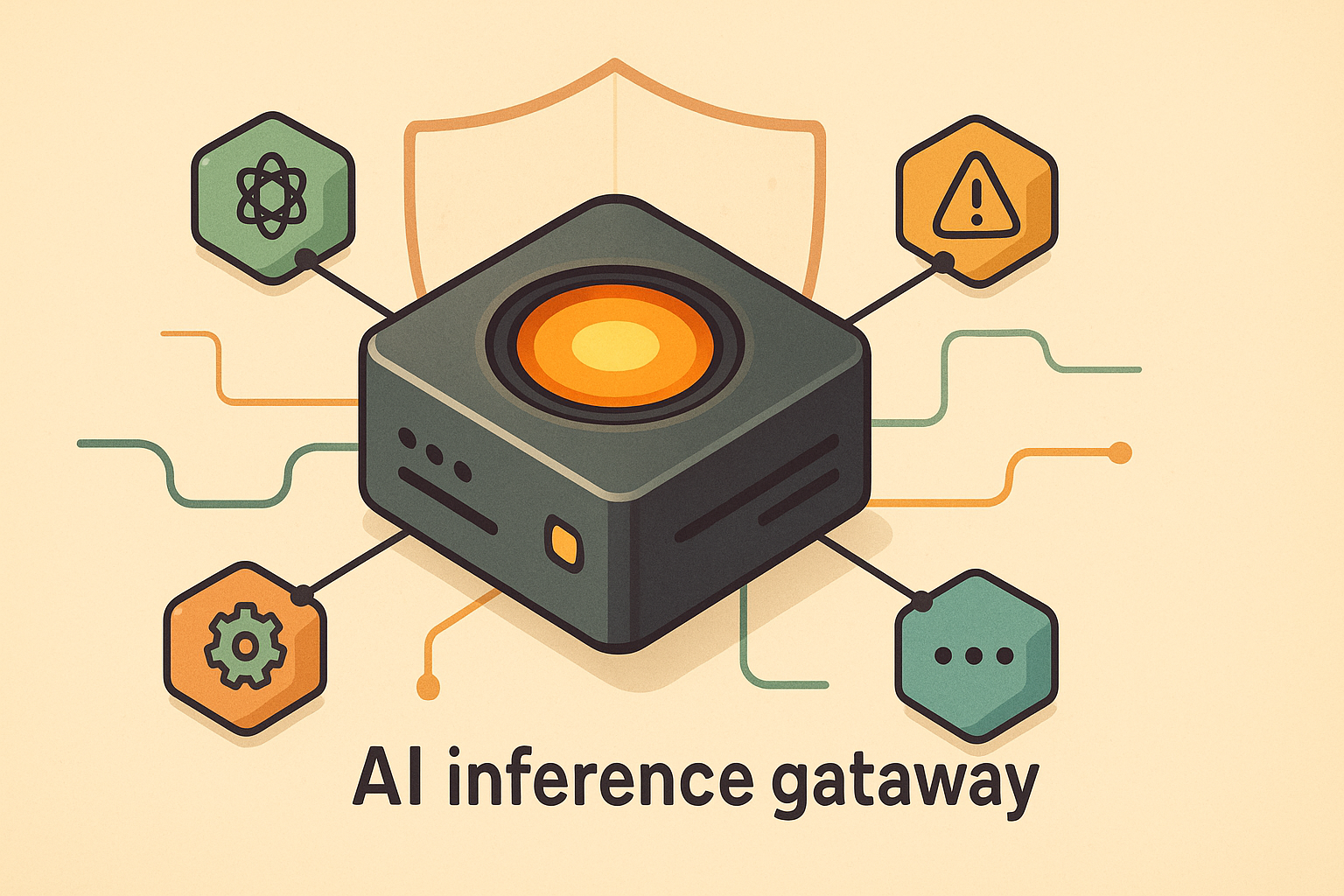
Cloudflare said it is evolving AI Gateway from a usage-management layer into a broader inference layer for agents, with support for calling models across 14+ providers. It also tied the product more closely to Workers AI and expanded the model catalog to include more multimodal options.
This matters because the stack is starting to normalize around model routing rather than single-model commitment. Developers increasingly want one control plane for logging, caching, policy enforcement, and provider switching. Cloudflare is trying to become that layer. If it succeeds, it gains leverage not by owning the best model, but by sitting between application builders and every model they might use.
There is an obvious tradeoff. The more companies centralize prompts, tool calls, and routing through a single gateway, the more operational convenience they get—and the more they concentrate risk. That concern is not theoretical; today’s security news makes that plain. Still, from a platform perspective, this is one of the more consequential moves of the day: inference management is becoming infrastructure, not glue code.
Agent Security Problem of the Day: Tool Metadata Can Hijack the Model
Category: Security & Privacy
Source: Secra
Secra described an MCP tool-poisoning attack in which malicious instructions are hidden inside tool metadata—specifically the descriptions models read when deciding how to use a tool. If an agent trusts that metadata blindly, an attacker can steer behavior and potentially exfiltrate sensitive material such as SSH keys.
The important shift here is where the prompt injection lives. Teams often think about user input, retrieved documents, or web pages as the danger zone. This attack pushes the problem down into the tool layer itself. In other words: even if your end user behaves, your tool registry may not. For teams building agent systems on Model Context Protocol, that means tool descriptions are now part of the trusted computing base whether they like it or not.
The near-term implication is straightforward. Treat tool metadata as untrusted input, constrain what agents can access by default, and add policy checks before secrets or filesystem contents can be handed over. MCP has been winning mindshare because it standardizes tool access; this is the predictable downside of standardization. Attackers also appreciate clean interfaces.
Research Shows Cheap LLM Routers Can Become a Real Supply-Chain Risk
Category: Security & Privacy
Source: arXiv
A new paper audited 428 third-party LLM API routers—the unofficial proxies some developers use to route calls more cheaply across providers—and found 9 that were actively malicious. Researchers report credential touching on 17 canary AWS secrets and one case where a researcher-owned ETH wallet was drained. The same study describes router behavior designed to evade casual testing, including delayed activation and triggers based on package names in code context.
This deserves attention because it cuts against a common cost-optimization instinct in the agent ecosystem. Routing through a third party looks like harmless arbitrage until you remember that the router sits in plaintext between your app and the model. That means full visibility into prompts, tool payloads, code, credentials, and session state. For autonomous agents, that is effectively root access to the workflow.
The lesson is not that all routing is bad. Enterprise gateways tied directly to Bedrock, Azure, or first-party infrastructure are a different category. The lesson is narrower and more useful: if you are using informal “cheaper OpenAI” style proxies, assume they can read and alter everything. Add fail-closed validation, logging, and schema enforcement—or stop using them for anything sensitive.
Google Is Standardizing Agentic Android Development With a CLI and “Skills”
Category: Developer Tools
Source: Android Developers Blog
Google launched Android CLI, a terminal interface aimed at making Android development easier for both humans and coding agents. The company says it reduces token usage by more than 70% and speeds common tasks by 3×, covering SDK setup, project scaffolding, emulator control, and deployment. It also introduced an Android Skills repository: markdown-based workflow instructions that agents can invoke through android skills.
The substance here is bigger than a CLI release. Google is packaging domain workflows into structured artifacts agents can follow reliably, rather than asking models to improvise against sprawling docs. That is quickly becoming the pattern for serious agent tooling: shrink the surface area, formalize the steps, lower the token bill, and reduce room for hallucinated commands.
The “3× faster” framing is marketing until independently validated, but the directional move is real. Vendors are no longer just exposing APIs to models; they are redesigning developer tooling so agents have fewer chances to get lost. Expect more of this from other ecosystems, especially where setup complexity still eats tokens and patience.
Keycard Targets a Real Pain Point for AI Teams: Local Secret Handling
Category: Security & Privacy
Source: Keycard
Keycard launched as a local-first secret workflow for developers and AI teams. The pitch is simple: store API keys encrypted on-device, organize them into profiles like dev and prod, and inject them only into subprocesses via CLI rather than dumping them into a shell or scattering them across .env files. The core product is open source under MIT; sync and team features are planned as paid additions.
That may sound small next to model launches, but it solves an increasingly common operational mess. AI development has multiplied the number of keys teams juggle—model providers, vector stores, eval tools, browser automation, cloud services—and many teams still manage them with a mixture of copy-paste habits and optimism. Keycard’s local-first approach is a credible response, especially for solo developers and small teams who do not need a full enterprise secrets platform.
The caveat is also obvious: a local-first tool is not a substitute for proper shared-secret governance, rotation, or auditability once teams scale. But for early-stage AI work, “don’t leak keys and don’t pollute your shell” is already a pretty strong product thesis.
Quick Updates
-
Allbirds becomes “NewBird AI,” and the market briefly loses its bearings: The footwear brand said it wants to pivot into GPU-as-a-service and AI-native cloud offerings, backed by a $50 million facility disclosed in an SEC filing. Treat this as a case study in AI-era financial theater unless and until there is evidence of actual infrastructure competence. Source: SEC filing
-
Qwen open-sources a sparse multimodal model with just 3B active parameters: Qwen3.6-35B-A3B is released under Apache 2.0, with 35B total parameters but only 3B active at inference thanks to mixture-of-experts routing. If the efficiency claims hold, it is exactly the kind of open model that makes local and edge experimentation more interesting. Source: Hugging Face
-
Simon Willison’s quick test suggests Qwen’s new model punches above its weight locally: His very specific benchmark—a pelican drawing test on a laptop—is not science, but it is a useful reminder that small active-parameter models keep getting more usable for on-device work. Source: Simon Willison
-
Google appears to have shipped a native Gemini app for macOS: Early reports say the app mostly mirrors the web experience for now, with Gemini Live support likely to follow. The broader pattern is clear: model vendors want desktop-level presence and permissions, not just browser tabs. Source: Reddit
-
A blog post on “arguing with agents” makes a thoughtful point about RLHF and misread intent: The author connects literal communication styles, neurodivergence, and the way tuned models infer subtext that users did not actually supply. This is commentary, not new research, but it articulates a real product problem many teams have felt and struggled to name. Source: blowmage
-
Researchers handed Codex a foothold and it reportedly popped a Samsung TV: The writeup is another reminder that coding agents can become offensive-security accelerants when placed near vulnerable systems. Useful as a warning signal, even if the long-term takeaway is the familiar one: sandbox everything. Source: Calif
-
An indie project claims better answers by injecting domain methodology and forcing multi-model debate: ParallaxAI routes queries through domain-specific reasoning frameworks, then has multiple frontier models critique one another before synthesis. Interesting architecture; still very much in the “show me the evals” category. Source: Reddit
-
Agent-cache launches as a multi-tier cache for agent stacks using Redis or Valkey: It aims to unify caching for LLM responses, tool results, and session state with adapters for LangChain, LangGraph, and Vercel AI SDK. Worth a look if your agent infrastructure is spending too much on repeated work. Source: Hacker News
-
Another study raises the usual concern: AI helps first, then users may struggle without it: Engadget reports on research involving 350 participants using a chatbot, with poorer performance once the AI was removed. The claim is directionally plausible, though this is an area where study design matters more than gloomy headlines. Source: Engadget
-
Interhuman introduces Inter-1 for reading social signals from video, audio, and text: The model is built to detect cues such as hesitation, skepticism, and stress, with rationales grounded in a behavioral-science ontology. The benchmark claims are ambitious; the deployment questions—bias, context, misuse—are the part to scrutinize. Source: Interhuman
-
Google says synthetic neurons can speed brain mapping: Its MoGen model generates realistic neuronal shapes to improve connectomics training data, reducing reconstruction error by 4.4% in tests. That sounds modest until you reach the “equivalent to 157 years of expert labor saved” part, which is why this line of work matters. Source: Google Research
-
NVIDIA handed out EMEA partner awards for AI deployment work: This is mostly channel-program news, but it does reflect where money is flowing: implementation partners that can turn GPU demand into deployed enterprise systems. Not every infrastructure story is a chip launch. Source: NVIDIA
-
A new film trailer uses AI to include Val Kilmer with estate approval: “As Deep as the Grave” is the latest example of AI-assisted posthumous performance entering mainstream production with explicit rights-holder involvement. The legal permission helps; the cultural debate is not going away. Source: Variety