Table of contents
Open Table of contents
OpenAI turns ChatGPT into more of a work platform
Category: Enterprise and Adoption Source: OpenAI
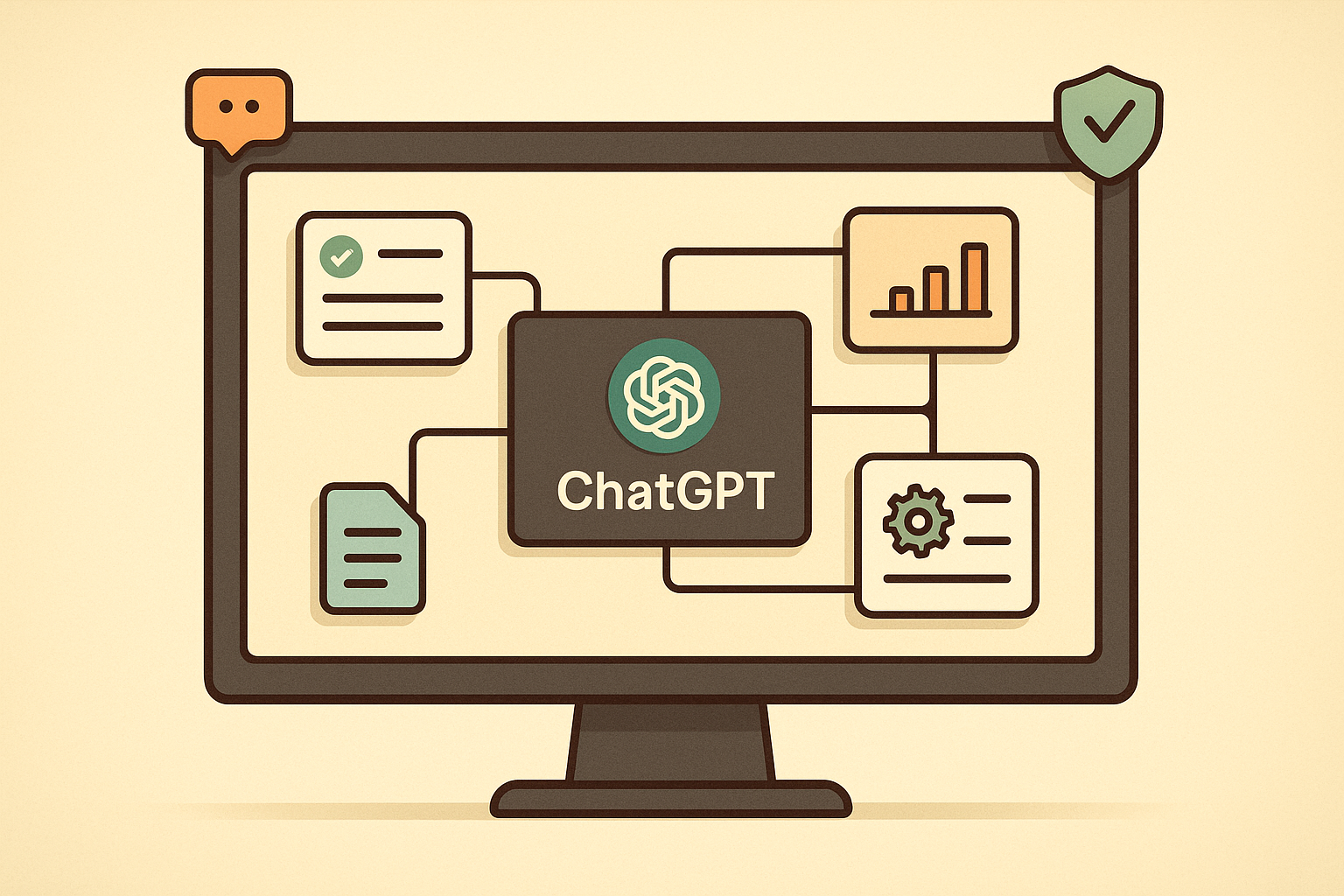
OpenAI’s most consequential release today wasn’t another base model. It was workspace agents in ChatGPT: shared, Codex-powered agents for Business, Enterprise, Edu, and Teachers plans that can run long workflows in the cloud, connect to tools, work in Slack, and be governed by admin controls. This matters because it pushes ChatGPT from “personal assistant” toward a real operating layer for internal work: scheduled reports, lead qualification, software approval flows, product-feedback routing, and other repetitive cross-tool processes.
The key shift is organizational, not just technical. These agents are designed to be shared, permissioned, monitored, and iterated as team assets rather than one-off prompt setups. OpenAI is also signaling where the monetization goes next: agents are free in research preview only until May 6, after which usage moves to credit-based pricing. For buyers, the watch item is whether these agents reduce integration and workflow glue enough to beat the usual sprawl of copilots, RPA, internal bots, and SaaS automation tools.
OpenAI also shipped ChatGPT Images 2.0, claiming improved text rendering, multilingual generation, and stronger visual reasoning, plus a separate privacy filter model for spotting and redacting PII from text. The image update is notable mainly because text rendering and multilingual fidelity have been persistent weak spots across image models; if the gains hold up in production workloads, that expands usefulness for marketing assets, UI mockups, documentation, and localization. The privacy model is more operationally important: enterprises adopting AI broadly need preprocessing and redaction layers before data ever touches training or inference systems.
Taken together, today’s OpenAI news looks less like a flashy model day and more like stack consolidation. The company is trying to own more of the practical workflow—from content generation to orchestration to compliance plumbing. That’s strategically stronger than any single benchmark jump, but it also puts OpenAI into more direct competition with automation vendors, collaboration suites, and developer tooling platforms that have so far benefited from sitting one layer above the models.
AI’s new battleground: code, chips, and security access
Category: Infrastructure and Hardware Source: CNBC
SpaceX said it has secured rights to buy Cursor later this year for $60 billion, or alternatively pay $10 billion for the companies’ collaboration. However unusual the pairing looks, the logic is straightforward: coding agents are becoming foundational infrastructure for software, operations, and knowledge work, and Cursor is one of the few companies with enough traction to matter at this scale. For SpaceX—already leaning hard into AI after Musk’s xAI tie-up—this is less about IDE software than owning a strategic interface for engineering work ahead of a likely IPO.
The number is the story. A $60 billion option price for a coding startup tells you how aggressively the market now values control over developer workflow. It also reinforces how quickly “AI application” companies can become infrastructure companies if they sit in front of enough high-value human labor. Separate but related, Vast Data raised $1 billion at a $30 billion valuation with Nvidia participating, a reminder that the enabling layers under model training and inference—storage, data movement, memory architecture—are still attracting massive capital alongside the headline model labs.
Google, for its part, used new TPU 8t and TPU 8i announcements to make a sharper architectural argument against Nvidia: split training and inference cleanly, add more SRAM, and optimize each path separately. The company says the training chip improves 2.8x over the previous generation, while the inference chip delivers an 80% performance bump. Google also paired that with a broader cloud push alongside Nvidia around agentic and physical AI. The practical signal: hyperscalers are no longer just scaling generic accelerator fleets; they’re designing more task-specific silicon and selling full-stack environments for training, inference, robotics, and agents.
Security remains the destabilizing variable. Reuters reported that Anthropic’s Mythos model—designed for advanced cybersecurity work—was reportedly accessed by unauthorized users, and Anthropic is investigating. That matters because Mythos sits in the narrow category of models whose commercial value and societal risk both come from the same capability: finding and exploiting software flaws at scale. If frontier cyber models are hard to contain operationally, the industry’s security race gets more urgent. The watch item now is not just which company has the strongest model, but which can govern access, logging, approvals, and containment tightly enough for those models to be trusted in the wild.
Quick Updates
-
Gallup: Gen Z uses AI more, likes it less: A Gallup survey of 1,500+ Gen Z respondents found regular generative AI use above 50%, while excitement fell from 36% to 22% and anger rose from 22% to 31%, largely tied to job anxiety. For leaders, adoption no longer implies goodwill. Source: Gallup
-
SurfSense pitches itself as an open-source NotebookLM alternative: The GitHub project emphasizes no data limits, model flexibility, privacy controls, external-source integrations, and multiplayer collaboration. Useful mainly as a sign of demand for self-hostable research copilots with fewer platform constraints. Source: GitHub
-
Michael and Susan Dell cross $1 billion in giving for an AI-native hospital project: Their latest gift backs a University of Texas at Austin medical research campus and hospital system intended to use AI deeply in operations and care. The long timeline matters: real AI transformation in healthcare is still capital-intensive and infrastructure-heavy. Source: Fox News
-
Wall Street law firm apologizes for AI-generated filing errors: Sullivan & Cromwell told a federal judge that a filing in the Prince Group case included hallucinated or inaccurate citations after internal AI controls were not followed. This is becoming less a novelty than a governance failure mode. Source: The Guardian
-
Pentagon seeks $54 billion for autonomous warfare push: The proposed budget would massively expand funding for autonomous and remotely operated systems under a new Defense Autonomous Warfare Group. The money is real; the doctrine, accountability framework, and safeguards appear much less mature. Source: The Guardian
-
Sony AI’s table-tennis robot reportedly beat elite players: The result, under official rules, is another sign that tightly scoped physical tasks are improving fast when perception, planning, and control are co-optimized. Worth watching as a robotics milestone, not a general-purpose one. Source: The Guardian
-
Nvidia and Google Cloud deepen AI factory partnership: The companies are packaging large-scale GPU infrastructure, Gemini on distributed cloud, confidential compute, and agentic tooling into a joint enterprise pitch. Read this as ecosystem lock-in getting more vertically integrated. Source: NVIDIA
-
Intel updates LLM-Scaler with Arc Pro B70 support: The latest release adds official support for Intel’s sub-$1,000 Arc Pro B70 GPU in its Dockerized vLLM stack. For cost-sensitive inference deployments, the more interesting question is software maturity, not raw support. Source: Phoronix
-
Zed adds parallel agents in one window: The editor now lets users run and monitor multiple agent threads at once, with per-thread repository access controls. Expect this pattern—parallelized, supervised agent work—to spread across developer tools. Source: Zed
-
Anker built its own AI chip for consumer devices: The new “Thus” chip is starting in earbuds before broader rollout across Anker products. It’s a small but clear sign that on-device AI silicon is moving beyond phones and PCs into mainstream peripherals. Source: The Verge
-
Firefox bug-hunting claims keep pressure on cyber-AI timelines: Reporting around Anthropic’s Mythos says AI-assisted discovery helped surface large numbers of long-standing vulnerabilities, including in major open-source software. Even if individual numbers move around, the directional signal is clear: defensive patching windows are shrinking. Source: Mozilla Blog
-
Daily Beast reports AI-enabled political romance scam case: The story centers on a scammer allegedly using an AI-generated persona to deceive victims. The broader lesson is familiar: low-cost synthetic identity tools keep lowering the barrier for targeted fraud. Source: The Daily Beast
-
A community project aims to evaluate AI-era job risk more pessimistically: A Reddit user shared an “AI Job Evaluator” focused on domain mismatch and stealth-startup risk. Not a market-moving release, but it reflects growing worker demand for tools that assess AI exposure from the labor side rather than the employer side. Source: Reddit
-
404 Media highlights startups bragging about AI spend over headcount: Some AI startups are explicitly framing compute as a substitute for hiring. That’s partly signaling, partly fundraising theater—but it captures how quickly labor-vs-compute tradeoffs are being normalized in startup strategy. Source: 404 Media