Table of contents
Open Table of contents
OpenAI Ships GPT-5.5 as the Model Race Turns Into a Workflow Race
Category: Tools and Platforms
Source: OpenAI
OpenAI says GPT-5.5 is its strongest model yet, aimed less at chat and more at work: coding, research, and analysis across tools. The immediate takeaway is not just capability; it’s positioning. The market is shifting from “who has the smartest model” to “who can turn the model into a usable worker.”
That matters because the competitive frontier is now bundled with productization and pricing, not benchmarks alone. The Neuron’s readout alongside the launch points to a broader pattern: OpenAI’s worker-model strategy is becoming explicit, with GPT-5.5 reportedly posting strong results on terminal and professional-task benchmarks, but at a price premium that will force teams to be selective about where they spend tokens.
The practical question for practitioners is whether this becomes a default production model or a premium specialist. For buyers, the issue is no longer raw model quality; it’s whether the gains justify higher inference costs, especially as teams compare OpenAI’s offer against Anthropic’s latest and a growing pile of competent open models.
AI Is Moving Into Physical Systems, Enterprise Work, and the Cost Center
Category: Enterprise and Adoption
Source: The Neuron
Today’s second-order signal is that AI is leaving the demo loop and hitting real operating constraints. Sony’s Ace and Toyota’s CUE7 show embodied learning getting more serious; OpenAI, Google, and Microsoft are pushing agents into real workflows; and the bill for all of it is becoming visible in chips, data centers, grid load, and headcount.
Sony’s Ace robot is the clearest robotics story of the day because it’s not a toy benchmark. It beat elite human ping-pong players under full rules, using sensor-heavy perception and reinforcement learning trained in simulation. Toyota’s CUE7 makes a different point: the company threw out earlier hand-coded control logic and retrained the robot to learn motion through experience. Both systems underscore the same trend—robotics is moving from scripted motion to policy learning, but only in tightly engineered environments for now.
On the enterprise side, Google says 75% of new code at the company is AI-generated, while OpenAI launched workspace agents and ChatGPT for Clinicians. Meta is cutting 10% of staff while also deepening AI investment and tracking employee activity for model training. That combination tells you where the value is concentrating: fewer humans shaping more systems, with the bottleneck moving to governance, reliability, and compute.
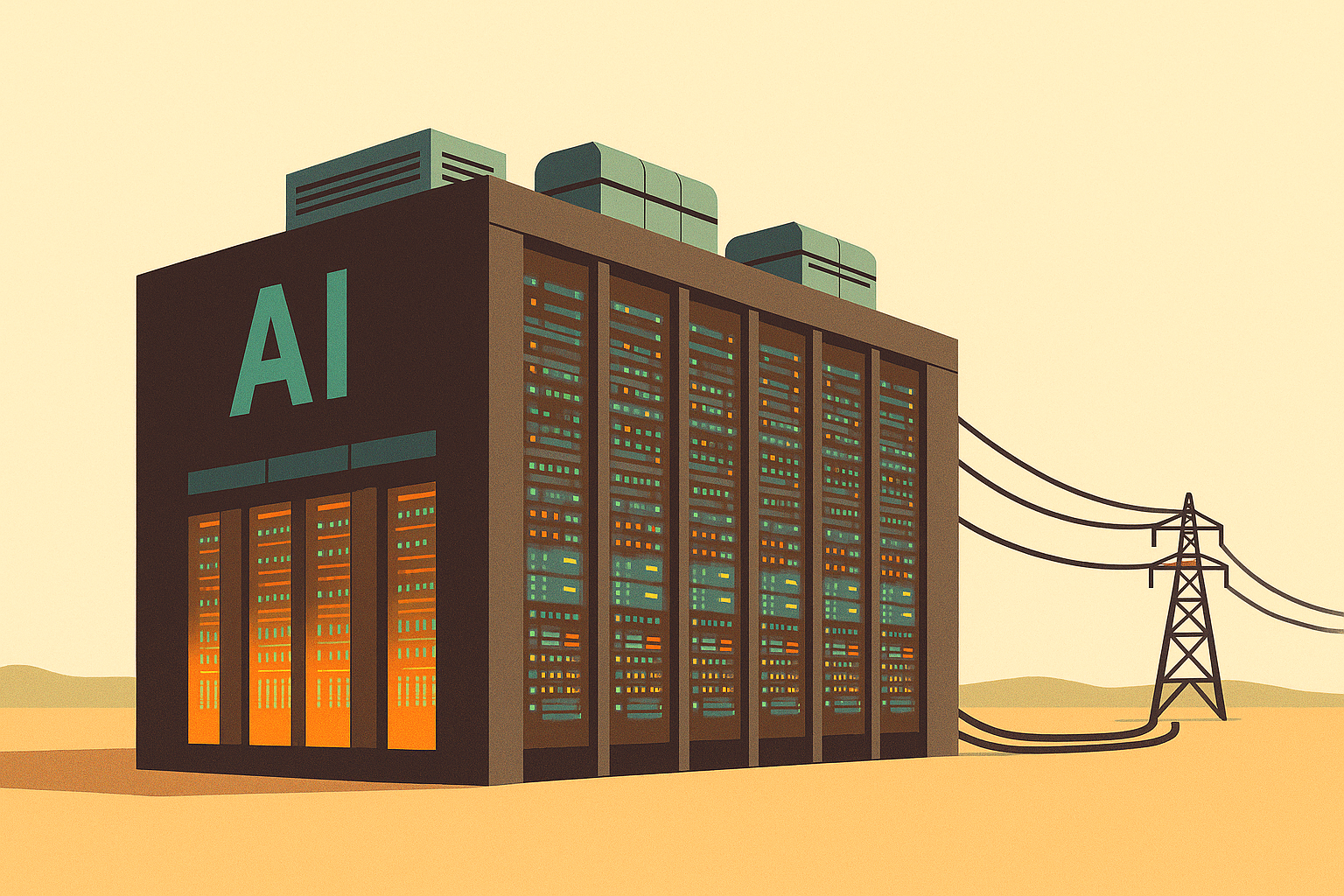
The cost side is catching up fast. Applied Digital signed a 15-year hyperscaler lease for 300 MW at its Delta Forge 1 campus, extending contracted revenue above $23 billion. Texas Instruments had its best day since 2000 on AI-driven chip demand. CNN highlighted the obvious but often dodged issue: AI growth is colliding with finite power and grid capacity. In other words, the next constraint is no longer model quality—it’s infrastructure.
Quick Updates
- House lawmakers got a live demo of jailbroken AI: DHS showed how uncensored models can produce violent or cyberattack instructions once safeguards are removed. Source: Politico
- Courts are splitting on AI-chat privilege: One federal judge said AI chats have no attorney-client privilege, while another protected ChatGPT logs as work product; deleted chats were also recovered in a separate fraud case. Source: Synvoya Blog
- Anthropic faced fresh Claude Code backlash: Pricing-page changes suggested Pro users might lose access, then were rolled back after public criticism. Source: Anthropic
- Meta is cutting 10% of its workforce: About 8,000 jobs are affected as the company keeps shifting capital and headcount toward AI. Source: CNBC
- Google says 75% of new code is AI-generated: A blunt reminder that internal adoption is now the real benchmark for coding assistants. Source: Business Insider
- Applied Digital landed a major hyperscaler tenant: A new 300 MW lease at Delta Forge 1 pushes contracted revenue above $23 billion. Source: Applied Digital
- Texas Instruments rode AI data-center demand: Analog chips are becoming a quiet beneficiary of the buildout, and TI’s stock had its best day since 2000. Source: CNBC
- IBM beat quarterly estimates on hybrid cloud growth: Another sign that enterprise AI spending is favoring infra and platforms with existing distribution. Source: Financial Times
- OpenAI launched ChatGPT for Clinicians: Verified US physicians get a dedicated workflow tool, paired with HealthBench Professional. Source: The Neuron
- OpenAI also shipped a Privacy Filter: The open-weight 1.5B model detects and redacts personal data locally, which is more useful than it sounds. Source: The Neuron
- Xiaomi opened beta for MiMo-V2.5-Pro: Native vision/audio plus a 1M-token context window targets long-horizon agent work. Source: The Neuron
- Alibaba’s Qwen3.6-27B is now in the mix: Open weights, consumer-GPU friendly, and positioned for coding tasks. Source: The Neuron
- Anthropic’s unreleased Mythos model is under scrutiny: Reports say a third-party vendor may have exposed access details. Source: The Guardian
- MythosWatch is now tracking official access to Mythos: The public ledger currently lists 51+ governments, regulators, and banks. Source: MythosWatch
- Brex CrabTrap wants to sit in front of your agents: The open-source proxy inspects outbound actions before they hit external APIs. Source: Brex
- Meta’s new “Model Capability Initiative” is drawing backlash: The company is tracking keystrokes, mouse movement, and screen content to train agents. Source: The Neuron
- The Pentagon wants $54B for autonomous drone warfare: That budget request would make AI-powered military systems a central line item. Source: The Guardian
- UK labor data still doesn’t show an AI productivity shock: Adoption remains low enough that exposure has not translated into a visible jobs split. Source: British Progress
- A White House-linked accusation is escalating the AI theft narrative: The FT reports the U.S. says China is engaged in industrial-scale theft of AI technology. Source: Financial Times
- CNN highlighted another hallucinated court filing: A reminder that legal work still punishes sloppy verification faster than almost any other domain. Source: CNN
- A legal assistant builder says citations are the hard part: One developer spent 40% of build time just stopping the model from citing sources incorrectly. Source: Reddit
- AI website builders are converging on the same pitch: The market is moving from site generation to cloud sandboxes and AI computers, but the moat is still unclear. Source: Reddit
- A community project has been building a multi-agent framework in public: Useful mostly as a reminder that agent orchestration is still messy, fragmented, and very much not solved. Source: Reddit
- There’s still appetite for AI explainability gimmicks: One post shared a “fable prompt” for learning hard concepts through story instead of definition. Source: The Neuron
- A cost comparison of 22 image models circulated widely: Pricing is becoming a first-class buying criterion in image generation too. Source: Reddit
- Vogue asked whether AI will kill the creator economy: The short answer: not yet, but AI creators are proliferating and disclosure is still weak. Source: Vogue
- A fake MAGA influencer was exposed as AI-generated: Another reminder that synthetic personas are already part of the political content economy. Source: The Independent
- Toyota’s CUE7 robot also made the rounds: The robot’s free throw is less about basketball than about learning physical skills through trial and error. Source: Fox News
- NVIDIA framed astronomy as an AI + GPU workload: Not a breakthrough headline, but another sign that scientific computing is becoming more automated and data-heavy. Source: NVIDIA