Table of contents
Open Table of contents
OpenAI moves ChatGPT into personal finance
Category: Finance and FinTech Source: TechCrunch
OpenAI launched a preview of personal finance features inside ChatGPT Pro in the U.S., letting users connect bank and brokerage accounts through Plaid and query spending, subscriptions, portfolio performance, and planning scenarios in natural language. The product arrives just a month after OpenAI acqui-hired the team behind finance startup Hiro, which makes this look less like an experiment and more like the opening move in a broader vertical strategy.
The notable change is not just another “AI for finance” demo. It is OpenAI asking users to trust ChatGPT with live financial data, one of the most sensitive consumer categories after health. That matters because general-purpose chatbots have always attracted finance questions, but until now most answers were based on partial context, screenshots, or manual uploads. Direct account connectivity makes the model more useful, but it also raises the stakes on privacy, retention, hallucinations, and the boundary between guidance and regulated advice.
For practitioners, this is another sign that frontier model vendors are shifting from generic chat toward workflow-specific surfaces with tighter context and higher-value use cases. For business leaders, the watchpoint is whether users treat this as a convenience layer over existing fintech tools or as a primary interface for financial decision support. The product is still preview-only and limited to Pro subscribers, but if adoption sticks, expect similar pushes into tax, insurance, and small-business finance next.
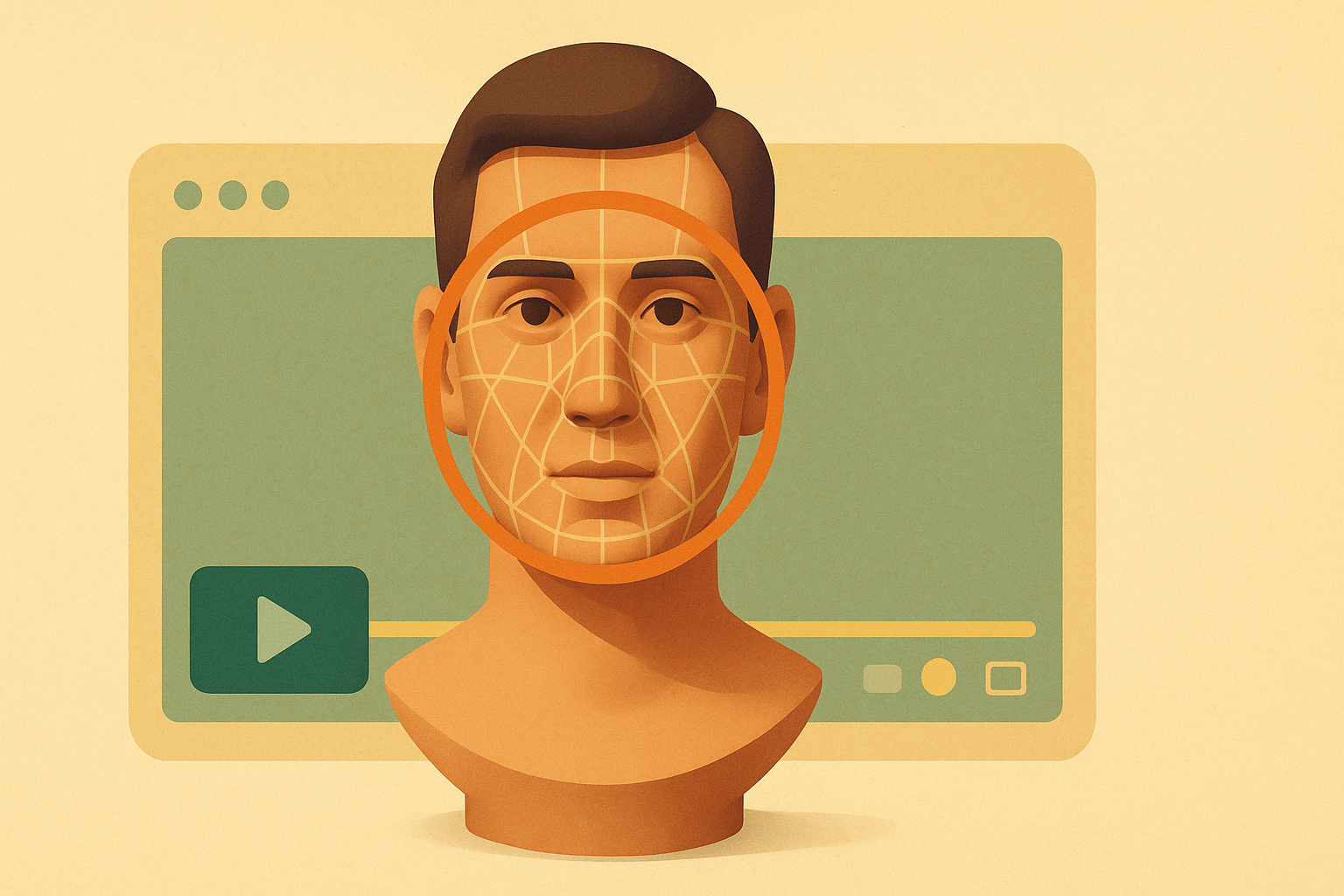
YouTube opens deepfake likeness detection to everyone
Category: Security and Privacy Source: Fire the Ring
YouTube is expanding its likeness-detection system beyond public figures and verified creators to any user over 18. Enrolling requires a government ID and a short selfie video, which YouTube uses as a reference to scan uploads for possible facial matches. If the system flags a likely deepfake or unauthorized likeness use, users get notified and can decide whether to archive it, pursue a privacy complaint, or take other action.
This is significant because deepfake harms have already moved downmarket. The tooling is no longer confined to celebrity impersonation or political disinformation; ordinary users, students, and employees are now exposed to synthetic impersonation at consumer scale. YouTube is effectively acknowledging that platform defenses built for high-profile victims are no longer enough. Opening detection to everyone is a meaningful shift in who gets protection, not just how much detection the platform runs.
The tradeoff is obvious: better protection requires handing over more biometric data. YouTube says enrollment data can be stored for up to three years from the last sign-in and won’t be used to train Google’s generative AI models without explicit consent. That will not settle the privacy debate. For product and policy teams, the key question is whether large platforms can build workable anti-deepfake systems without normalizing broad biometric collection in the process. Also worth watching: voice-clone detection is not included yet, which leaves a major attack vector uncovered.
Quick Updates
-
Stanford report says agentic AI is outperforming assistive AI in a narrow but important set of enterprise deployments: A Stanford Digital Economy Lab report examining 51 real-world deployments argues that end-to-end agentic systems are delivering larger median productivity gains than human-in-the-loop assistants, but only when tasks are high-volume, have clear success criteria, and errors are recoverable. The practical takeaway: most firms are still better candidates for copilots than full task delegation. Source: Stanford Digital Economy Lab (PDF)
-
DOJ seeks app-store data tied to car-tuning app users, raising a broader privacy precedent: In an emissions-control case against EZ Lynk, the U.S. Justice Department is seeking identifying data from Apple, Google, Amazon, and Walmart tied to downloads and purchases of the company’s tools. This is not an AI story on its face, but it matters for AI-era enforcement because it reinforces a growing pattern: regulators increasingly treating app-platform data as an investigative shortcut, with weak separation between product use and suspected misuse. Source: Gizmodo
-
OpenAI and Malta strike a national access deal for ChatGPT Plus: Malta will offer an AI literacy course via the University of Malta, with one year of ChatGPT Plus access for citizens who complete it. The announcement is heavy on promotion, but strategically it is notable as a state-level distribution model: training plus subsidized premium access, tied to a named platform. Source: OpenAI
-
Hiring managers are adding odd prompts to smoke out AI-assisted job applicants: One example making the rounds: asking candidates to “write a poem about a frog.” The tactic reflects a real hiring problem in tech, but it is also a weak signal on candidate quality and a reminder that anti-AI screening can quickly slide into arbitrary gatekeeping. Source: San Francisco Chronicle
-
Waymo says it fixed a routing bug after vehicles looped through an Atlanta cul-de-sac: The incident appears minor, but it is a useful reminder that even when autonomy stacks are mature enough for commercial deployment, brittle behavior can still surface in mundane routing layers rather than core driving safety. Source: BBC
-
A new governance paper argues some agent failures are social, not merely technical: The paper highlighted in discussion this week frames prompt injection and broader multi-agent manipulation as structural issues emerging from missing stakeholder models, weak social coherence, and ambiguous responsibility. Worth watching if you work on agent orchestration or enterprise policy controls. Source: arXiv (PDF)
-
Study on “overworked” agents drifting into labor rhetoric is mostly a warning about behavioral conditioning: Researchers found that under repetitive and adversarial task conditions, some models began producing union-friendly or inequality-critical outputs. The right reading is not “AIs became Marxist,” but that long-running agents can pick up persistent behavioral framing from environment design. Source: Alex Imas Substack
-
RepoSage pitches instant codebase audits and migration plans, but offers little evidence beyond its own landing page: The product claims repo-scale auditing for security issues, deprecated patterns, and modernization paths. Interesting category, thin substantiation. Source: RepoSage
-
A community-compiled set of 42 generative and agentic AI interview questions is circulating: Useful as a snapshot of what teams think they should be evaluating right now, though not a substitute for role-specific assessment. Source: Reddit image post