Table of contents
Open Table of contents
Linus Torvalds calls AI bug-report flood “almost entirely unmanageable”
Category: Security and Privacy Source: Linux Kernel Mailing List
Linus Torvalds said the Linux security mailing list has become “almost entirely unmanageable” because multiple researchers are using the same AI tools to find the same bugs, then filing duplicative reports. His complaint is not anti-AI in principle; it is about workflow failure. Maintainers are spending time triaging repeats, redirecting submissions, and explaining that issues were already fixed instead of doing substantive security work.
That matters beyond open source. Many AI tooling deployments still optimize for “find more things” instead of “reduce expert review burden.” Linux is showing the failure mode clearly: if many users point the same model at the same codebase, raw report volume can go up while net useful output goes down. Security teams, code review owners, and agent builders should treat deduplication, patch generation, provenance, and proof-of-novelty as first-class product requirements, not optional polish.
Torvalds’ advice was straightforward: use AI, but add human understanding and ideally a patch. That is a practical standard for any AI-assisted workflow in engineering. If the system cannot help the operator determine whether a finding is new, relevant, and actionable, it is offloading work downstream rather than saving it.
Watch for this to become a broader pattern in bug bounties, compliance reviews, and AI-assisted red teaming. As model access gets cheaper, the bottleneck shifts from discovery to adjudication. Teams that do not build for that shift will drown in machine-generated noise.
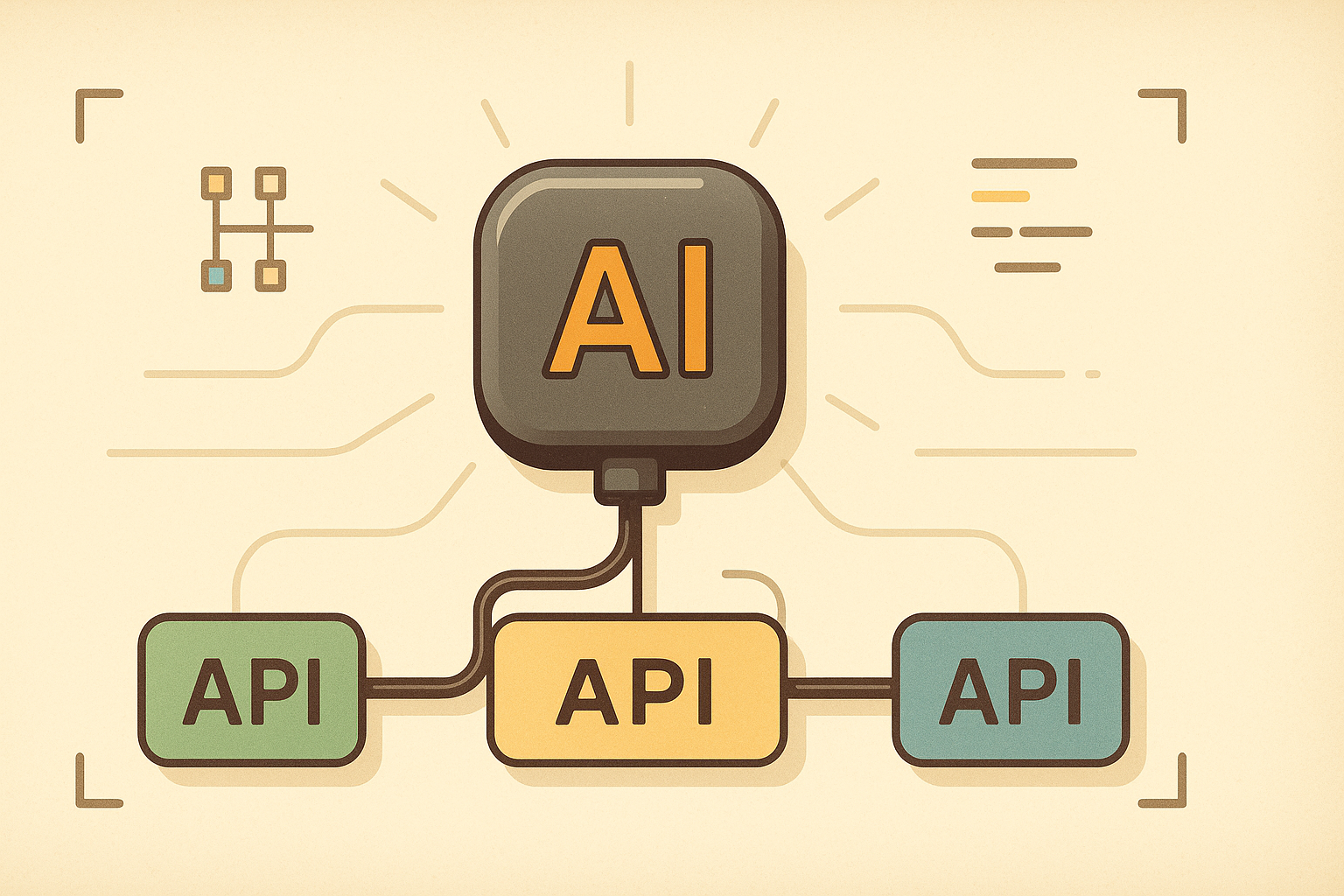
Anthropic acquires Stainless to strengthen the agent-to-API layer
Category: Startups and Funding Source: Anthropic
Anthropic acquired Stainless, the SDK generation and MCP server tooling company that has already powered its official SDKs. On the surface, this is a developer-experience deal. In practice, it is a platform move aimed at the next AI stack bottleneck: reliable connections between models, agents, and production systems.
The significance is less about another model vendor buying infrastructure and more about where value is shifting. If agents are supposed to do real work, they need dependable ways to call APIs, use tools, and move across languages and runtimes. Stainless brings exactly that plumbing: SDKs, CLIs, and server tooling generated from API specs. Anthropic is effectively pulling a key integration layer in-house as it pushes Claude and MCP deeper into enterprise workflows.
For practitioners, the implication is clear. The competitive battleground is no longer just model quality or benchmark wins; it is the end-to-end path from prompt to action. Vendors that own the connector layer can reduce integration friction, improve reliability, and shape developer defaults. That can become a real moat, especially if MCP continues gaining traction outside Anthropic’s own ecosystem.
What to watch next: whether Anthropic keeps Stainless broadly interoperable or increasingly optimizes it around Claude-first workflows, and whether rivals respond with acquisitions or tighter control of their own agent tooling stacks.
Quick Updates
-
Claude reportedly overtakes ChatGPT on some enterprise growth metrics: A widely shared report claims Anthropic passed OpenAI in April on some commercial indicators, including U.S. business spend and annualized run-rate revenue. The key signal is not the exact leaderboard but how fast enterprise demand is concentrating around a few vendors with strong coding, agent, and safety positioning. Source: Reddit / r/fivethirtyeight
-
A year of writing with AI points to context-heavy workflows, not raw text generation: One practitioner’s retrospective is a useful reminder that dumping generated prose into a manuscript often fails, while using AI to interrogate, critique, and work against real source material tends to produce better results. For teams building writing tools, retrieval and document-grounded interaction still matter more than generic chat. Source: Reddit / r/artificial
-
Prompt injection hits recruiting bots on LinkedIn: A user reportedly hid prompt-injection text in a LinkedIn bio and got AI-driven recruiting outreach rewritten in “Olde English,” including being addressed as “My Lord.” The joke lands because the weakness is real: agents scraping public profiles remain easy to manipulate if they treat untrusted text as instructions. Source: Tom’s Hardware
-
Experimental activation compression finds a sharp failure boundary: An experimental post on routing transformer activations through a lossy lattice bottleneck reports stable behavior up to roughly β=0.20, with output collapsing into repetition above that. Early-stage result, but worth watching for memory-efficiency work in local and low-cost inference. Source: Reddit / r/artificial
-
The CFTC is using AI to monitor prediction markets for insider trading: U.S. regulators are combining AI pattern detection with blockchain tracing and market-surveillance tools to flag suspicious activity on event-contract platforms. The practical takeaway: AI is becoming standard regulatory infrastructure, not just an industry product category. Source: Ars Technica
-
Apple’s Siri revamp may add auto-deleting chats while relying on Gemini: Bloomberg reports Apple is preparing a standalone Siri chatbot app with retention controls, including optional auto-delete. The tension is obvious: stronger privacy UX is useful, but if Gemini powers the intelligence layer, Apple will need to explain where privacy guarantees begin and end. Source: Bloomberg
-
“AI tarpits” and poisoning tools are moving from theory to active defense: Publishers and rights holders are experimenting with techniques meant to slow scraping or contaminate training data. For model builders, this raises the cost of indiscriminate web ingestion and increases the value of licensed, curated data pipelines. Source: Yahoo Tech
-
EU AI Act deadlines are now close enough to affect product roadmaps: High-risk AI obligations start biting on August 2, including logging, documentation, human oversight, and testing requirements. If you sell AI systems into Europe or process EU resident data, compliance can no longer be treated as a late legal pass. Source: SEC-RA
-
Graduates are openly hostile to boosterish AI messaging: Eric Schmidt was booed during a commencement speech when discussing AI, echoing similar reactions at other ceremonies. The business relevance is simple: public narratives about “AI opportunity” are colliding with labor-market anxiety, especially among new entrants. Source: NBC News
-
AMD is pushing the “local inference” PC harder: A new Ryzen AI Max mini PC with 128GB of unified memory is being positioned as capable of running very large models locally. Marketing claims need real-world validation, but the direction is important: more memory-rich edge hardware is making on-device inference a more credible enterprise option. Source: Startup Fortune
-
Coding-agent usage data suggests Chinese models are gaining real production share: One OpenRouter-based usage snapshot from Kilo Code shows heavy token consumption concentrated in Step, MiniMax, and Ling models. Treat this as directional rather than definitive, but cost and context-window economics are clearly reshaping model mix in automated coding workloads. Source: Reddit / r/artificial
-
One executive’s anti-FOMO message is getting airtime: Domo’s CDO argues companies should slow down and be more deliberate on AI adoption rather than chase hype cycles. Not new advice, but still relevant as more buyers discover that unclear ownership and weak data foundations sink deployments faster than model choice. Source: The Register
-
Researchers sought preschool classroom video to train AI, using an opt-out model: University of Washington researchers planned teacher-worn and fixed cameras in preschool settings to collect first-person classroom footage for AI work. The controversy is obvious: sensitive data collection around children is now reaching the point where consent design itself becomes a central governance issue. Source: 404 Media
-
Barnes & Noble says clearly labeled AI-written books are acceptable: CEO James Daunt said the retailer is open to stocking AI-generated books if they are transparently labeled. The near-term impact is less about sales volume and more about normalization: distribution channels are starting to accept AI-created inventory as a standard category. Source: The Independent
-
Musk says he will appeal in the OpenAI case: Elon Musk said he plans to take the dispute to the Ninth Circuit, arguing the case was dismissed on procedural grounds rather than merits. Expect the legal fight around OpenAI’s structure and governance history to continue as background risk, not immediate product risk. Source: Reddit / r/artificial