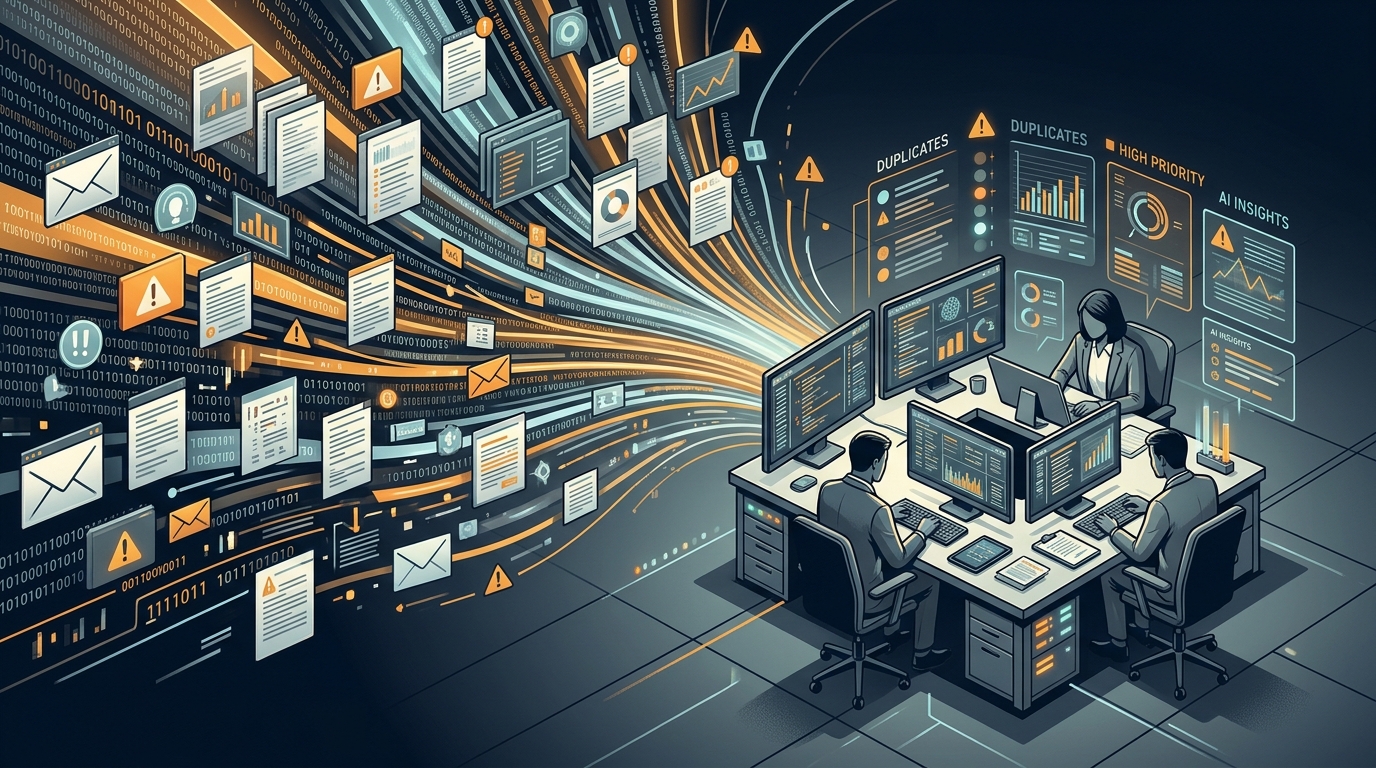
AI is getting very good at finding more things for experts to inspect. That is useful. It is also how a workflow quietly fails while everyone is still congratulating the automation.
The new bottleneck is not discovery. It is judgment.
That distinction is starting to matter everywhere AI touches expert work. Linux maintainers are complaining about a flood of duplicated AI-assisted bug reports. Anthropic’s restricted security model is reportedly helping capable researchers accelerate serious vulnerability discovery. Enterprise studies keep finding that agentic systems work best where tasks have clear success criteria and recoverable errors. Recruiting bots are still falling for prompt injection hidden in public profiles. Platforms are adding deepfake detection that requires new biometric enrollment. Regulators are using AI to watch prediction markets.
Different rooms, same pressure. AI is increasing the supply of findings, alerts, matches, candidates, reports, and synthetic evidence. But the human institution still has to decide what is new, what is true, what is actionable, what is lawful, and what deserves scarce expert attention.
That is not a side effect. That is the control plane.
More findings can mean less progress
Linus Torvalds put the issue cleanly on the Linux Kernel Mailing List: AI-assisted bug reports are making the security list “almost entirely unmanageable” when multiple people use similar tools to submit the same issues. His complaint was not that AI should never be used. It was that raw reports without understanding, deduplication, or patches move work downstream.
That should make every security team, maintainer group, compliance office, and engineering manager sit up straighter. Most organizations still measure AI tools by whether they can find more. More possible bugs. More suspicious transactions. More candidate matches. More policy violations. More documents that might be relevant. More generated test cases. More flagged anomalies wearing little orange hats and asking for review.
But expert review is not free. It is usually the expensive part, the slow part, and the part where institutional memory lives. If an AI system doubles report volume while only slightly improving useful signal, it has not automated the workflow. It has automated queue growth.
The ugly version of this future is easy to imagine. Bug bounties filled with duplicate AI findings. Legal teams buried under weak discovery matches. Hiring teams drowning in machine-written applications, then using machine-written filters to fight them. Compliance teams reviewing AI-generated exceptions to AI-generated policies. A beautiful circular economy of everyone wasting everyone else’s time at machine speed.
Very efficient. In the way a fire hose is efficient.
Restricted capability changes the review problem
The security story cuts the other direction too. According to The Wall Street Journal, researchers using techniques derived from Anthropic’s restricted Mythos program helped uncover a serious macOS exploit chain. The important caveat is that experienced humans still mattered. Good. That caveat is the point.
If frontier models can help elite researchers narrow search space, connect subtle patterns, and move faster through exploit development, then access policy becomes part of the security architecture. A model that is merely mediocre in public hands can still be powerful in expert hands. A model that accelerates defenders can also accelerate attackers. The difference is not just capability. It is who gets access, under what logging, with what purpose, and inside which review process.
This is why “the model found a bug” is the least interesting sentence in the room. The better questions are operational. Was the finding novel? Was it reproducible? Was a patch attached? Was responsible disclosure followed? Did the tool preserve enough provenance for someone else to trust the result? Did access controls reduce misuse, or merely create a more exclusive blast radius?
AI does not remove the need for expert judgment. It raises the stakes on where that judgment sits.
The missing product feature is adjudication
This is where many AI products still feel unfinished. They optimize the impressive first act: discovery. They are weaker at the boring second act: adjudication.
For code and security tools, that means deduplication, proof of novelty, exploitability evidence, patch suggestions, maintainer-aware routing, and an honest confidence model. For deepfake detection, it means appeal paths, biometric retention limits, false-positive handling, and clear separation between protection and surveillance. For recruiting automation, it means treating scraped profiles and resumes as untrusted data, not instruction-bearing material. For regulatory monitoring, it means audit trails that explain why a pattern was suspicious before enforcement machinery starts moving.
The pattern is not limited to security. It applies anywhere AI touches a scarce human reviewer. The system must not merely say, “Here are 10,000 things.” It must help answer, “Which three deserve action, why, and who is accountable if we are wrong?”
That is a harder product. Less theatrical. Fewer launch demos. More workflow plumbing, provenance, escalation design, access control, and institutional responsibility. Naturally, the glamorous part gets funded first. The unglamorous part is where the serious buyers eventually discover whether the tool is usable.
There is a useful rule here: if an AI system increases the number of decisions humans must make, it has not yet earned the word automation. It is a suggestion engine with an invoice.
Judgment is the scarce layer
The industry spent years treating intelligence as the scarce resource. In many expert workflows, that is becoming less true. The scarce resource is trusted judgment under load.
That is why the next serious AI deployment checklist should ask fewer questions about whether the model can generate a plausible answer and more about whether the institution can adjudicate the answer at scale. Can it tell duplicates from discoveries? Can it distinguish evidence from vibes? Can it preserve source lineage? Can it route work to the right humans without exhausting them? Can it say no quickly, not just yes slowly?
The organizations that get this right will not simply install AI on top of existing queues. They will redesign the queue. They will make provenance visible, collapse duplicates before they reach experts, require machine findings to arrive with enough context to be tested, and build review loops where human judgment becomes more concentrated, not more harassed.
That is the actual productivity gain: not more machine output, but less human waste.
AI will keep finding things. Some of them will be real. Some will be duplicate, shallow, poisoned, misleading, or merely loud. The winning systems will not be the ones that produce the most findings. They will be the ones that know how to earn attention.
Discovery is becoming cheap. Judgment is not.