Table of contents
Open Table of contents
Meta’s Instagram AI image experiment lasted days before collapsing
Category: Security and Privacy
Source: BBC
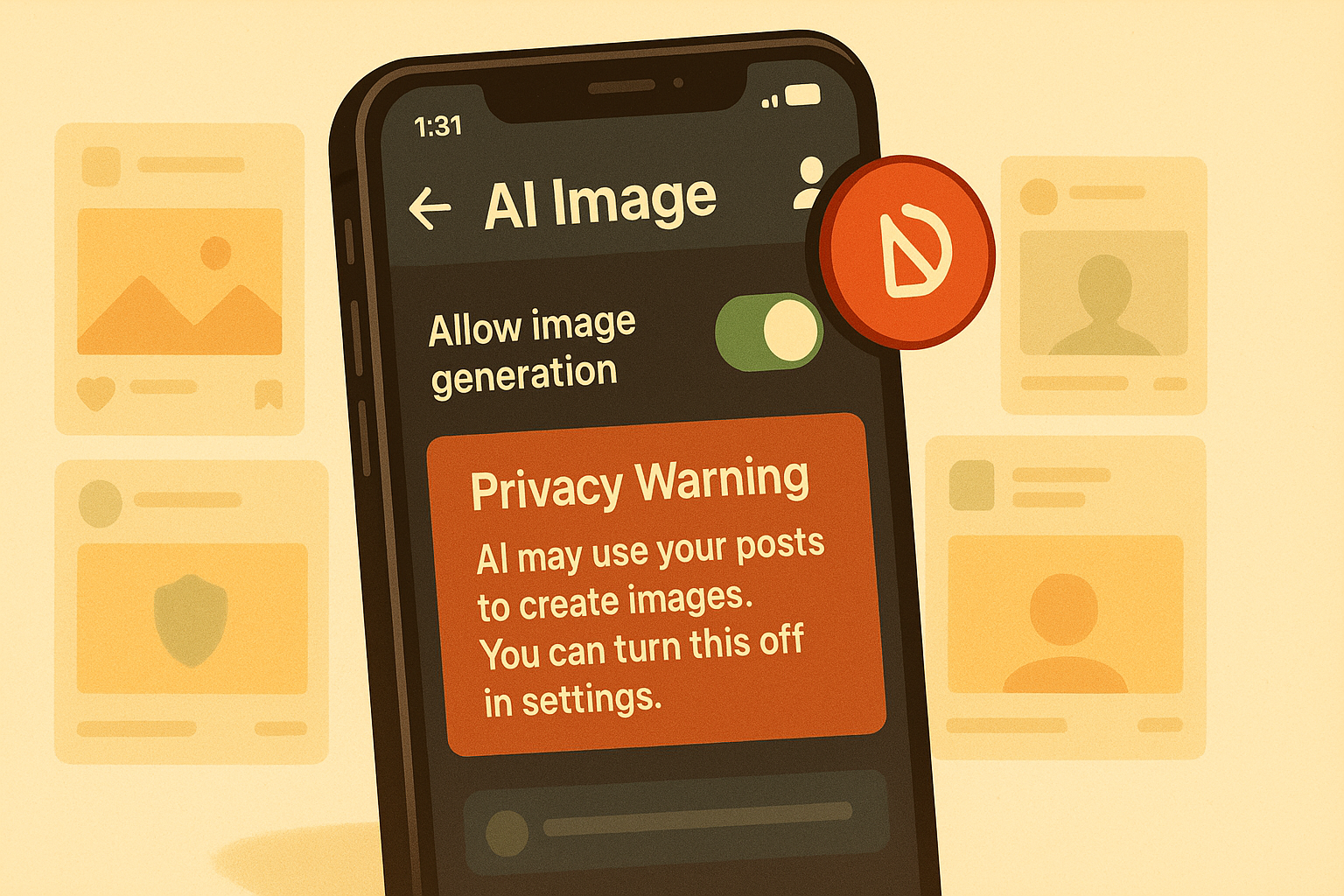
Meta pulled a new Instagram-linked AI image feature just days after launch, after users and advocacy groups objected to how it handled public content. The feature, part of Meta’s new Muse Image system, let people generate fake images based on public Instagram posts. The problem was not technical novelty; it was consent. Public-account users were effectively included by default, meaning their likeness could be repurposed without explicit permission.
That is increasingly the red line for consumer AI products: not whether the model can transform user content, but whether the company assumes it can. Meta said it had “missed the mark” and removed the feature after criticism from privacy advocates and SAG-AFTRA, which framed the reversal as a win for likeness rights. The backlash also arrived before Meta could extend similar functionality across WhatsApp, Facebook, and Messenger, where the trust and regulatory risks would be larger.
What matters now is less this one rollback than the product signal it sends. Platforms are still testing where “public” ends and “usable for AI generation” begins. Regulators, unions, and users are converging on a stricter answer than many product teams seem to expect. Watch whether Meta reintroduces the feature with explicit opt-in, tighter provenance controls, or narrower use cases; anything short of that is likely to trigger the same fight again.
In China, a voice actor’s fight shows the next phase of AI identity theft
Category: Ethics and Governance
Source: Sixth Tone
A Sixth Tone report on voice actor Shen Anyu captures a problem that is moving from edge case to industry pattern: once a voice is clonable at scale, the creator can lose both economic control and proof of authenticity. Shen’s voice has reportedly been copied across short-video apps, ads, and other media without consent. In a sharper twist, platforms sometimes flag his real recordings as synthetic, degrading distribution and undermining client trust.
This is the practical governance gap in generative audio. The issue is no longer just unauthorized cloning; it is that moderation systems, marketplaces, and recommendation engines are poorly equipped to distinguish licensed, real, and fake voice assets. That creates a double loss for creators: stolen likeness on one side, false enforcement on the other. Legal recourse is slow and expensive, while attribution is often obscured by anonymous upload pipelines and repackaged AI voice tools.
For AI builders and platform operators, this story points to a near-term requirement: provenance and verification for audio need to mature fast, not as a research ideal but as marketplace infrastructure. Expect pressure for stronger consent records, auditable voice-model licensing, and platform-level mechanisms to verify authentic human recordings. Synthetic voice is already a business workflow; the policy and product controls around it are not keeping up.
Quick Updates
- No additional quick updates today.