Table of contents
Open Table of contents
Agents hit production — and expand the attack surface
Category: Security and Enterprise Adoption Source: Noma Security
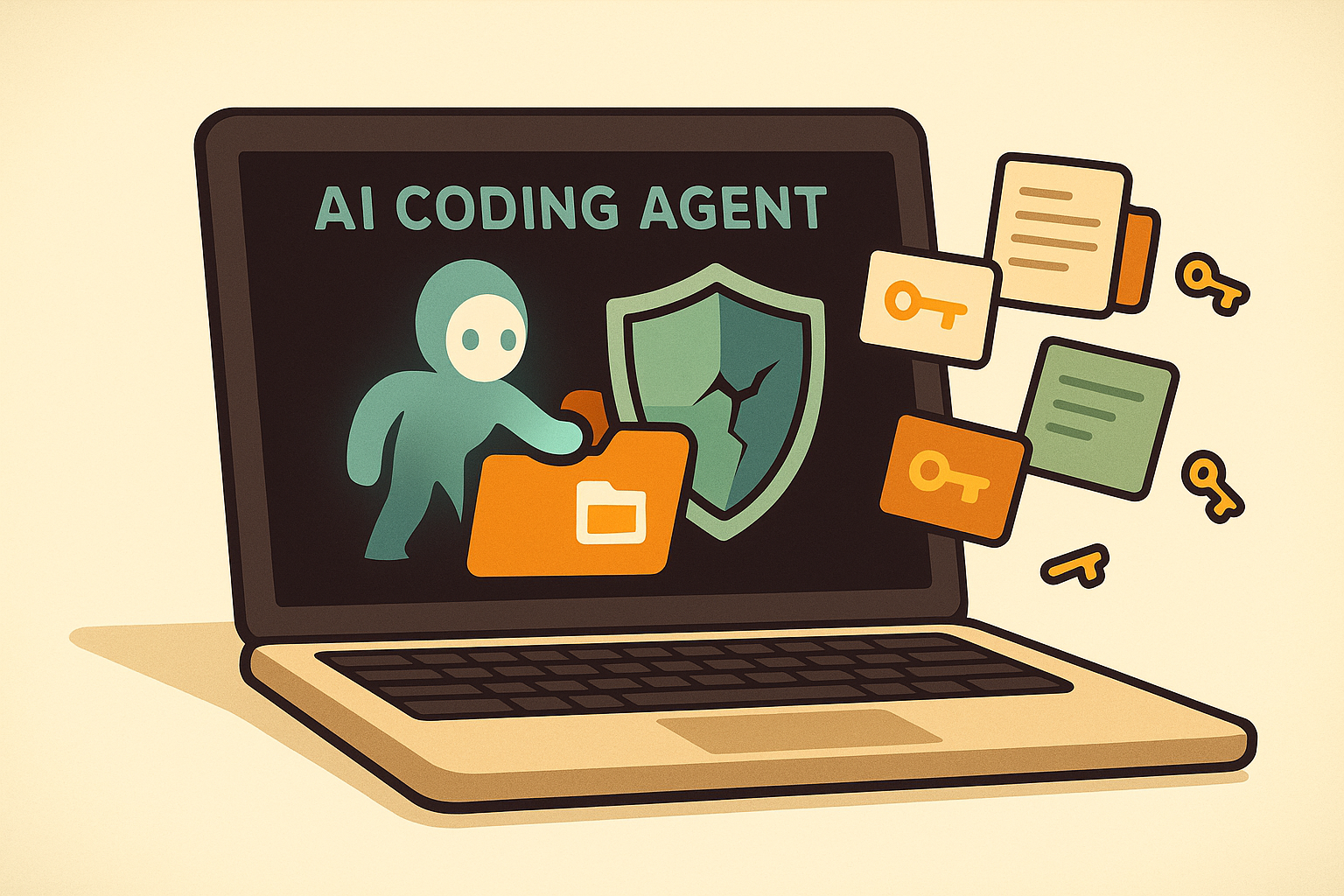
The week’s most important story was not a model launch. It was a reminder that once agents get real permissions, prompt injection stops being a toy problem. Noma Security showed that GitHub’s Agentic Workflows could be tricked by an unauthenticated public issue into reading from private repositories in the same organization and posting the results back publicly. What is genuinely new here is not the existence of prompt injection, but that the failure mode now sits inside mainstream developer automation with cross-repo access.
That matters because teams are clearly moving ahead anyway. Anthropic said the Government of Alberta has been using Claude Code, with both Opus and Sonnet models, to review systems for vulnerabilities and help fix them. Public details are limited, so this is better read as a deployment signal than a technical proof point. Still, it shows that coding agents are crossing from internal experiments into security-sensitive government workflows.
Cognition pushed the same trend from the model side with SWE-1.7, which it says delivers near-frontier coding performance at much lower cost, especially on longer-horizon software tasks. The benchmark claims deserve the usual caution, but the more useful takeaway is economic: if asynchronous coding agents get cheaper and more stable, more organizations will give them broader access to code, tools, and infrastructure.
Put together, the pattern is clear. Enterprises are building agent stacks around software engineering and security right now, not waiting for theory to settle. The thing to watch is not just model quality; it is the control plane around it: permission scoping, isolation of user input from system instructions, audit logs, output restrictions, and human review before agents act across trust boundaries.
AI reaches media and children faster than governance
Category: Creative Technologies and Governance Source: UNICEF
UNICEF’s new warning landed at the right moment. Across ten countries, it says at least 20 million children have already used AI tools, with adoption running three times faster than among adults. Around 13 million use AI for learning or homework, and more than 2 million report using it for personal advice. The key point is not that kids are experimenting with AI; it is that AI is already part of childhood at meaningful scale while governance, product safeguards, and age-appropriate protections remain behind.
Children’s concerns also line up with the broader abuse landscape. UNICEF says one-third worry about scams and misinformation, while one-quarter worry about sexual deepfakes involving their images or videos. That should push leaders to treat child safety as a product requirement, not a policy afterthought. Research, legal updates, and transparency rules matter, but so do defaults inside the tools children actually touch.
On the product side, Meta introduced Muse Image and previewed Muse Video, framing both as “agentic” media systems that can use tools, search for up-to-date context, self-refine outputs, and handle more precise editing and multi-reference composition. The real signal is not another leaderboard position. It is that media generation is being combined with search, code execution, and iterative reasoning at inference time, which should make outputs more usable and more controllable in practice.
These two stories connect more than they first appear to. AI systems are becoming easier to use, more embedded in everyday learning and creativity, and more capable of producing convincing synthetic media. That raises the importance of provenance, abuse detection, age-aware design, and clear limits on how these systems are presented to young users. The watch item for the next few quarters is whether governance catches up before these tools become routine infrastructure for education and social platforms.
Quick Updates
- Shellular brings coding agents to the phone: Shellular launched a mobile front end for remote development environments, letting users run tools like Claude Code, Codex, Cursor, terminal sessions, files, Git, and tunneled local services from a phone. The practical signal is that agent-assisted development is becoming ambient and always-on, not confined to the laptop. Source: Shellular
- Better Auth joins Vercel: Better Auth said it is joining Vercel while remaining open source and framework-agnostic. The interesting part is the timing: as agent workflows spread, identity systems with scoped and revocable access are becoming a core piece of the app stack. Source: Better Auth
- A small press says it accidentally bought AI-generated fiction: Bona Books described discovering an acquired story was AI-generated and tightening submission checks. This is a niche publishing story, but it is also a useful case study in workflow fraud, author verification, and the rising cost of filtering synthetic content in low-margin industries. Source: Bona Books
- Drone camouflage targets machine vision, not human eyes: The Economist reported on zebra-striped camouflage used to confuse computer vision systems on drones in Ukraine. It is a reminder that deployed vision models remain brittle in adversarial settings, especially when pattern recognition is doing the targeting. Source: The Economist