Table of contents
Open Table of contents
Mesh LLM Tries to Turn Spare GPUs Into One Inference Fabric
Category: Infrastructure and Hardware Source: iroh
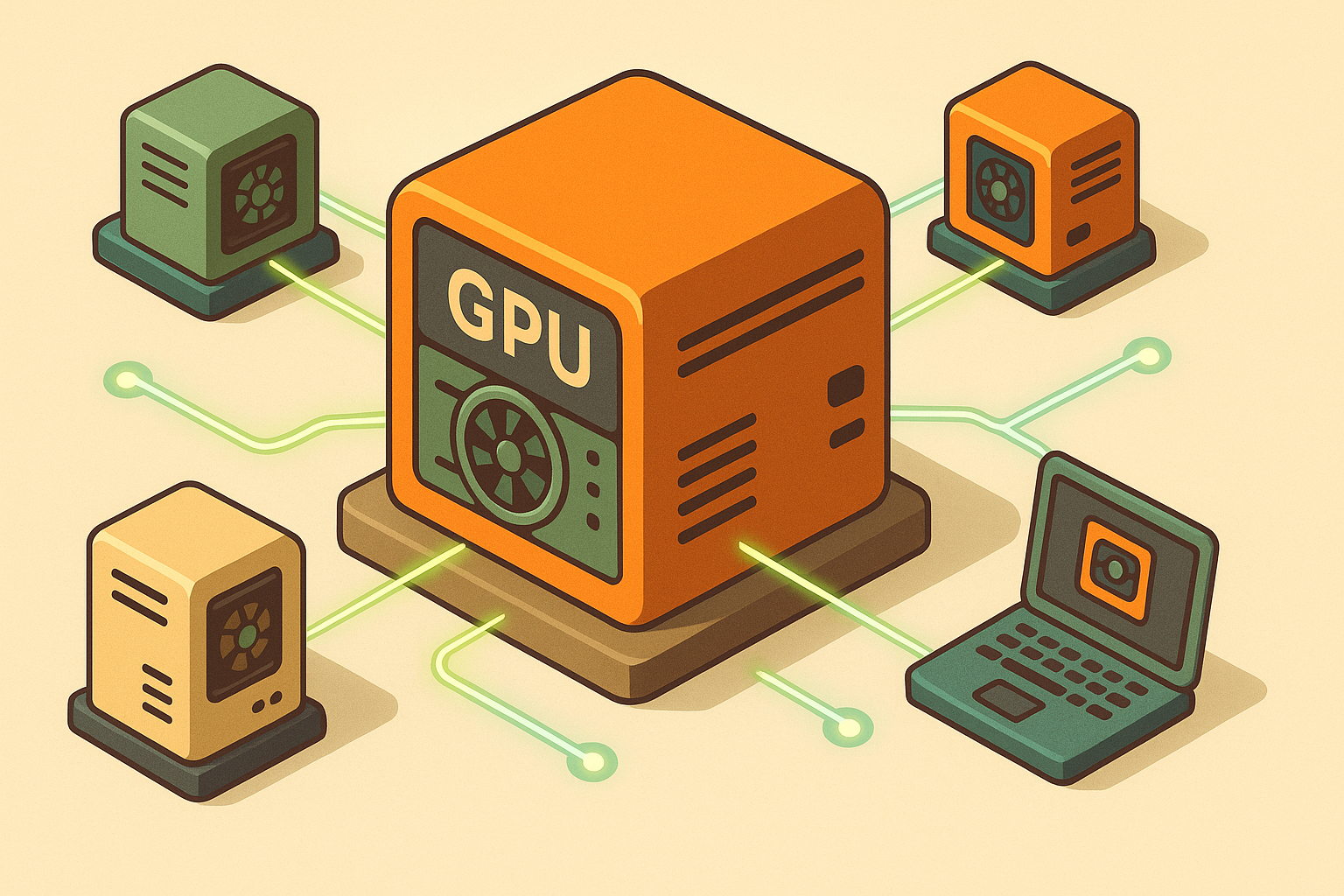
Mesh LLM’s pitch is straightforward: take whatever GPU capacity a team already has across laptops, desktops, servers, and small clusters, and expose it behind a single OpenAI-compatible API. The interesting part is not the wrapper; it’s the attempt to make routing and model placement transparent, so a request can run locally, jump to a peer that already has the model loaded, or be split across multiple machines if no single box can hold the full model.
What changed here is that the project is pushing beyond simple remote inference into distributed execution for oversized models. Its pipeline mode partitions a model by layers across nodes, passing activations between machines so several modest systems can collectively run a model that would otherwise require a large single host. If it works well in practice, that addresses a real pain point for companies with fragmented GPU inventory and growing sensitivity to cloud inference cost, privacy, and vendor control.
The caveat is equally clear: distributed inference is usually easier to demo than to operationalize. Network latency, model loading behavior, fault tolerance, scheduling efficiency, and observability will determine whether this is useful beyond hobbyist setups and small internal deployments. Still, the OpenAI-compatible interface matters because it lowers the switching cost; teams can test the economics of self-hosted, pooled inference without rewriting application code.
What to watch next: benchmark data under mixed workloads, support for common serving stacks, and whether the system can keep throughput acceptable once requests span multiple nodes. If those pieces land, this could become a credible option for organizations that have “GPU dust” everywhere but no clean way to use it.
Coding Agents Shift From Greenfield Generation to Practical Maintenance
Category: Tools and Platforms Source: Terry Tao’s blog
A useful signal from Terry Tao’s latest post is not that coding agents can produce flashy demos; it’s that they can help recover and modernize old software that humans no longer want to hand-port. Tao says an agent migrated roughly two dozen Java applets into JavaScript in hours, with only one minor bug found in the generated code and a couple of bugs surfaced in the original implementations. That is exactly the kind of bounded, testable, low-regret work where coding agents increasingly make economic sense.
He also used the same workflow to build new educational visualizations that had previously been too time-consuming to implement manually. The practical lesson for teams is narrower than the hype cycle suggests: agents appear most valuable when the user can validate behavior directly, the software is important but not mission-critical, and iteration speed matters more than pristine first-pass architecture. That is a different, more durable use case than “autonomous software engineer” marketing.
A related development is mindwalk, a new open-source tool for replaying coding-agent sessions on a 3D map of a codebase. That won’t make agents smarter, but it could make them easier to audit: where they searched, what they read, and which files they changed. As more engineering teams put agents into real workflows, observability and post-hoc review may matter as much as raw code generation quality.
The broader pattern is worth watching. We’re moving from “can agents write code?” to “which software tasks are safe, reviewable, and worth delegating?” Legacy migration, internal tools, educational software, and exploratory prototypes are emerging as stronger answers than production-critical autonomy.
Quick Updates
-
mindwalk visualizes coding-agent behavior inside a repo: The open-source tool replays Claude and Codex sessions as movement over a 3D map of a codebase, showing which files an agent searched, read, or edited. Useful if you want auditability and teaching/debugging value around agent workflows, not just generated diffs. Source: GitHub
-
Terry Tao reports strong results using agents for legacy applet migration: Tao says modern coding agents helped port old Java teaching applets to JavaScript quickly, with limited bug fallout and some improvements over the original versions. The key takeaway is not “agents replace developers,” but that they can be highly effective on constrained, visually verifiable modernization work. Source: Terry Tao’s blog