Table of contents
Open Table of contents
NVIDIA Tries to Turn AI Compute Into Finance-Grade Infrastructure
Category: Infrastructure and Hardware Source: NVIDIA
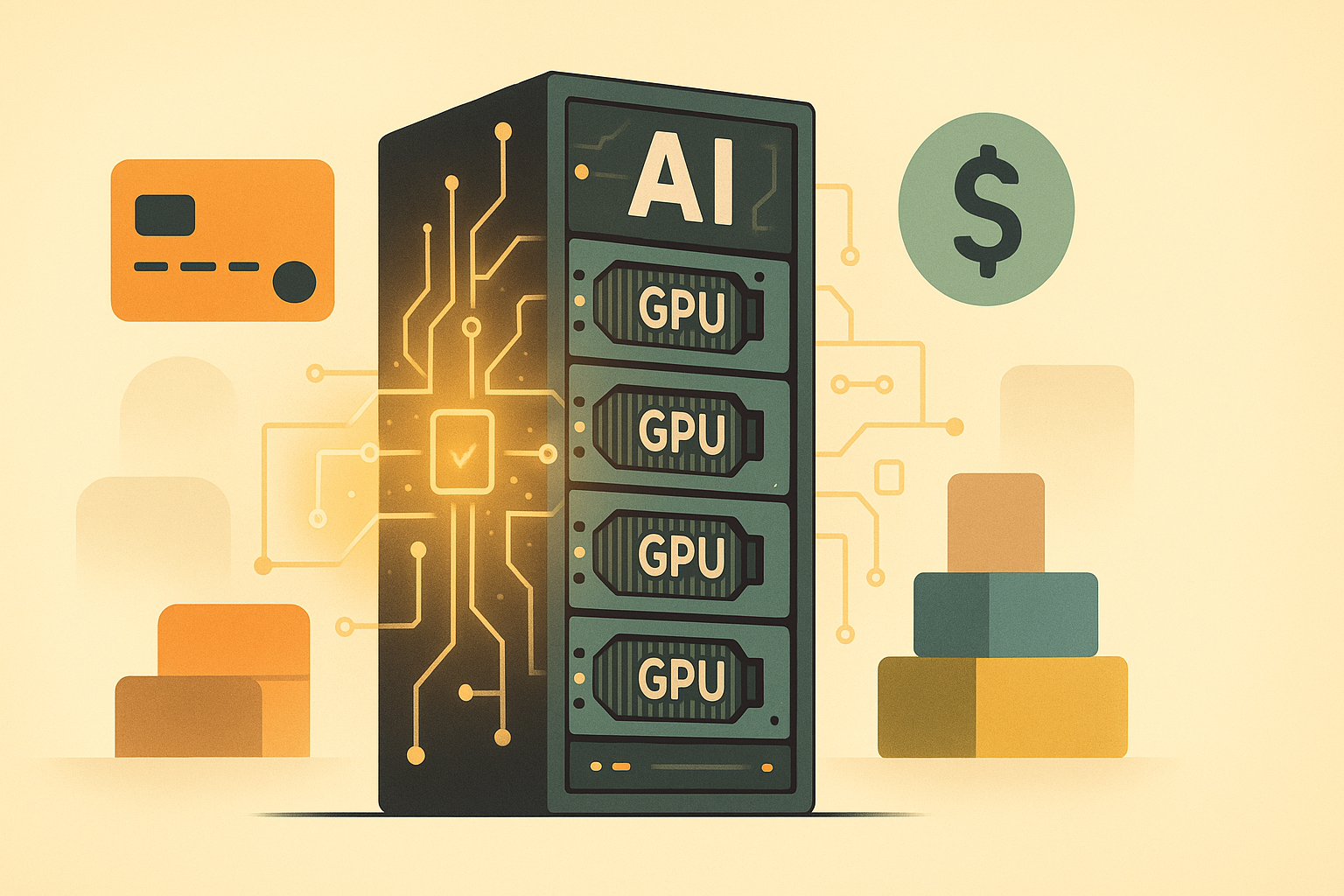
NVIDIA says it is partnering with Apollo, BlackRock, Blackstone, Brookfield, Goldman Sachs, and KKR to create financing platforms designed to mobilize more than $500 billion over time for AI infrastructure. The important detail is not the headline number by itself; it is the framing. NVIDIA is arguing that AI compute should be treated less like fast-depreciating IT spend and more like infrastructure with repeatable cash flows, residual value, and institutional underwriting.
That matters because AI demand has run into a capital bottleneck as much as a technical one. Frontier labs, AI-native startups, sovereign projects, and cloud challengers all want capacity, but not all of them can finance large GPU clusters on hyperscaler terms. If this model works, it could widen access to large-scale training and inference infrastructure beyond the biggest incumbents. It would also further professionalize the market for GPU-backed leases, rentals, and asset-backed financing.
NVIDIA’s case rests on two claims: first, that its systems are fungible across customers and workloads; second, that CUDA and software upgrades extend the useful life of deployed hardware. The company points to continued commercial use of A100 six years after launch and to rising H100 and Blackwell rental pricing as evidence that AI compute can hold value longer than conventional hardware assumptions suggest. That is a strong pitch, but still a pitch. Residual value in AI hardware remains exposed to model efficiency gains, competition from custom silicon, power constraints, and any meaningful slowdown in end-user AI monetization.
What to watch now: whether these financing vehicles actually broaden supply outside the hyperscaler core, what underwriting standards the capital providers apply, and how much risk NVIDIA ultimately retains through residual-value support. If AI compute becomes a recognized asset class, it would reshape who gets to build AI capacity—and who captures the economics.
Fake “Human-Written” Research Services Show AI Fraud Is Moving Up the Stack
Category: Ethics and Governance Source: 404 Media
A 404 Media investigation found that Research Gold, a company marketing “100% human-written, never AI” medical research and peer-review support, appears to be built on deception. According to the report, some listed reviewers and PhD experts do not exist at all, while other profiles reuse the names, photos, and biographies of real professionals without permission. Customer interactions were also reportedly handled by AI systems that continued pitching the service while obscuring the extent of automation.
The story matters beyond one bad actor. It shows how generative AI is being used not just to fabricate content, but to fabricate institutions: expert rosters, credibility signals, and the appearance of process compliance. In fields like medical evidence synthesis, where trust depends on provenance and methodology, that is a serious escalation. A polished website claiming PRISMA or Cochrane alignment is no longer meaningful if the people supposedly doing the work may not exist.
For research organizations, publishers, and procurement teams, the practical lesson is simple: vendor verification now needs to include identity verification. Independent checks on reviewer credentials, institutional affiliations, and publication histories are becoming table stakes. This is especially urgent for outsourced literature reviews, systematic reviews, and manuscript-prep services, where the output can look plausible long before anyone checks who produced it.
The broader implication is that AI governance cannot stop at model outputs. More of the risk is shifting into workflow fraud, synthetic staffing, and false claims of human oversight. Expect this to become a larger issue in regulated sectors where “human in the loop” is increasingly used as a compliance signal—and increasingly easy to fake.
Quick Updates
-
Agentic web traffic keeps rising, but referrals remain tiny: Known Agents’ latest index across 5,000+ sites says 35% of visits are bots, AI-related bot traffic is up 11%, and just 0.1% of human visits come from AI chat referrals. The signal: AI agents are consuming the web faster than they are sending users back to it. Source: Known Agents
-
Google brings more Gemini behavior to the wrist: Pixel Watch 5 adds proactive Gemini-powered assistance, including contextual suggestions and low-latency voice interactions, alongside new health and emergency features. For practitioners, this is another sign that ambient, on-device AI is becoming a product default rather than a premium experiment. Source: Google
-
DeepSeek V4 Pro GA lands with a 1M-token context window: DeepSeek V4 Pro 0813 is now generally available via OpenRouter, priced at $0.435 per million input tokens and $0.87 per million output tokens, with a 1,048,576-token context window. The headline here is cost-context positioning: long-context inference is getting cheaper and more normalized. Source: OpenRouter
-
Zed is pitching Delta as multiplayer coding with agents: The Zed team announced Delta, described as a multiplayer environment for coding with agents. Details in the provided material are thin, but the direction is clear: IDE vendors are moving from solo copilots toward shared agent workflows for teams. Source: Zed